$15B Wisconsin AI Data Centre Campus Signals a New Building Era
Companies Mentioned
Why It Matters
The campus illustrates how AI workloads are reshaping data‑centre construction, demanding unprecedented power, cooling and infrastructure investments. Its scale and green design set a benchmark for future hyper‑scale facilities and regional economic development.
Key Takeaways
- •$15 billion Lighthouse campus will host ~1.3 GW power capacity
- •Phase 1 includes 2.5 million sq ft of data‑centre space
- •Vantage pledged $175 million for local grid and infrastructure upgrades
- •Closed‑loop cooling targets near‑zero water use, saving billions of gallons
- •Project aims for 70% zero‑emission power via solar, wind, storage
Pulse Analysis
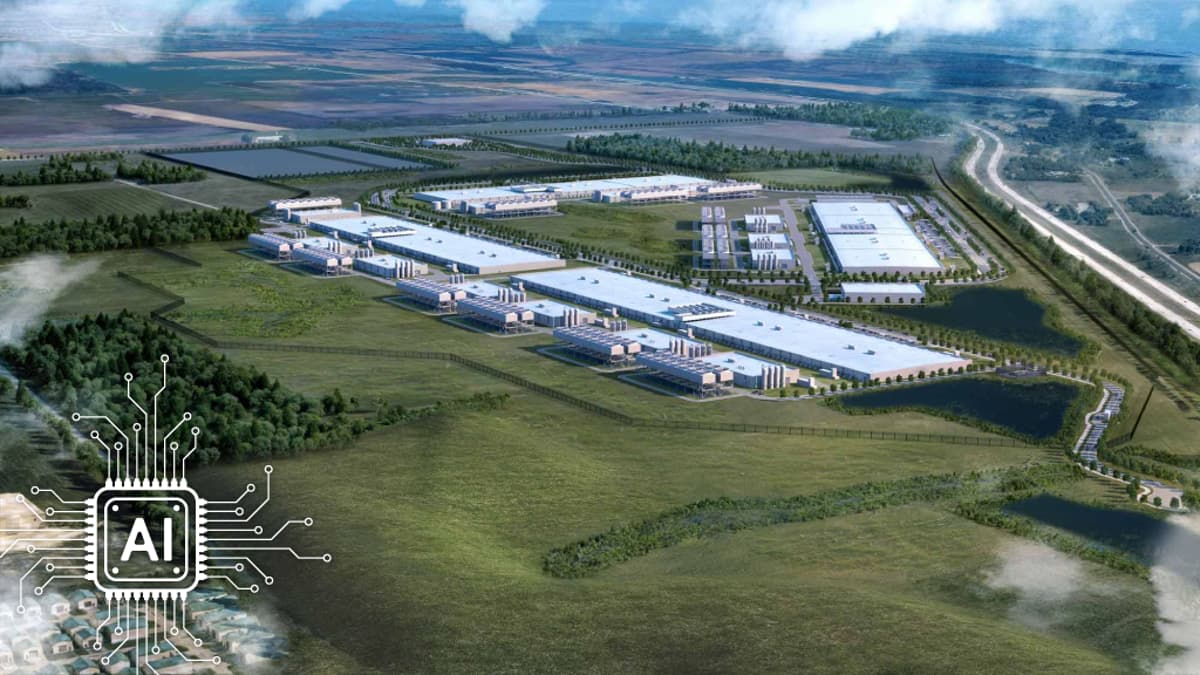
AI‑driven workloads have turned data‑centre construction into a new frontier of industrial development. Rather than isolated server farms, developers now assemble sprawling campuses that resemble manufacturing parks, each demanding massive power, cooling and land footprints. The Lighthouse project in Wisconsin exemplifies this shift, with a $15 billion price tag and a design that will eventually consume 1.3 GW—enough electricity for a midsize city. By clustering multiple single‑storey halls, the campus achieves modularity while accommodating the dense GPU arrays that power generative AI models.
The engineering challenges are equally formidable. Supplying a gigawatt of clean electricity required Vantage to fund $175 million in grid upgrades, new high‑voltage substations and dedicated utility feeders. Traditional evaporative cooling is impractical at this scale, prompting a closed‑loop chilled‑water system that reduces water use to the equivalent of 65 homes, effectively eliminating billions of gallons of consumption. Structural designs must support heavy equipment, rooftop cooling arrays and redundant power gear, all while enabling rapid, repeatable construction across millions of square feet. Sustainability is baked in: 70% of the campus’s power will come from on‑site solar, wind and battery storage, with the remainder sourced from renewable purchases.
The broader implications ripple through the tech and construction sectors. As AI models grow, demand for hyper‑scale facilities will accelerate, driving further public‑private partnerships for infrastructure investment. Communities hosting such campuses can expect job creation, tax revenue and ancillary services, but also must plan for increased traffic, storm‑water management and grid resilience. The Lighthouse campus sets a precedent for balancing massive energy needs with environmental stewardship, signaling how future AI data‑centres may be built to meet both performance and climate goals.
$15B Wisconsin AI data centre campus signals a new building era
Comments
Want to join the conversation?
Loading comments...