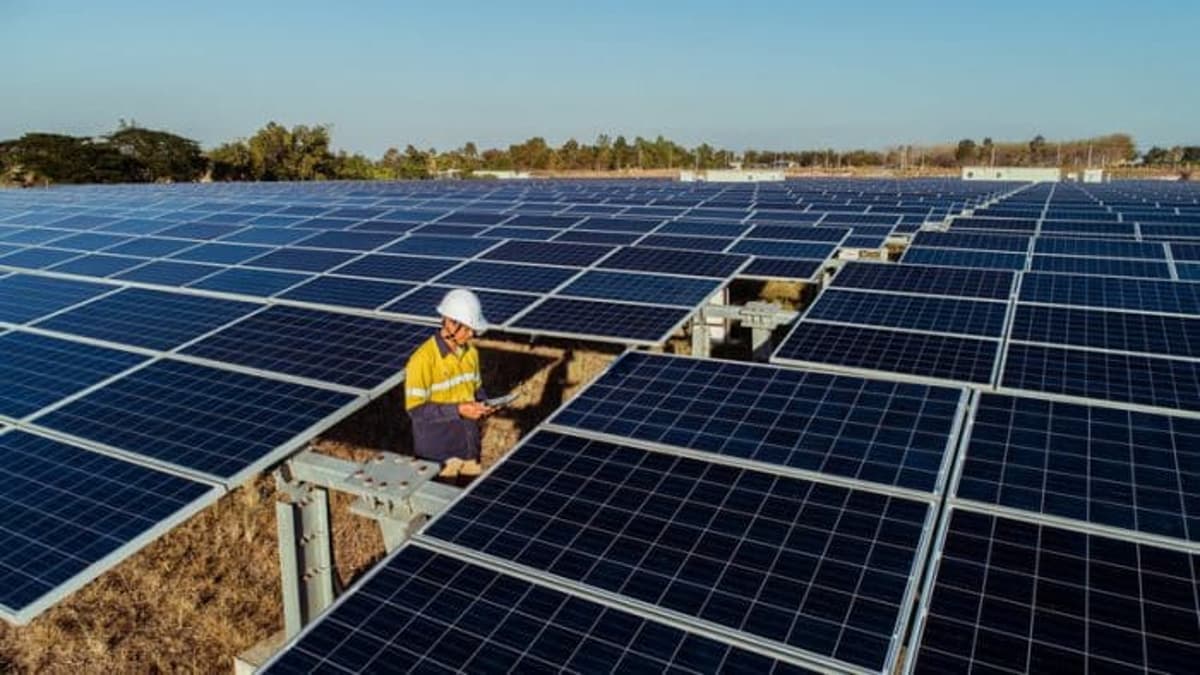
$3.5bn US Solar Storage Financing Powers Cypress Creek Large-Scale Renewable Construction Expansion
Why It Matters
The funding accelerates deployment of grid‑scale renewable capacity, bolstering reliability and creating jobs while signalling strong market appetite for hybrid solar‑storage assets. It also de‑risks future investments by locking in revenue through long‑term PPAs.
Key Takeaways
- •$3.5 bn financing backs multi‑state solar‑plus‑storage pipeline.
- •Construction slated through 2026, accelerating U.S. decarbonisation.
- •Battery storage improves grid reliability and peak‑shaving capabilities.
- •Multi‑vendor procurement mitigates inverter and battery lead‑time risks.
- •Long‑term PPAs lock revenue, attracting further infrastructure investors.
Pulse Analysis
The $3.5 billion financing package reflects a broader shift toward hybrid renewable projects that combine solar generation with battery storage. Investors are increasingly favouring this model because it mitigates the intermittency of solar power, offering dispatchable energy that can be sold into wholesale markets or under firm PPAs. Cypress Creek’s capital structure blends senior debt with project‑finance mechanisms, reducing equity exposure while delivering predictable cash flows. This approach mirrors recent trends in Europe and Asia, where financing consortia are packaging solar‑plus‑storage assets to meet both climate targets and investor return expectations.
Beyond the balance sheet, the project’s construction phase promises tangible economic benefits. By coordinating EPC contractors, equipment suppliers, and transmission authorities, Cypress Creek aims to compress interconnection timelines that have historically delayed utility‑scale renewables. The inclusion of battery energy‑storage systems enhances grid stability, enabling peak‑shaving and reducing congestion on high‑load corridors. Local hiring for electrical, civil, and logistics roles further extends the impact to regional labor markets, while long‑term PPAs with utilities and corporates lock in revenue streams that underpin the financing’s creditworthiness.
Supply‑chain resilience remains a critical challenge. Global shortages of inverter components and lithium‑ion battery modules have pressured lead times, prompting Cypress Creek to adopt multi‑vendor sourcing and early procurement strategies. Parallel developments, such as the Koreplex battery manufacturing plant, aim to shore up domestic capacity and lower dependence on overseas suppliers. As the United States tightens renewable‑portfolio standards and expands federal incentives, projects like this hybrid pipeline will likely serve as templates for future clean‑energy investments, reinforcing the nation’s energy security and carbon‑reduction objectives.
$3.5bn US Solar Storage Financing Powers Cypress Creek Large-Scale Renewable Construction Expansion
Comments
Want to join the conversation?
Loading comments...