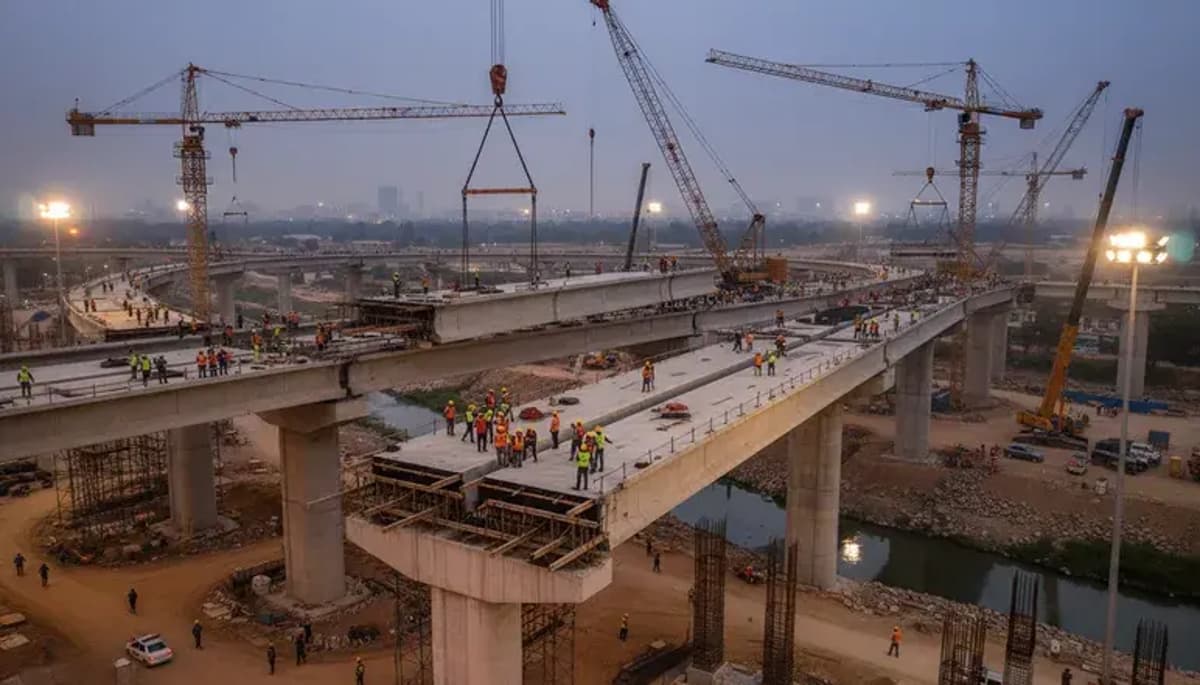
$54 Billion Delhi–Mumbai 8-Lane Expressway Project Drives 12-Hour Travel Transformation
Companies Mentioned
Why It Matters
By slashing long‑haul transit times, the expressway boosts supply‑chain efficiency, lowers inventory costs, and catalyzes industrial investment along a critical economic axis, reshaping India’s logistics landscape.
Key Takeaways
- •929 km of expressway already open, cutting Delhi‑Mumbai travel to 12 hrs
- •$54 billion investment ranks among world’s largest highway programs
- •Freight transit time fell from 3 days to 14 hrs, boosting productivity
- •Logistics parks and warehouses sprouting near interchanges accelerate regional industrial growth
- •Mukundra Hills tunnel work underscores complex environmental and geological challenges
Pulse Analysis
The Delhi‑Mumbai 8‑lane expressway represents one of the world’s most ambitious road‑building endeavors, both in financial scale and engineering complexity. At an estimated $54 billion, the project rivals the cost of major transcontinental highways and showcases India’s capacity to mobilize capital through the Bharatmala Pariyojana framework. Its design incorporates eight lanes from day one, with the structural flexibility to expand to twelve, and features a suite of intelligent transport systems that monitor traffic flow, enhance safety, and reduce congestion on a route that previously suffered chronic bottlenecks.
From a logistics perspective, the corridor is a game‑changer. Freight that once required up to three days now moves in under 14 hours, translating into higher fleet utilization, lower fuel consumption, and reduced working‑capital requirements for manufacturers and retailers. The time savings also enable just‑in‑time inventory models, which are critical for sectors ranging from automotive components to perishable agricultural goods. As a result, logistics firms are rapidly establishing warehousing hubs, cold‑storage facilities, and multimodal terminals near key interchanges, creating a new economic belt that attracts foreign direct investment and stimulates local employment.
Strategically, the expressway dovetails with India’s broader push to modernize its transport infrastructure, complementing projects like the Mumbai‑Bangalore 14‑lane corridor. Together, these arteries aim to knit together the nation’s financial, industrial, and agricultural centers, fostering a more resilient supply chain network. The successful delivery of such large‑scale projects signals to global investors that India can execute complex, capital‑intensive initiatives on schedule, bolstering confidence in the country’s long‑term growth trajectory.
$54 Billion Delhi–Mumbai 8-Lane Expressway Project Drives 12-Hour Travel Transformation
Comments
Want to join the conversation?
Loading comments...