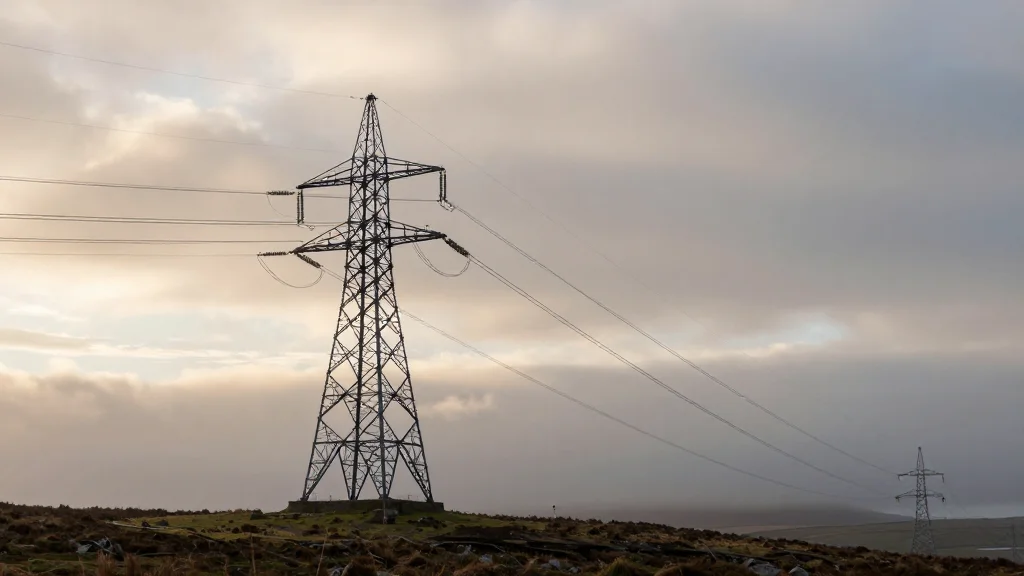
£56M Infrastructure Programme Launched Across Cumbria’s Electricity Network
Why It Matters
Doubling network capacity will enable widespread EV adoption and heat‑pump installations, driving the region’s low‑carbon transition and economic growth.
Key Takeaways
- •£56M (£≈$71M) investment in Cumbria power infrastructure.
- •152 pylons replaced along 47 km, 132 kV line.
- •Capacity expected to nearly double after full Cumbria Ring upgrade.
- •Completion of phase one targeted for 2027, minimal disruption.
- •Supports EVs, heat pumps, and regional economic development.
Pulse Analysis
The UK’s electricity grid is undergoing a rapid modernization to accommodate the nation’s net‑zero targets, and regional projects like the Cumbria Ring are pivotal. By upgrading a 132 kV transmission corridor, SP Electricity North West is addressing bottlenecks that have limited renewable integration and constrained load growth. The new pylons and reinforced conductors not only replace aging assets but also provide the structural backbone needed for future high‑capacity links, aligning with national transmission system operator plans for a more resilient network.
Enhanced capacity on the Cumbria Ring will directly influence the adoption of low‑carbon technologies across the county. With the ability to nearly double power availability, households can install heat pumps without risking grid overload, while businesses gain the confidence to transition fleets to electric vehicles. This infrastructure boost also facilitates greater penetration of offshore wind and other renewable sources, smoothing intermittency and reducing reliance on fossil‑fuel generation. In essence, the upgrade creates a virtuous cycle: more clean energy feeds the grid, and a stronger grid enables broader clean‑energy consumption.
Beyond environmental benefits, the project carries significant economic implications. The construction phase generates skilled jobs in remote areas, and the improved grid attracts investment in energy‑intensive industries seeking reliable power. As capacity expands, the region becomes more attractive for data centers, green manufacturing, and tourism‑related services that rely on stable electricity. The phased approach, with the first segment due in 2027 and additional upgrades planned, signals a long‑term commitment to regional development, positioning Cumbria as a model for integrated infrastructure and sustainable growth.
£56M infrastructure programme launched across Cumbria’s electricity network
Comments
Want to join the conversation?
Loading comments...