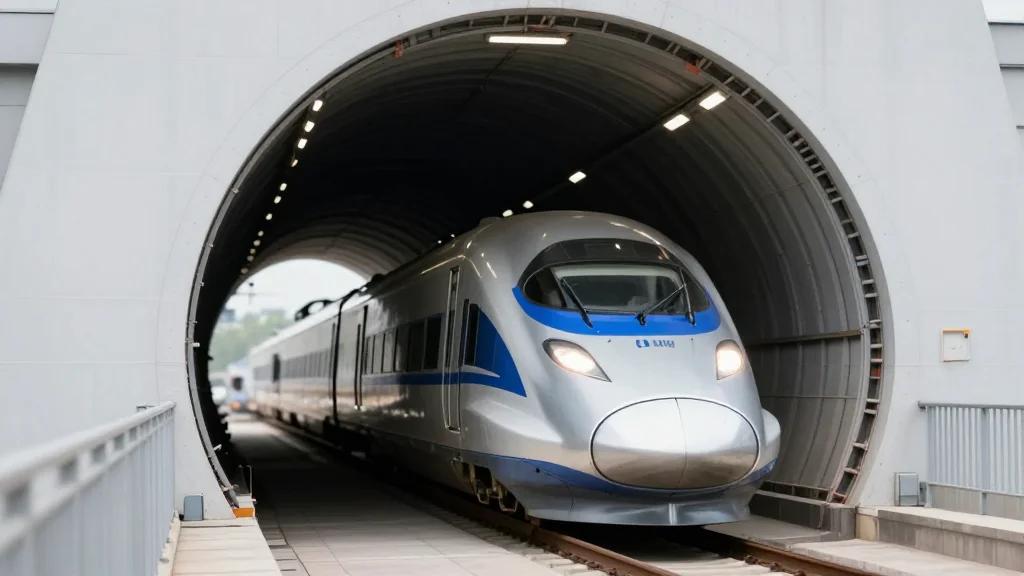
$6 Billion Frederick Douglass Tunnel Project Drives 16km Construction in Baltimore
Why It Matters
By eliminating the oldest tunnel on the nation’s busiest rail artery without service interruption, the project will dramatically improve reliability, speed, and capacity for East Coast travelers, strengthening the economic competitiveness of the region.
Key Takeaways
- •$6 billion tunnel replaces 150‑year‑old Baltimore & Potomac Tunnel
- •New parallel tubes allow 160 km/h speeds, cutting travel time
- •Construction proceeds without halting Amtrak service on the Northeast Corridor
- •Kiewit/J.F. Shea JV leads contract; project funded by Infrastructure Act
- •Completion slated for 2035, boosting regional connectivity and jobs
Pulse Analysis
The Frederick Douglass Tunnel is more than a replacement project; it addresses a systemic bottleneck that has constrained the Northeast Corridor’s ability to meet growing demand. As the single point of failure for a line that links Boston, New York, Philadelphia, Baltimore, and Washington, the aging tunnel forces speed reductions and frequent maintenance shutdowns. By inserting a modern, dual‑tube tunnel, Amtrak can align this segment with the corridor’s higher‑speed sections, unlocking smoother schedules and reducing ripple delays that affect millions of commuters and intercity passengers.
From an engineering perspective, the project showcases a sophisticated construction strategy that keeps the existing tunnel live while excavating a new parallel bore beneath a dense urban landscape. Advanced geotechnical surveys completed in early 2026 guided soil‑stabilization techniques, and the Kiewit/J.F. Shea joint venture is employing tunnel‑boring machines equipped with real‑time monitoring to mitigate settlement risks. The new tubes will support 160 km/h electric trains, feature state‑of‑the‑art fire suppression, and include three dedicated emergency‑evacuation shafts, raising safety standards well above current federal requirements. These technical upgrades also pave the way for future signaling enhancements and potential capacity expansions.
Economically, the $6 billion investment is expected to generate tens of thousands of construction jobs and stimulate ancillary growth in West Baltimore through a $50 million community‑investment program. Faster, more reliable service will shorten travel times between Baltimore and Washington, encouraging business travel and commuter flexibility. Moreover, the project exemplifies the broader momentum of U.S. infrastructure renewal driven by the Infrastructure Investment and Jobs Act, signaling to investors and policymakers that large‑scale, high‑impact rail projects can succeed without disrupting existing operations. By 2035, the tunnel should deliver lasting benefits in reduced maintenance costs, increased ridership, and enhanced regional connectivity.
$6 Billion Frederick Douglass Tunnel Project Drives 16km Construction in Baltimore
Comments
Want to join the conversation?
Loading comments...