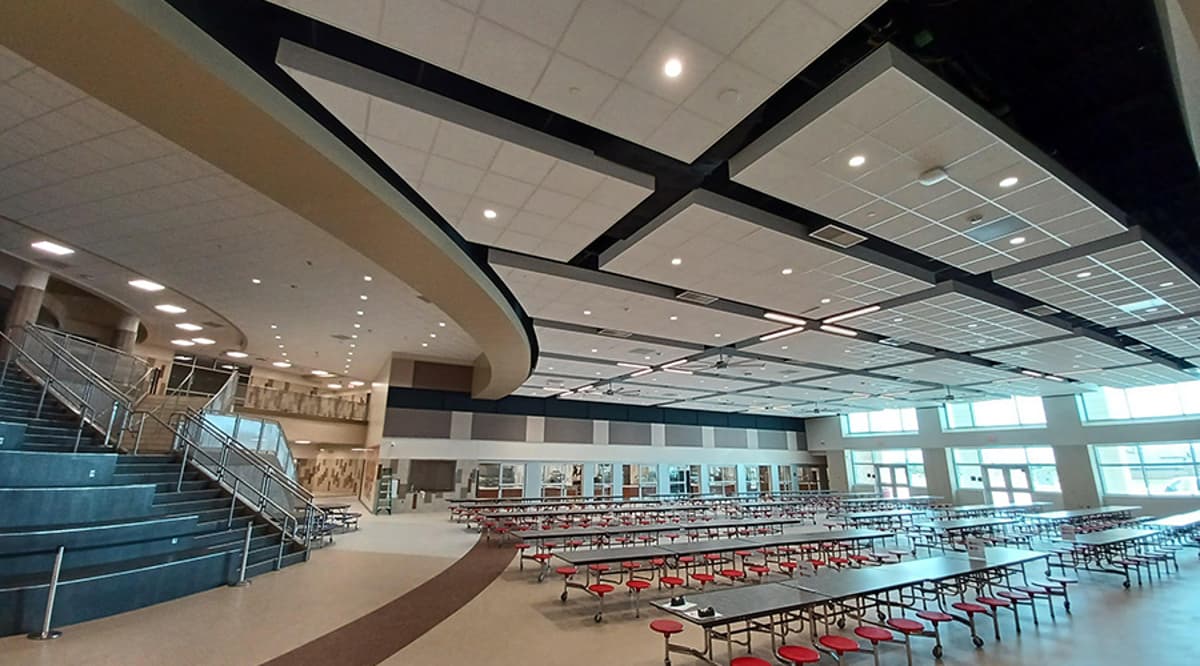
Acoustic Ceiling System Improves Learning at Houston's Thompson Intermediate School
Why It Matters
Improved acoustics directly boost student concentration and teacher effectiveness, while durable, moisture‑resistant ceilings lower operational expenses for districts facing climate‑related risks. The project showcases how resilient building materials can future‑proof educational facilities.
Key Takeaways
- •Rockfon panels deliver NRC up to 0.90, enhancing speech clarity
- •100,000 sq ft of acoustic ceiling installed across 181,000‑sq‑ft campus
- •Hydrophobic stone‑wool resists water, mold, reducing maintenance costs
- •Modern white ceilings amplify daylight, supporting energy‑efficient lighting
- •Open‑concept library design leverages acoustics for flexible learning
Pulse Analysis
Acoustic performance has become a cornerstone of modern school design, especially in regions prone to extreme weather. After Hurricane Harvey devastated Pasadena ISD facilities, the district rebuilt Thompson Intermediate with a focus on resilience and learning quality. By integrating Rockfon stone‑wool ceiling panels, the school achieves superior sound absorption, which research links to higher student engagement and reduced teacher vocal strain. The high Noise Reduction Coefficient (NRC) values—0.75 for general classrooms and 0.90 for specialized spaces—ensure that spoken instruction remains clear even in open‑plan environments.
Beyond sound control, the stone‑wool material offers practical benefits that align with district budget priorities. Its hydrophobic nature prevents water absorption, a critical feature for a building situated on a storm‑drainage‑graded 26.1‑acre site. The panels also inhibit mold and mildew growth, safeguarding indoor air quality and protecting student health. Durability translates into lower cleaning and repair cycles, allowing facilities teams to allocate resources elsewhere. The aesthetic choice of bright white panels maximizes natural daylight, complementing energy‑efficient lighting and reducing reliance on artificial illumination, which further cuts operating costs.
The Thompson Intermediate case reflects a broader shift in educational infrastructure toward resilient, health‑focused materials. As school districts nationwide confront climate uncertainty, investments in acoustic and moisture‑resistant solutions are increasingly justified by measurable gains in learning outcomes and lifecycle cost savings. Manufacturers like Rockfon are positioning themselves as partners in this transformation, offering products that meet stringent acoustic standards while delivering durability. For administrators, the ROI is clear: better learning environments, healthier indoor conditions, and a facility that can withstand future storms without extensive retrofits.
Acoustic Ceiling System Improves Learning at Houston's Thompson Intermediate School
Comments
Want to join the conversation?
Loading comments...