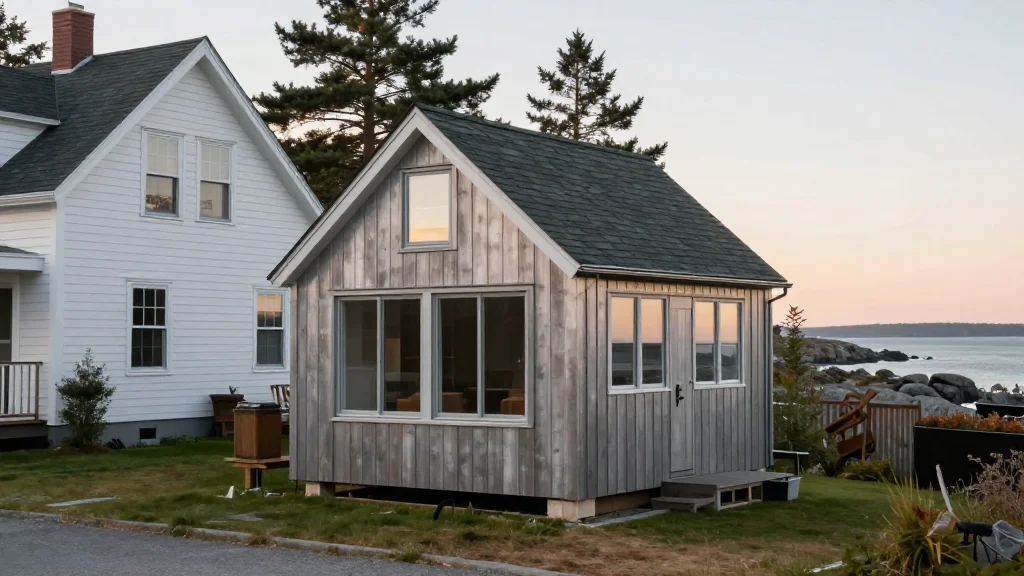
ADUs Accounted for 9% of New Maine Building Permits in 2025
Why It Matters
The uptick shows that targeted policy changes can quickly boost ADU construction, providing a modest but tangible addition to Maine’s strained housing market. Streamlined regulations slated for 2027 could further accelerate affordable unit creation both locally and in other states watching Maine’s experiment.
Key Takeaways
- •500 ADU permits issued, 9% of Maine’s 2025 building permits.
- •2022 law legalized ADUs on all residential lots statewide.
- •Two new laws to simplify permitting and cut costs start 2027.
- •Data collected for the first time; trends remain unclear.
- •ADUs seen as a tool to ease Maine’s housing shortage.
Pulse Analysis
Maine’s housing market has long grappled with limited supply and high prices, prompting legislators to explore accessory dwelling units as a low‑cost, infill solution. The 2022 law that legalized ADUs on any residential lot removed a major legal barrier, but developers still faced costly permitting processes and unclear zoning rules. By allowing homeowners to add small, self‑contained units to existing properties, ADUs can increase density without altering neighborhood character, a balance that appeals to both local officials and community groups.
The 2025 data—500 ADU permits representing 9% of all new permits—suggests the policy shift is gaining traction. While the figure is modest compared with states like California, where ADUs comprise a larger share of new construction, Maine’s early results are encouraging given the recent legal changes and the pilot nature of the data collection. The upcoming 2027 reforms, which aim to streamline permitting and reduce fees, could push the ADU share higher, potentially adding several hundred units annually and easing pressure on the rental market.
For developers and municipalities, the emerging ADU trend offers a new revenue stream and a tool for meeting affordable‑housing goals without extensive new infrastructure. However, the lack of historical data means planners must monitor outcomes closely to assess cost‑effectiveness and community impact. If Maine’s streamlined approach proves successful, it could serve as a template for other states seeking to boost housing supply through modest, policy‑driven infill development.
ADUs accounted for 9% of new Maine building permits in 2025
Comments
Want to join the conversation?
Loading comments...