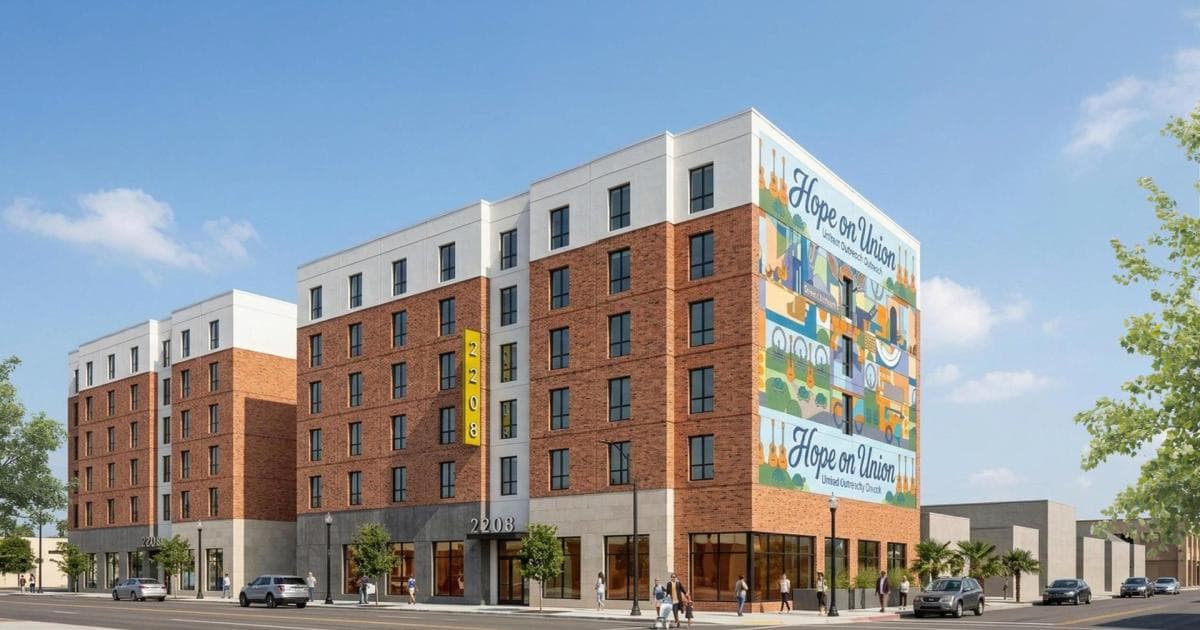
Affordable Housing Proposed at 2208 S. Union Ave. In University Park
Why It Matters
The development adds critical affordable units to a market with severe supply constraints while leveraging underused church land, illustrating how policy incentives can accelerate low‑income housing delivery in Los Angeles.
Key Takeaways
- •LH Housing proposes 155 one‑bedroom units on former church lot
- •Six‑story building includes ground‑floor space for United University Church
- •Project uses brick‑veneer “Commercial Vernacular” design by JPark Architects
- •SB 4 streamlines affordable housing on religious property in Los Angeles
- •Historic Preservation Overlay Zone board will review development’s impact
Pulse Analysis
The Los Angeles housing market continues to grapple with a severe affordability gap, prompting policymakers to seek creative land sources. State Senate Bill 4, enacted in 2022, accelerates the approval process for affordable units built on property owned by religious organizations, recognizing churches as underutilized assets. By allowing streamlined permitting and tax incentives, the legislation aims to add thousands of low‑income homes without displacing existing congregations. This policy backdrop has spurred a wave of church‑developer partnerships across the city, from downtown loft conversions to suburban infill projects.
The proposal at 2208 S. Union Avenue exemplifies that trend. LH Housing plans a six‑story, brick‑veneer structure that will house 155 one‑bedroom apartments, each targeting households earning up to 80 percent of the area median income. A dedicated ground‑floor sanctuary preserves United University Church’s presence while activating the street front with retail‑compatible spaces. Designed by JPark Architects, the building adopts a "Commercial Vernacular" aesthetic that respects the historic fabric of University Park, a neighborhood governed by a Historic Preservation Overlay Zone. The project is now before the overlay board for final clearance.
If approved, the Union Avenue development could inject much‑needed rental inventory into a market where vacancy rates hover below 3 percent and rents have risen 12 percent year‑over‑year. The model also demonstrates how faith‑based land can be leveraged to meet municipal housing goals without triggering community opposition often associated with large‑scale projects. However, developers must navigate historic‑preservation constraints and ensure that the modest 24‑vehicle parking allocation aligns with transit‑oriented planning. Success here may encourage additional church‑led affordable housing initiatives throughout Los Angeles and set a template for other high‑cost cities.
Affordable housing proposed at 2208 S. Union Ave. in University Park
Comments
Want to join the conversation?
Loading comments...