AFL Returns to UTAS Mid-Build as Work Starts on Timber-Concrete Grandstand
Why It Matters
The upgrade secures Launceston as a permanent AFL Tier 2 hub, boosting regional sport, tourism and demonstrating mass‑timber’s viability in large‑scale stadiums.
Key Takeaways
- •$130 million AUD redevelopment uses mass‑timber glulam, cutting carbon.
- •Capacity drops to 9,000 seats in 2026, rising to 17,000 by 2027.
- •Project funded equally by Australian and Tasmanian governments ($43 million USD each).
- •New stands enable Tier 2 AFL venue for Tasmania Devils from 2028.
- •Off‑site glulam prefabrication speeds construction and reduces on‑site time.
Pulse Analysis
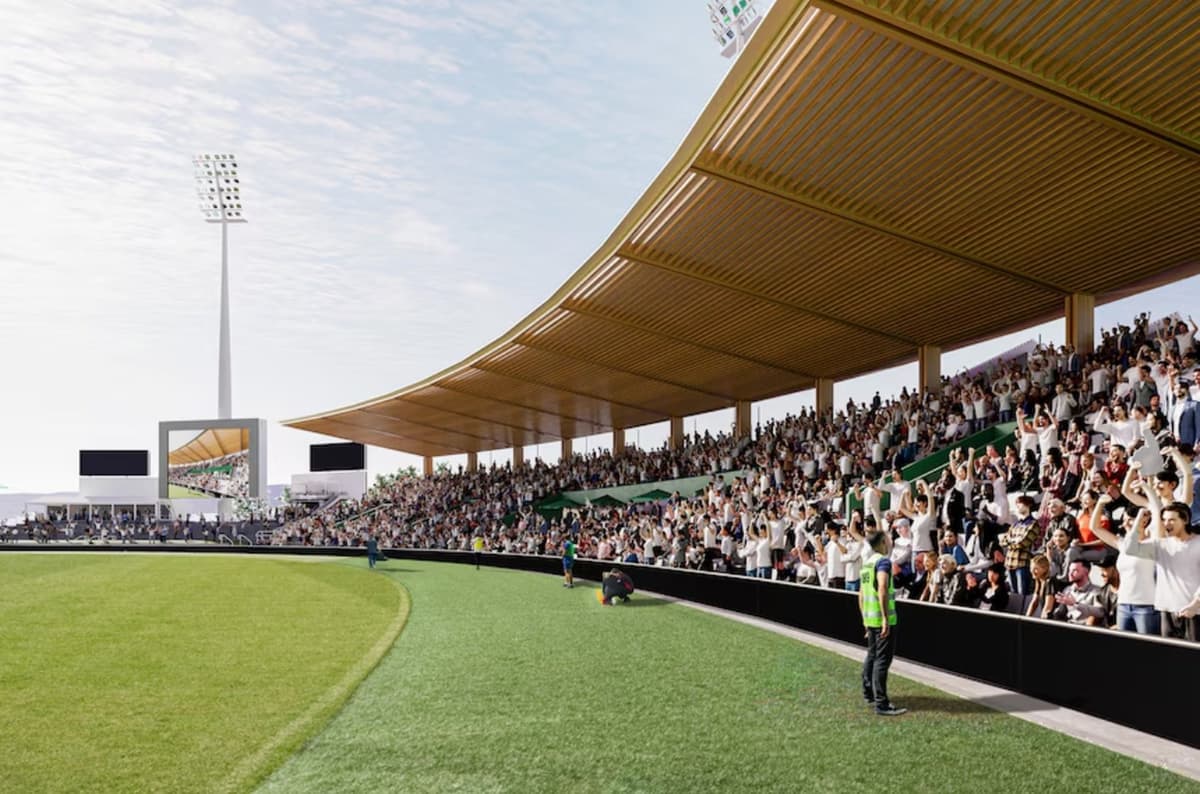
The UTAS Stadium transformation marks a milestone for Australian sports infrastructure, marrying mass‑timber engineering with concrete to create a hybrid façade that slashes embodied carbon. By sourcing radiata pine from domestic plantations and prefabricating glulam components off‑site, the project trims construction timelines and showcases a low‑emission alternative to traditional steel. Designers Populous and Philp Lighton Architects have integrated the timber‑concrete system into both the new Centre West Stand and the Eastern Stand roof, setting a precedent for sustainable stadium design in the Southern Hemisphere.
While the redevelopment temporarily halves the venue’s capacity to roughly 9,000 seats, a phased rollout will restore and expand seating to 17,000 by early 2027. This incremental approach keeps the ground active for AFL, AFLW, VFL, and Big Bash League matches throughout construction, ensuring revenue streams remain intact. The upgraded capacity and Tier 2 compliance position Launceston to host the Tasmania Devils’ home games from 2028, filling the gap left by the delayed Hobart Macquarie Point Stadium and cementing the city’s role in the AFL’s national expansion.
Financially, the $130 million AUD project is split evenly between the Australian and Tasmanian governments, each contributing about $43 million USD. This public investment underscores the strategic importance of sports venues for regional economic development, tourism, and community identity. As mass‑timber gains traction in high‑profile projects, UTAS Stadium’s success could accelerate similar sustainable constructions across Australia and beyond, reinforcing the sector’s shift toward greener, faster‑build solutions.
AFL Returns to UTAS Mid-Build as Work Starts on Timber-Concrete Grandstand
Comments
Want to join the conversation?
Loading comments...