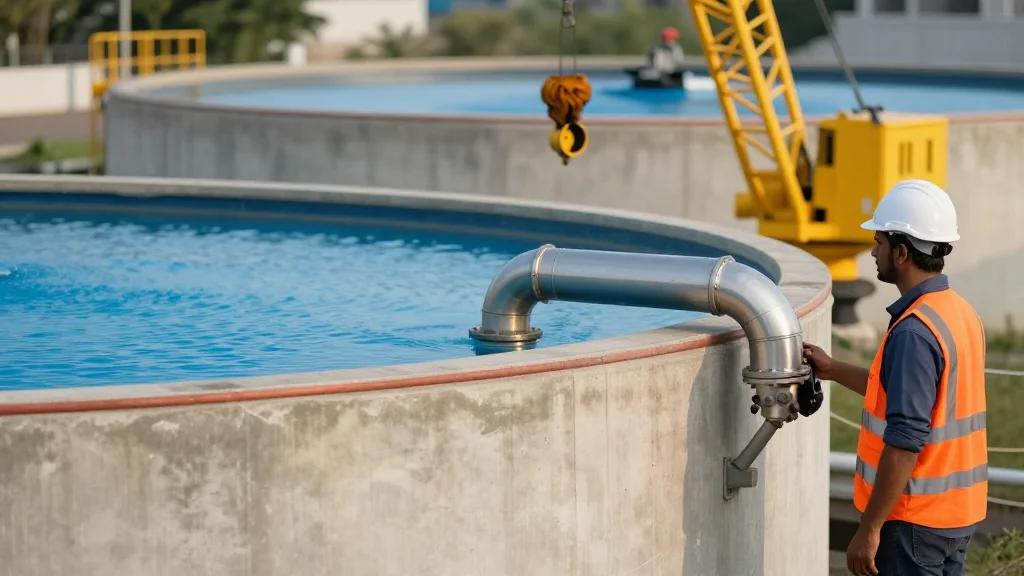
Andhra Pradesh Urban Water Supply and Septage Management Improvement)
Why It Matters
The deal strengthens critical water infrastructure for millions of residents while showcasing the growing role of private firms in India’s public‑utility sector. Successful execution will improve public health outcomes and set a benchmark for future design‑build‑operate contracts in the region.
Key Takeaways
- •JWIL Infra wins $76 million water supply contract in Andhra Pradesh
- •Project covers source, distribution, meters, and 5 MLD wastewater plant
- •Competitive bids from NCC Ltd and Megah Engineering within $0.5 million range
- •Contract aims to improve urban water access for over 1 million residents
- •Public‑health circle oversees operation and maintenance for long‑term sustainability
Pulse Analysis
India’s rapid urbanization has strained municipal water systems, prompting state governments to seek private‑sector expertise for large‑scale upgrades. Andhra Pradesh’s Urban Water Supply and Septage Management Improvement project reflects this trend, combining traditional infrastructure expansion with a modern 5 MLD wastewater treatment plant. By bundling design, construction, and long‑term operation under a single contract, the state aims to reduce project delays, ensure quality control, and achieve cost efficiencies that conventional procurement often lacks.
The award to JWIL Infra Limited, a New Delhi‑based engineering firm, underscores the competitive nature of India’s infrastructure market. JWIL’s bid, roughly $76 million, edged out close competitors NCC Ltd and Megah Engineering by a narrow margin, highlighting how marginal cost differences can determine contract outcomes in high‑value public works. The inclusion of high‑service connections (HSCs) and water meters signals a shift toward smarter water management, enabling better consumption monitoring and revenue collection for utilities.
For investors and industry observers, the project offers a glimpse into the evolving public‑private partnership (PPP) landscape in India. Successful delivery could catalyze further private participation in water and sanitation sectors, especially as the government pushes for sustainable urban services under its National Water Mission. Moreover, the design‑build‑operate model provides a template for replicable, financially viable infrastructure that balances public health goals with fiscal responsibility, potentially attracting additional foreign and domestic capital into the country’s utility modernization drive.
Andhra Pradesh Urban Water Supply and Septage Management Improvement)
Comments
Want to join the conversation?
Loading comments...