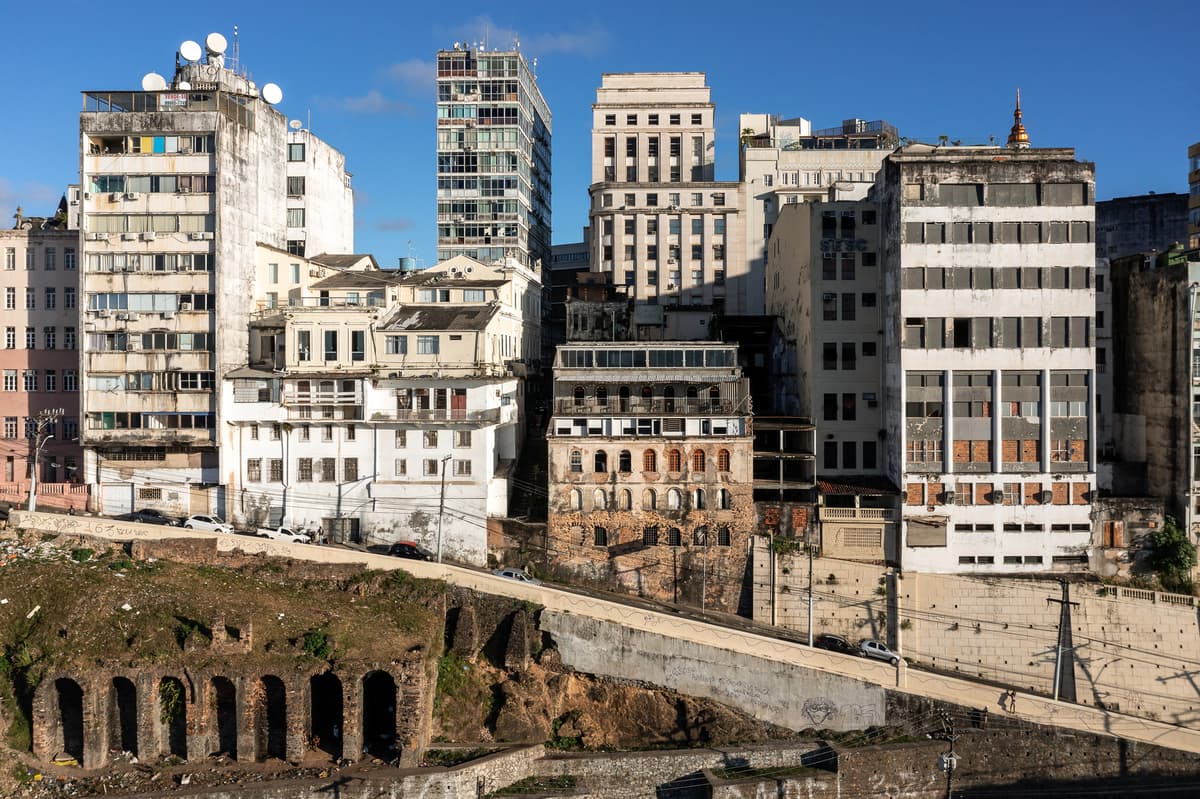
Arquivo: Deconstruction and Material Reuse for a Circular Architecture
Why It Matters
Arquivo demonstrates a scalable circular‑economy model that cuts construction waste, lowers material costs, and creates new revenue streams, positioning the industry for stricter sustainability mandates.
Key Takeaways
- •Arquivo won ArchDaily 2025 Next Practices Award for circular construction.
- •Rescues over 50 elements per house; 400+ units from hotel.
- •On‑site consignment sales turn demolition waste into sellable inventory.
- •Reuse Report evaluates technical and cultural value for profitable resale.
- •Partners with builders, universities, and training programs to scale reuse.
Pulse Analysis
The construction sector generates roughly 30 % of global solid waste, and in Brazil demolition alone accounts for millions of tons each year. Traditional teardown methods send most materials to landfill, squandering embodied energy and contributing to climate change. Arquivo confronts this paradox by treating each demolition as a laboratory, systematically disassembling structures to harvest high‑quality elements that can be reincorporated elsewhere. This approach not only reduces landfill burden but also captures the hidden cultural and aesthetic value of older building components, aligning with the broader circular‑economy agenda that governments and investors are increasingly demanding.
At the core of Arquivo’s operation is the Reuse Report, a dual‑criteria assessment that grades items on technical‑physical condition and cultural relevance. Elements that pass the cost‑benefit equation—disassembly plus transport versus market value—are catalogued, priced, and offered through on‑site consignment sales or a central warehouse supplied by a partner constructor. The firm’s portfolio includes over 50 salvaged pieces per residential project and bulk recoveries such as 400+ units from the Hotel Othon Palace deconstruction. By providing design consulting and installation monitoring, Arquivo ensures that reclaimed components fit seamlessly into new architectural narratives.
Arquivo’s collaborative network—spanning builders, carpenters, universities, and online training programs—creates a knowledge‑sharing ecosystem that can be replicated across emerging markets. Its success signals to policymakers that incentives for deconstruction and material passports can yield measurable carbon savings and cost efficiencies. As the industry grapples with stricter waste‑management regulations and rising material prices, firms that embed circular practices stand to gain competitive advantage. Arquivo therefore not only reshapes Brazil’s construction supply chain but also offers a blueprint for global firms seeking to transition from linear demolition to regenerative building cycles.
Arquivo: Deconstruction and Material Reuse for a Circular Architecture
Comments
Want to join the conversation?
Loading comments...