Why It Matters
The project demonstrates how modern public amenities can coexist with historic preservation, offering a replicable model for heritage‑sensitive urban development and sustainable design.
Key Takeaways
- •Project relocates food court to preserve Fort Cornwallis western moat
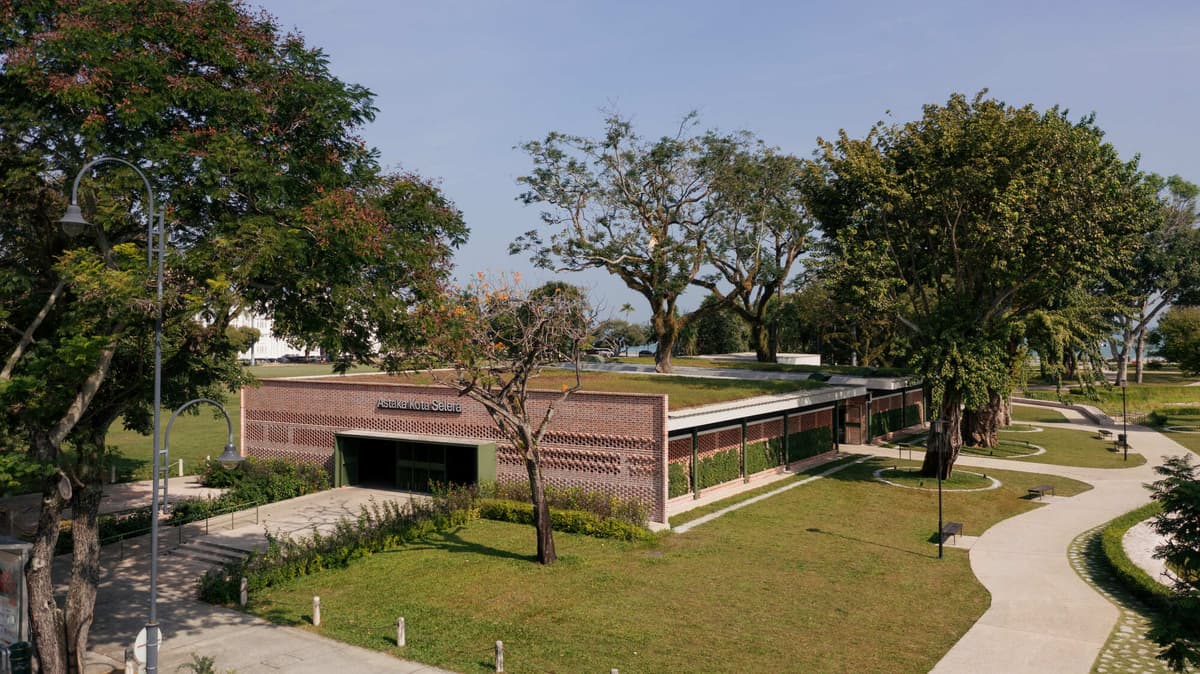
- •Design uses visual permeability to keep heritage sightlines unobstructed
- •Circular stall layout creates 360-degree street‑food theatre
- •Two mature trees serve as biological anchors aligning entrance
- •Natural ventilation reduces cooling demand, lowering environmental footprint
Pulse Analysis
George Town’s North Seafront Improvement Programme faced a rare dilemma: how to restore the historic western moat of Fort Cornwallis without sacrificing a beloved street‑food hub. The original market sat directly atop the moat’s alignment, prompting authorities to seek a solution that honored both the colonial fort’s archaeological significance and the vibrant culinary scene that defines Penang’s cultural identity. By moving the food court, the project not only safeguards a UNESCO‑listed landscape but also revitalizes the public realm with a purpose‑built venue that respects the city’s layered history.
The architects introduced two core concepts—visual permeability and biological anchors—to reconcile modern functionality with heritage aesthetics. A perimeter‑stall configuration forms a 360‑degree theatre, allowing diners to experience the market as an open‑air stage while preserving sightlines to the Fort, Town Hall, and historic Padang. Two mature trees anchor the primary circulation axis, creating a natural corridor that stitches together historic landmarks. The building’s porous envelope and reliance on natural ventilation replace heavy mechanical cooling, slashing energy consumption and reinforcing the project’s eco‑conscious ethos. Earth‑tone materials further blend the structure into its surroundings, ensuring it feels like an extension rather than an intrusion.
Astaka Kota Selera’s success signals a shift in how cities approach development within heritage zones. It proves that adaptive reuse can deliver contemporary amenities without compromising cultural integrity, offering a template for future interventions in protected districts worldwide. The project’s emphasis on sustainability, community engagement, and respectful design may inspire policymakers and developers to prioritize heritage‑centric solutions, ultimately enriching urban experiences while preserving the past for future generations.
Astaka Kota Selera / EA Architects
Comments
Want to join the conversation?
Loading comments...