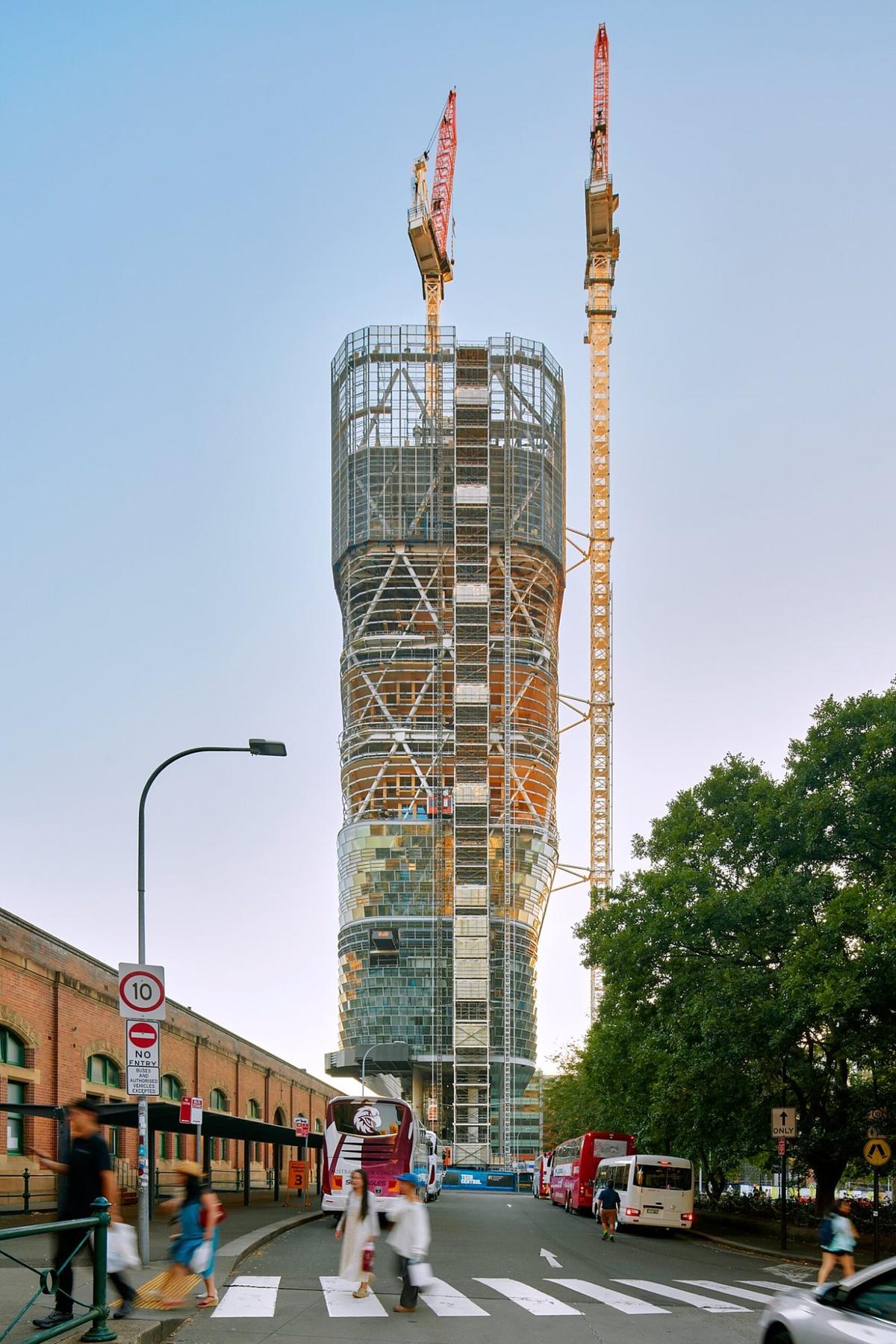
Atlassian Races Past Ascent — World’s Tallest Plyscraper Towers Over Sydney
Companies Mentioned

Why It Matters
The tower proves that high‑rise timber construction can meet commercial performance while slashing carbon, offering a scalable model for greener skyscrapers. Its success is likely to accelerate hybrid timber adoption across global real‑estate portfolios.
Key Takeaways
- •Atlassian Central Tower now tallest hybrid timber building, 39 storeys
- •Over 30,000 m³ timber replaces concrete, cutting embodied carbon >50%
- •Seven “timber habitats” are free‑standing CLT modules cantilevered off steel exoskeleton
- •1,794 solar louvres generate ~247 kW peak, providing self‑shading
- •Completion slated 2026; Atlassian to occupy five habitats by late 2028
Pulse Analysis
Hybrid timber is moving from niche projects to mainstream high‑rise construction, and Sydney’s Atlassian Central Tower is the latest proof point. By marrying a steel exoskeleton with cross‑laminated timber (CLT) and glulam, the 39‑storey plyscraper achieves structural rigidity traditionally reserved for concrete and steel. The design’s seven timber habitats—four‑storey, free‑standing modules—allow rapid vertical progression, with crews jumping five levels at a time before back‑filling timber, a method that has shaved months off the schedule.
The engineering innovations extend beyond speed. Drag straps link CLT floors directly to concrete cores, routing lateral loads efficiently and eliminating interior columns, which creates 2,000 m² column‑free floor plates. Over 30,000 m³ of timber sourced from European producers replaces a comparable volume of concrete and steel, delivering a projected 50 % reduction in embodied carbon. The façade’s 1,794 Onyx Solar louvres not only generate roughly 247 kW of peak power but also act as a self‑shading system, reducing cooling loads and showcasing the synergy between timber construction and building‑integrated photovoltaics.
For investors and developers, the Atlassian project signals a viable commercial pathway for sustainable skyscrapers. The tower’s anticipated 2026 completion and phased occupancy beginning in late 2028 will house 5,000 workers, demonstrating that hybrid timber can support dense, high‑performance office environments. As regulatory bodies worldwide tighten carbon‑emission standards, the cost‑effective, renewable‑powered model exemplified by Atlassian Central may become a benchmark for future urban developments, driving demand for timber manufacturers, BIPV suppliers, and engineering firms specializing in hybrid systems.
Atlassian Races Past Ascent — World’s Tallest Plyscraper Towers Over Sydney
Comments
Want to join the conversation?
Loading comments...