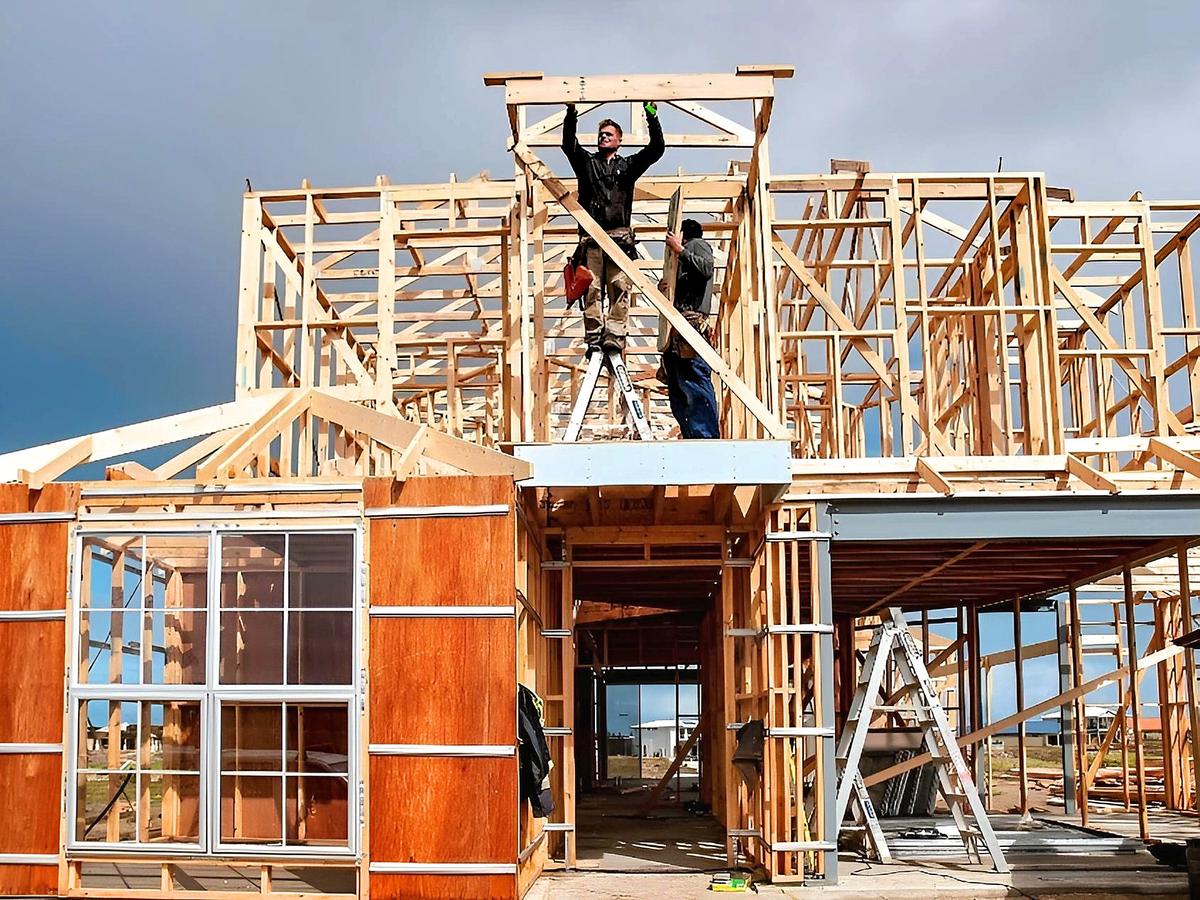
Australia Can Reach Net Zero in Three Years With Better Timber Use
Companies Mentioned
Why It Matters
Timber‑centric building can transform Australia’s largest emitting sector, delivering rapid emissions reductions and creating a domestic carbon‑removal industry. The findings give policymakers and developers a clear roadmap to meet national net‑zero targets while unlocking new market opportunities.
Key Takeaways
- •Timber‑maximised homes cut construction emissions by 46%.
- •Scaling mass timber could pull 3 million tonnes CO₂ annually by 2050.
- •Over one‑third of new houses must use timber to hit 2029 target.
- •Biomass substitution could halve fossil fuel use in wood factories.
- •Government incentives and regulation needed for timber‑centric building codes.
Pulse Analysis
Australia’s forest and wood products sector, already responsible for a carbon footprint 90 times smaller than mining, is poised to become the country’s first net‑zero manufacturing industry. The Wood Beca report provides the first full‑chain emissions baseline for the sector and outlines three decarbonisation pathways to 2050. While market forces alone would only modestly lower emissions, the "Beyond Net Zero" scenario adds biomass substitution and a greener electricity grid to reach net zero by 2035. The most ambitious pathway accelerates timber adoption across residential, office and industrial construction, achieving net zero as early as 2029 and pulling three million tonnes of CO₂ out of the atmosphere each year.
The construction sector drives the bulk of the projected 3.8 million‑tonne annual emissions cut. A timber‑maximised home emits roughly 33 tonnes of CO₂ versus 61 tonnes for a conventional concrete‑steel build—a 46% reduction that scales dramatically when more than a third of new houses and over 10% of apartments, offices and factories adopt mass‑timber systems such as cross‑laminated and glue‑laminated timber. Advanced engineered‑wood technologies that upcycle low‑grade logs further amplify carbon storage, while increased paper recycling and low‑emission heavy vehicles each contribute modest gains.
Realising this vision hinges on coordinated policy action. Direct incentives for biomass use, sustained research funding for engineered‑wood innovations, and regulatory reforms that integrate timber‑maximised designs into building codes are critical. Federal Net Zero Sectoral Plans already recognise forestry’s role, but additional support is needed to accelerate plantation expansion and domestic bioenergy projects. For developers and investors, the report signals a burgeoning market for sustainable timber products, offering both climate benefits and a competitive edge in a rapidly greening construction landscape.
Australia Can Reach Net Zero in Three Years With Better Timber Use
Comments
Want to join the conversation?
Loading comments...