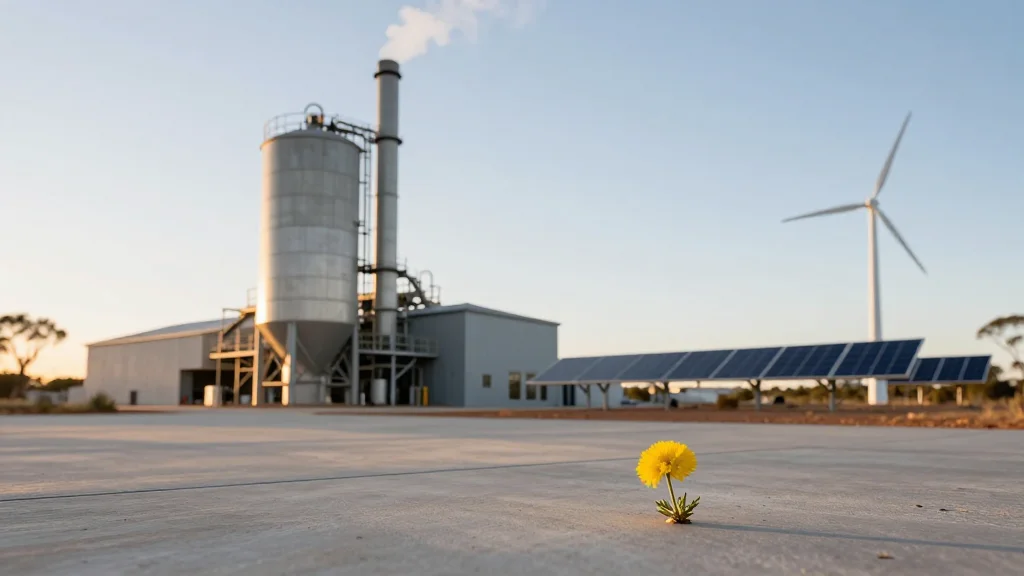
Australia Turns to Green Alternatives as Manufacturing Costs Rise
Why It Matters
Higher input costs threaten construction margins, while green‑cement initiatives and potential carbon‑adjustment policies could reshape Australia’s cement supply chain and create new revenue streams.
Key Takeaways
- •Building material costs up 30% since Middle East conflict
- •Holcim adds A$8.67/Mm³ surcharge, roughly US$6.10
- •Green360 targets 30,000t low‑carbon cement by H1 2026
- •Port Augusta hub receives A$12m loan and US$29m grant
- •Australia may adopt CBAM, projected €500m revenue by 2030
Pulse Analysis
The surge in global fuel prices, sparked by the closure of the Straits of Hormuz and escalating conflict in the Middle East, has rippled through Australia’s construction sector. Housebuilders report a 30% rise in material and freight costs, forcing major cement producers like Holcim and Heidelberg Materials to impose fuel surcharges of roughly US$6.10 and US$5.50 per cubic metre. These added expenses compress profit margins for smaller contractors and accelerate the search for cost‑effective, low‑carbon alternatives.
Against this backdrop, Australia’s cement industry is fast‑tracking green‑cement projects. Green360 Technologies plans to launch 30,000 tonnes of its Eco‑Clay low‑carbon cement by the first half of 2026, leveraging metakaolin as a partial replacement for traditional Portland cement. Simultaneously, the Port Augusta green‑cement terminal, backed by an A$12 million state loan and a US$29 million federal grant, aims to transform former power‑station waste into supplementary cementitious materials, targeting a 0.3 Mt annual emissions cut. The A$200 million (≈US$136 million) investment promises to anchor a new supply chain across South Australia, linking Port Augusta and Port Adelaide.
Policy makers are also weighing a carbon‑leakage safeguard to protect domestic producers. A review of the Safeguard Mechanism could lead to an Australian version of the EU’s Cross‑Border Carbon Adjustment Mechanism, projected to generate €500 million (≈US$540 million) by 2030. Such a levy would level the playing field against rising clinker imports, encouraging further investment in low‑carbon cement technologies and potentially reshaping the market dynamics for years to come.
Australia turns to green alternatives as manufacturing costs rise
Comments
Want to join the conversation?
Loading comments...