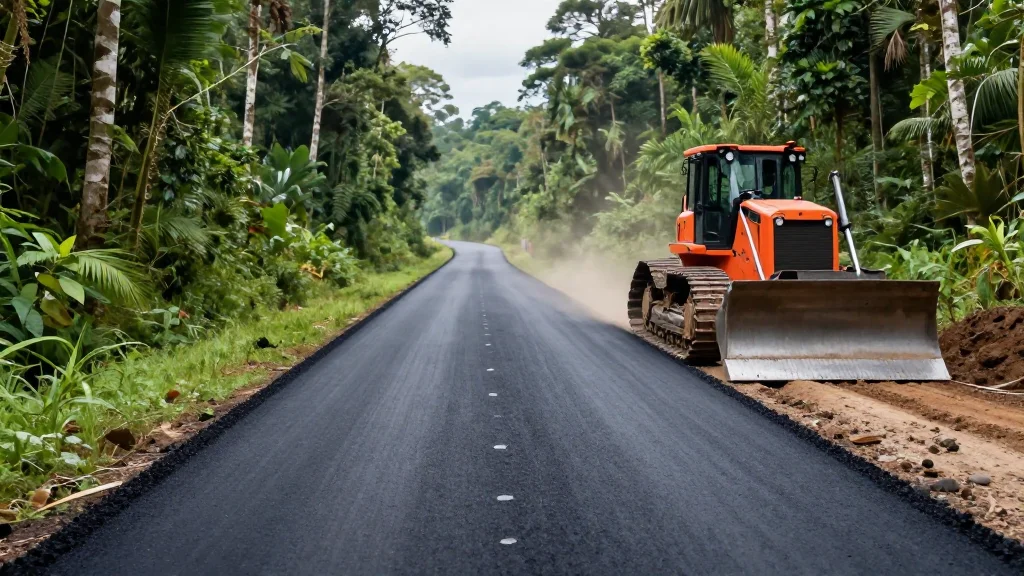
Brazil Taps Legal Loophole to Issue Bids for Amazon ‘Tipping Point’ Road
Why It Matters
The road’s construction could accelerate irreversible ecosystem loss, undermine Brazil’s Paris‑Agreement commitments, and serve as a political lever in a pivotal election cycle.
Key Takeaways
- •Brazil uses loophole to sidestep full Amazon environmental licensing.
- •339‑km BR‑319 upgrade budgeted at R$1.3 bn (~US$260 m).
- •Study predicts fourfold rise in deforestation and emissions by 2050.
- •New road may spawn illegal access points and pandemic‑risk habitats.
- •Lula’s re‑election strategy tied to infrastructure promises in the Amazon.
Pulse Analysis
The BR‑319 highway, inaugurated in 1976 to link Manaus and Porto Velho, has long been a logistical lifeline for the remote Amazon interior. Its central 339‑km stretch remains unpaved, forcing residents to rely on boats and small aircraft. By issuing four competitive bids this April, the Lula administration aims to transform the corridor into a modern transport artery, citing regional development and voter outreach ahead of the October election. The decision leverages a 2024 congressional amendment that reclassifies certain infrastructure upgrades as exempt from Brazil’s stringent environmental licensing regime, a loophole previously vetoed by Lula but later overturned.
Environmental scientists caution that the road could act as a catalyst for a massive ecological shift. A study from the Federal University of Minas Gerais projects that paving will generate up to four times more deforestation and greenhouse‑gas emissions by 2050, jeopardizing Brazil’s target to cut emissions under the Paris Agreement. The newly accessible terrain is expected to attract illegal loggers, ranchers, and land grabbers, creating dozens of unauthorized access points that fragment habitats and increase human‑wildlife contact—a scenario linked to heightened pandemic risk, as highlighted in a recent *Science* paper. Moreover, the projected rise in carbon emissions could offset gains from other climate initiatives.
Politically, the project intertwines infrastructure ambition with electoral calculus. By framing the highway upgrade as a job‑creating, connectivity‑enhancing venture, the government seeks to secure votes in the Amazonian states, even as senior environmental officials resign to pursue political careers. Critics argue that the legal shortcut sidesteps essential safeguards, such as wildlife corridors and monitoring systems previously outlined in a 2025 “parkway” model. While the budget of roughly US$260 million underscores the economic stakes, the long‑term cost to Brazil’s biodiversity, climate credibility, and public health could far outweigh short‑term gains. The outcome will signal how Brazil balances development pressures with its global environmental responsibilities.
Brazil taps legal loophole to issue bids for Amazon ‘tipping point’ road
Comments
Want to join the conversation?
Loading comments...