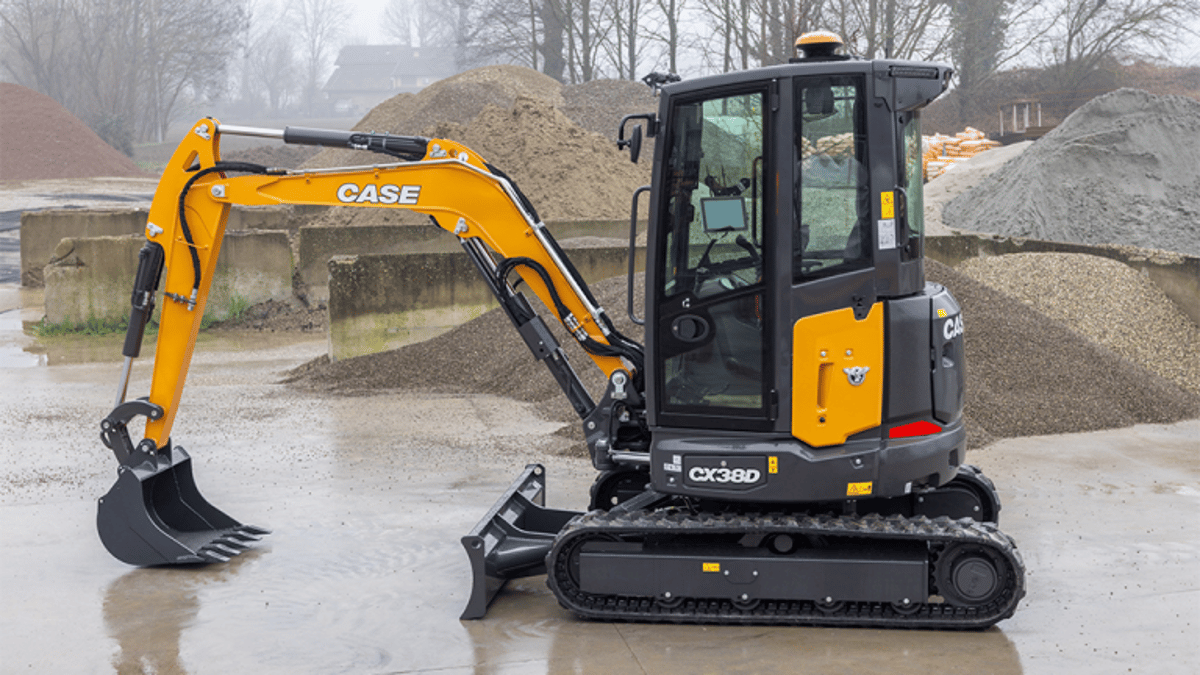
CASE Enhances D Series Mini Excavator Lineup with Three Next-Gen Models
Why It Matters
The upgrades give contractors higher efficiency in confined spaces, expanding CASE’s appeal in the competitive mini‑excavator market.
Key Takeaways
- •Zero‑tailswing design enables work beside walls and structures.
- •Automotive‑style cab improves operator comfort and visibility.
- •CX38D offers optional six‑way dozer blade for grading tasks.
- •Multi‑circuit hydraulics support power‑hungry attachments.
- •New models target 3‑ton class, expanding CASE’s market share.
Pulse Analysis
The global mini‑excavator segment is booming as urban construction projects demand machines that can maneuver in ever tighter spaces. Operators increasingly value equipment that combines compact dimensions with high productivity, and manufacturers are racing to embed automotive‑level comfort into traditionally utilitarian rigs. CASE Construction Equipment, a long‑standing player in heavy machinery, has responded with a refreshed D Series that directly addresses these market pressures. By introducing zero‑tailswing geometry and a cab modeled after passenger‑car ergonomics, the company positions its new CX30D, CX34D and CX38D models to capture contractors seeking both agility and operator satisfaction.
Beyond the physical footprint, the next‑generation D Series distinguishes itself through a versatile hydraulic architecture. All three models feature multi‑way hydraulic circuits, enabling quick swaps between buckets, thumbs, trenchers and other tools without extensive re‑routing. The top‑of‑the‑line CX38D adds an optional six‑way dozer blade and a constant‑flow circuit, allowing power‑intensive attachments such as hydraulic breakers to run at full capacity. Coupled with electronic throttle control, auto‑idle and a robust undercarriage, these enhancements promise smoother cycles, reduced fuel consumption and higher cycle times on confined‑site tasks.
From a business perspective, CASE’s refreshed lineup could sharpen its competitive edge against rivals like Bobcat, Kubota and JCB, which have also rolled out zero‑tailswing mini excavators. The added comfort and attachment flexibility may translate into higher rental rates and longer equipment lifespans, improving profitability for contractors. Moreover, the 3‑ton class fills a niche between ultra‑compact units and larger 5‑ton machines, potentially expanding CASE’s addressable market by 10‑15 percent. As infrastructure spending accelerates, the new D Series positions CASE to benefit from both new‑build projects and equipment replacement cycles.
CASE enhances D Series mini excavator lineup with three next-gen models
Comments
Want to join the conversation?
Loading comments...