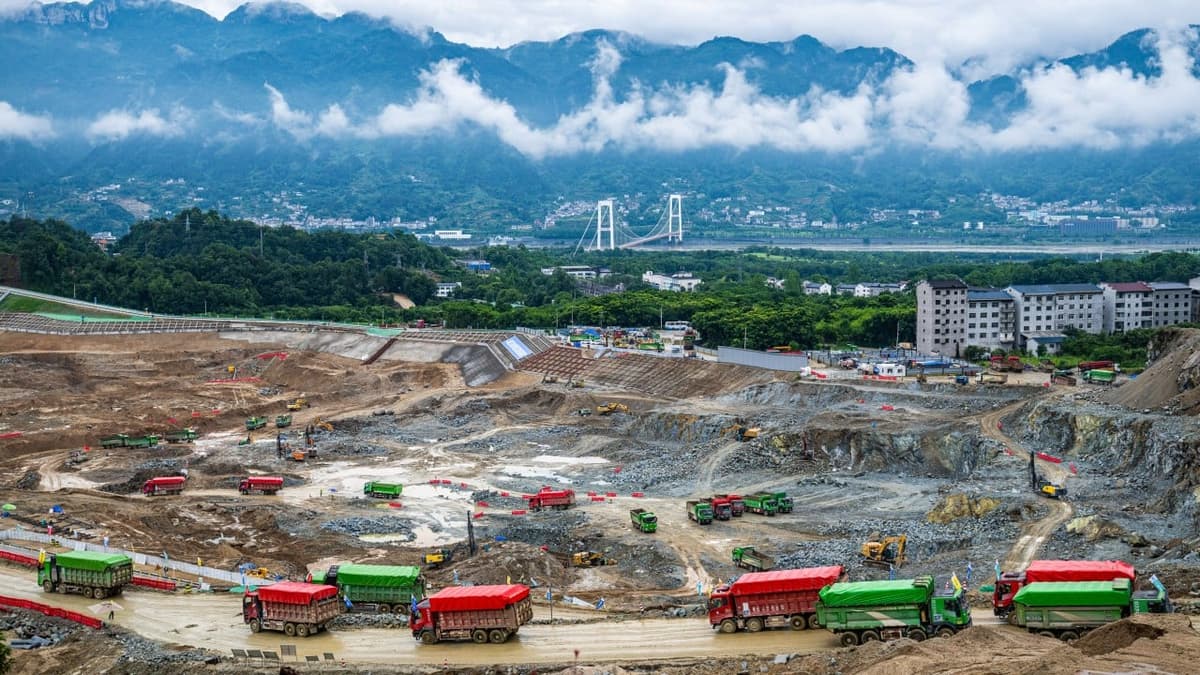
China to Bust Yangtze River Chokepoint with US$11 Billion ‘Water Staircase’ Project
Why It Matters
Eliminating the Three Gorges bottleneck will cut transit times, lower shipping costs, and strengthen China’s domestic supply chains, supporting sustained economic growth.
Key Takeaways
- •$11.4 billion water‑staircase to replace aging Three Gorges locks.
- •Locks will enable larger vessels, easing current capacity constraints.
- •Project spans nearly a decade, embedded in 2026‑2030 five‑year plan.
- •Improves connectivity between Chongqing, Wuhan, Nanjing, and Shanghai.
- •Expected to lower logistics costs and boost Yangtze‑Delta industrial output.
Pulse Analysis
The Yangtze River, Asia’s longest waterway, has become a critical artery for China’s internal trade, moving millions of tons of cargo annually between inland manufacturing centers and the coastal export hubs. Existing lock systems, built in the early 2000s, now struggle with a surge in vessel size and volume, creating delays that ripple through supply chains. By quantifying the bottleneck’s economic cost—estimated in billions of dollars in lost efficiency—policy makers have justified a massive infrastructure overhaul.
The newly approved water‑staircase, a series of mega ship locks, leverages cutting‑edge hydraulic engineering to lift vessels up to 180 meters, far exceeding the capacity of the current Three Gorges lift. Comparable projects such as the Panama Canal expansion demonstrate how lock upgrades can unlock new trade routes and attract larger, higher‑value cargoes. Integrating the staircase into the 15th Five‑Year Plan signals Beijing’s commitment to long‑term logistical resilience, with construction slated to run for close to ten years and involve both domestic firms and foreign technology partners.
Beyond easing congestion, the project is poised to reshape regional economics. Faster, cheaper river transport will lower production costs for factories in the Chongqing‑Wuhan corridor, encouraging further industrial clustering. The downstream Yangtze‑Delta, already a global manufacturing powerhouse, stands to gain from increased inbound freight efficiency, bolstering its export competitiveness. While financing, environmental safeguards, and coordination across multiple jurisdictions present challenges, the water‑staircase exemplifies China’s strategic use of mega‑infrastructure to sustain growth and reinforce its position in global supply chains.
China to bust Yangtze River chokepoint with US$11 billion ‘water staircase’ project
Comments
Want to join the conversation?
Loading comments...