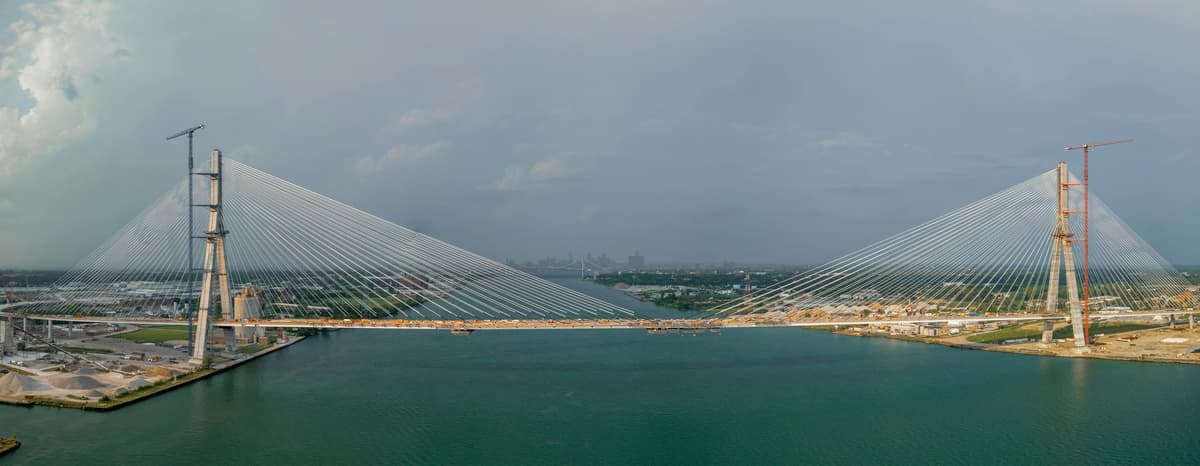
Construction Is Nearly Complete, but Gordie Howe Bridge Still Awaits Green Light
Why It Matters
The bridge will expand trade capacity and provide a modern toll crossing, but political delays could postpone the economic gains and disrupt supply‑chain reliability for both the United States and Canada.
Key Takeaways
- •Construction and testing of the $4.7 B bridge will finish within days.
- •Final approvals needed from U.S., Michigan, and Canadian agencies before opening.
- •Former President Trump's threat could delay opening despite DHS readiness.
- •Bridge will add a third Detroit‑Windsor crossing, boosting trade capacity.
Pulse Analysis
The Gordie Howe International Bridge, a $4.7 billion cable‑stayed structure, marks the most ambitious cross‑border infrastructure project between the United States and Canada in decades. After eight years of construction, the bridge’s main span—North America’s longest of its type—is 98% complete, and systems testing is slated to conclude within days. Its design includes state‑of‑the‑art customs plazas and highway connectors on both sides, promising faster clearance for passenger and commercial vehicles and a new revenue stream through tolls.
Despite the engineering milestones, the bridge’s opening hinges on a complex web of regulatory sign‑offs. Approvals from the Federal Highway Administration, the U.S. Department of Transportation, Michigan’s state agencies, and Canadian counterparts are still pending. The political dimension sharpened when former President Donald Trump threatened to block the crossing in response to a trade dispute, raising concerns that federal backing could be withdrawn. While the Department of Homeland Security has signaled operational readiness, any lingering political friction could delay the final green light, illustrating how infrastructure projects remain vulnerable to policy swings.
When operational, the bridge will become the third Detroit‑Windsor link, alleviating pressure on the aging Ambassador Bridge and the tunnel. Analysts project that the new crossing could increase bilateral trade flow by up to 15%, reduce freight bottlenecks, and attract logistics firms seeking more reliable routes. The toll model also offers a sustainable financing mechanism, with revenue shared equally between Michigan and Canada after the latter recoups its construction debt. In a broader context, the bridge underscores the strategic importance of North American supply‑chain resilience and may set a precedent for future joint infrastructure ventures.
Construction Is Nearly Complete, but Gordie Howe Bridge Still Awaits Green Light
Comments
Want to join the conversation?
Loading comments...