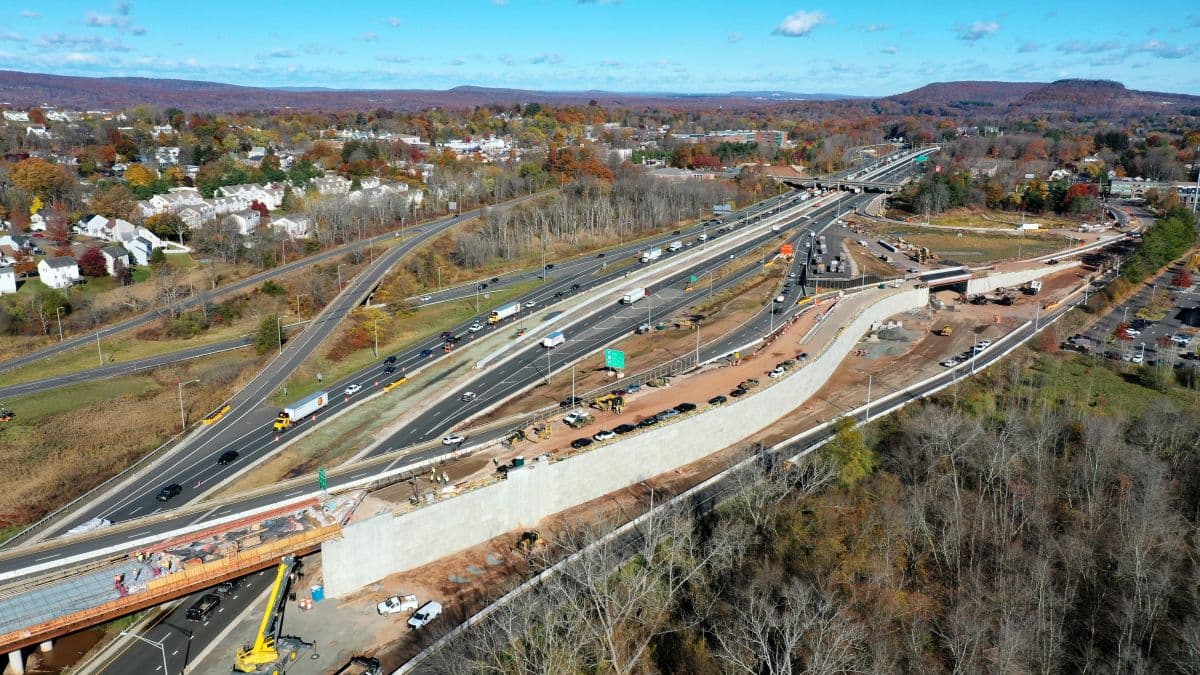
CTDOT Announces Milestones, Next Steps for Interchange Project in Meriden
Why It Matters
The project improves a critical transportation corridor, reducing travel delays for commuters and freight, which bolsters Connecticut’s economic competitiveness. Delivering the work on‑time and on‑budget demonstrates effective use of federal infrastructure dollars.
Key Takeaways
- •Phase one finished on time, $83.7M state‑funded.
- •Phase two on track for 2028, $250M total funding.
- •Full project slated for 2030, total cost > $712M.
- •New ramps aim to cut congestion on I‑91, I‑691, Route 15.
- •80% federal funding from 2021 Infrastructure Investment and Jobs Act.
Pulse Analysis
The I‑91, I‑691 and Route 15 interchange is a linchpin for central Connecticut’s mobility, linking major north‑south and east‑west corridors that move commuters, tourists, and freight. Decades of capacity constraints have led to frequent bottlenecks, especially at the Exit 68 and Exit 17 ramps. By adding two‑lane ramps, realigning merges, and replacing aging bridges, the project directly addresses these choke points, promising smoother traffic flow and shorter travel times for the region’s 150,000‑plus daily vehicle trips.
Funding for the $712 million initiative illustrates how the 2021 Infrastructure Investment and Jobs Act is being leveraged at the state level. Roughly 80% of the budget comes from federal sources, complemented by state allocations that cover the remaining share. A project labor agreement ensures that the construction workforce receives good‑paying jobs, fostering local skill development and supporting the broader goal of a resilient, American‑made supply chain. The infusion of federal dollars also signals confidence in Connecticut’s ability to manage large‑scale infrastructure projects efficiently.
When completed in 2030, the reconfigured interchange is expected to boost economic activity by improving the movement of goods across the state, a factor that can attract logistics firms and manufacturing investments. Reduced congestion translates into lower fuel consumption and emissions, aligning with regional sustainability targets. While construction will continue to require careful traffic management, the phased approach—maintaining traffic flow through overnight work—aims to minimize disruption. Overall, the project positions Connecticut’s central corridor as a modern, high‑capacity artery ready to support future growth.
CTDOT Announces Milestones, Next Steps for Interchange Project in Meriden
Comments
Want to join the conversation?
Loading comments...