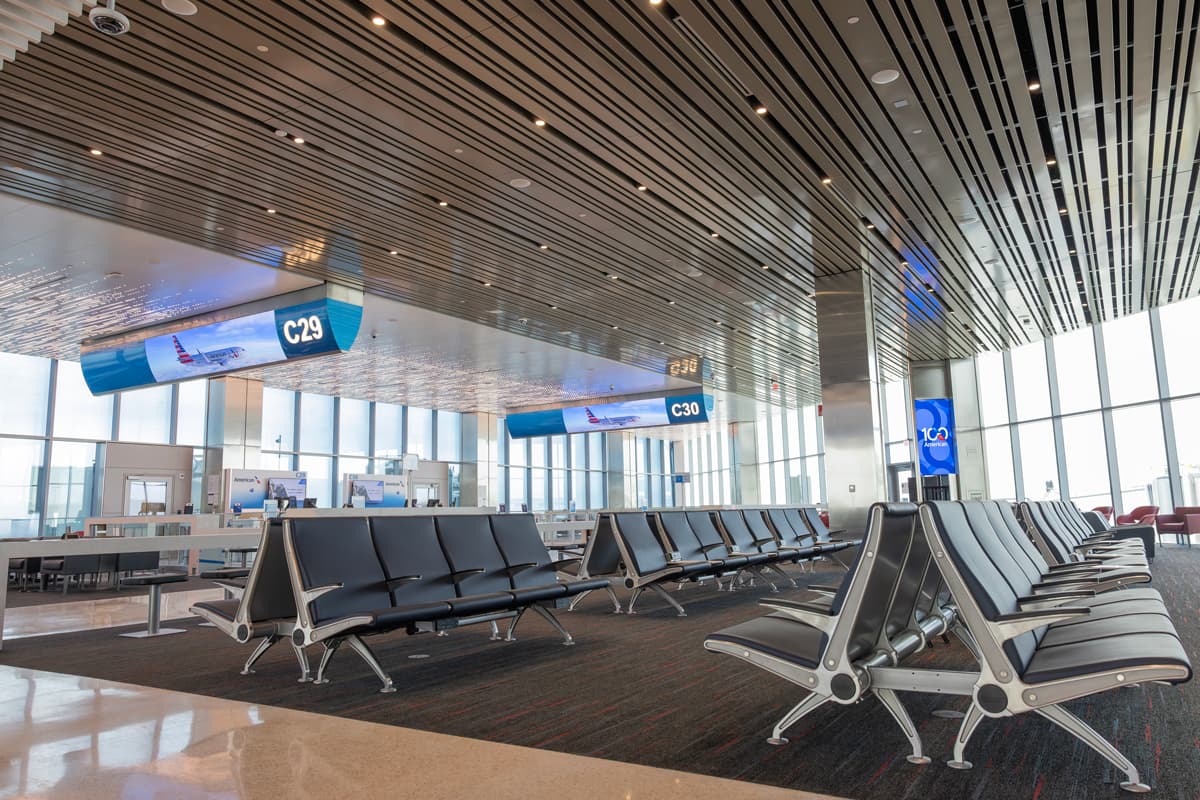
Dallas Fort Worth Airport Terminal C Pier Opens as First Milestone in $3 Billion Hub Transformation
Companies Mentioned
Why It Matters
The new pier expands capacity and introduces digital boarding, improving passenger flow and operational efficiency at one of the nation’s busiest hubs. It also showcases modular construction as a low‑disruption model that other airports are likely to emulate.
Key Takeaways
- •Terminal C pier adds nine electronic boarding gates, four new.
- •Modular construction moved 1,200‑ton modules overnight, minimizing disruption.
- •DFW's $9 billion Forward plan includes 32 gates by 2030.
- •American Airlines first U.S. carrier using dormakaba electronic gates at hub.
- •Expansions at Terminals A and F boost DFW hub status.
Pulse Analysis
Dallas Fort Worth International Airport (DFW) has long been a linchpin in American air travel, handling roughly 200 departures per day and ranking among the world’s busiest hubs. The Terminal C pier opening not only adds nine high‑tech boarding gates but also introduces dynamic glass, higher ceilings, and upgraded concessions, directly enhancing the passenger experience. By expanding capacity at the airport’s oldest terminal, DFW reinforces its competitive edge against other major hubs such as Atlanta and Chicago, positioning itself to capture growing traffic from both legacy carriers and low‑cost airlines.
The project’s most striking feature is its reliance on off‑site modular construction. Six megastructure modules, the largest measuring 204 ft × 68 ft and weighing about 1,200 tons, were fabricated away from the active terminal and moved across closed runways overnight. This approach slashed on‑site labor time, reduced noise, and eliminated the typical construction‑related flight delays that plague live‑operation airports. As airports nationwide grapple with aging infrastructure, DFW’s method offers a replicable blueprint—Cleveland’s $1.6 billion CLEvolution program, for example, is already exploring similar modular tactics.
Strategically, the pier is the first milestone in a $9 billion Forward capital plan that will see Terminal C fully rebuilt, a new Terminal F added, and further expansions at Terminals A and B by 2030. The deployment of dormakaba electronic boarding gates marks the first large‑scale U.S. adoption of this technology, promising faster boarding cycles and reduced staffing costs. Collectively, these investments signal DFW’s intent to remain a top‑tier hub, attract additional airline routes, and set a new standard for smart, resilient airport design in the United States.
Dallas Fort Worth Airport Terminal C Pier Opens as First Milestone in $3 Billion Hub Transformation
Comments
Want to join the conversation?
Loading comments...