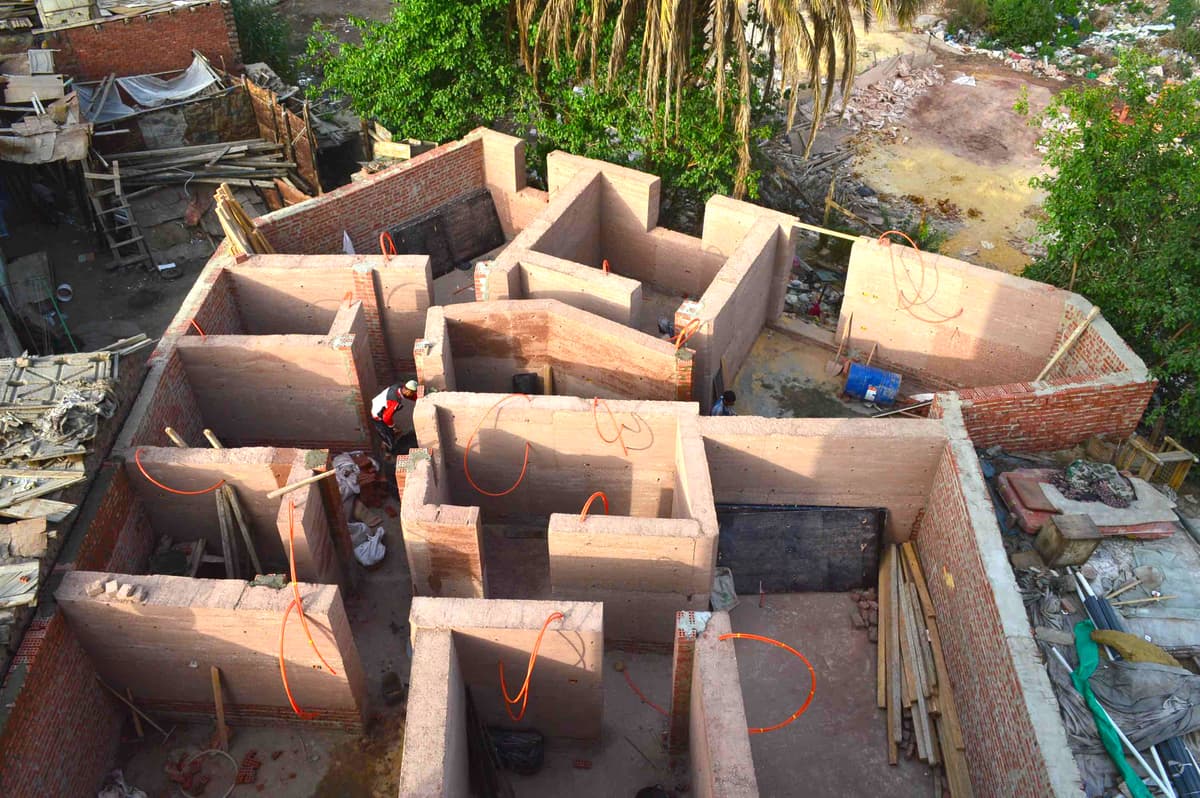
“Earth Is Not Nostalgia”: Hand Over on Design-Build and Local Materials
Why It Matters
The firm proves that low‑impact, locally sourced building methods can gain cultural acceptance and scale in fast‑growing markets, reshaping how developers and policymakers view affordable, sustainable construction.
Key Takeaways
- •Hand Over won 2025 ArchDaily Next Practices Awards
- •Uses design‑build model to integrate earth, stone, geopolymers
- •Demonstrated cultural shift after El Ezba survived first rain
- •Trains local workers, embedding knowledge in communities
- •Targets sustainability through replication, not just single projects
Pulse Analysis
The emergence of integrated design‑build studios like Hand Over reflects a broader shift in architecture toward blurring the line between design and construction. In regions where traditional contracting firms lack expertise in low‑impact materials, firms that control both the creative and execution phases can iterate faster, reduce cost overruns, and embed sustainability from the outset. Hand Over’s recognition by ArchDaily underscores how award platforms are now spotlighting practices that marry research, community engagement, and material innovation, signaling a new benchmark for emerging firms worldwide.
In Egypt, the cultural narrative around building materials has long favored concrete as a symbol of progress, relegating earth to a stigma of poverty. Hand Over’s El Ezba project turned that narrative on its head when the rammed‑earth structure withstood the first heavy rainfall, offering a tangible proof point for residents. This experiential validation not only altered perception but also created a living showcase for public institutions and donors seeking resilient, climate‑responsive housing. By positioning buildings as communication tools, the studio leverages architecture’s social dimension to accelerate acceptance of alternative construction methods.
Sustainability for Hand Over extends beyond material choice; it is measured by the diffusion of knowledge and the replication of techniques across villages and private homes. The studio’s training of local laborers, workshops with students, and nascent carbon‑footprint calculations illustrate a holistic approach that aligns environmental performance with socioeconomic uplift. As funding agencies and municipalities demand quantifiable impact, the move toward life‑cycle assessment and post‑occupancy studies will be critical for scaling such models. Hand Over’s trajectory suggests that the next wave of sustainable architecture will be defined less by isolated green certifications and more by replicable, community‑owned processes that lower emissions while fostering local economies.
“Earth Is Not Nostalgia”: Hand Over on Design-Build and Local Materials
Comments
Want to join the conversation?
Loading comments...