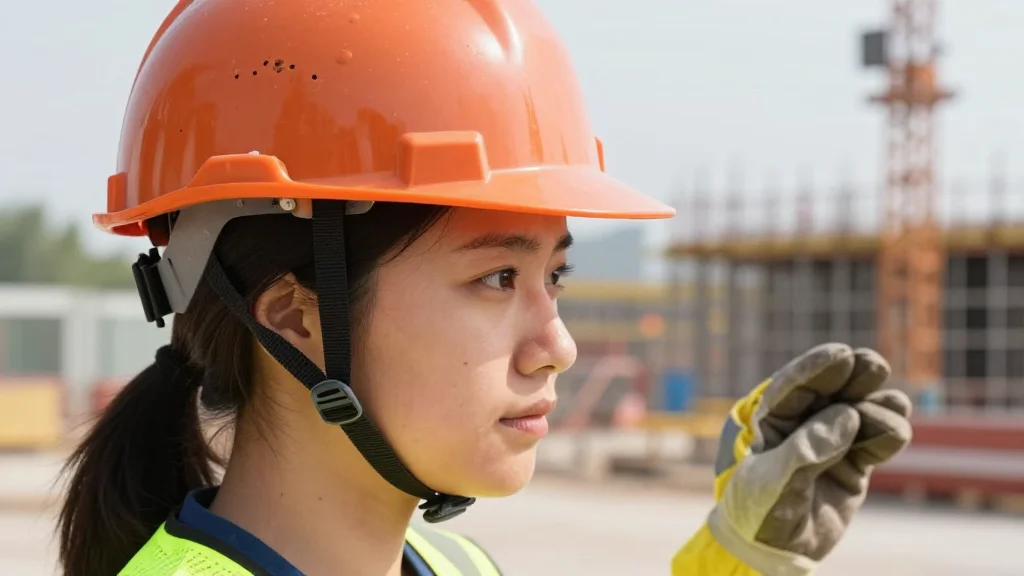
EDF and JCB Back Charter to Protect 250,000 Women with Inclusive PPE
Companies Mentioned

Why It Matters
Inclusive PPE directly improves safety outcomes for a growing segment of the construction workforce and forces employers to address a long‑standing gender equity gap, influencing procurement and regulatory practices industry‑wide.
Key Takeaways
- •EDF, JCB, BAE, Bylor sign GMB inclusive PPE charter
- •Survey finds 70% of women wear ill‑fitting PPE
- •BS 30417 standard guides inclusive PPE design and procurement
- •MPs demonstrated ill‑fitting gear in Parliament to raise awareness
- •GMB urges firms to embed inclusive PPE in procurement contracts
Pulse Analysis
The construction sector has long struggled with a one‑size‑fits‑all approach to safety gear, leaving women disproportionately exposed to ill‑fitting equipment. A recent GMB survey revealed that seven out of ten female workers consider their PPE uncomfortable or unsafe, a statistic that underscores a hidden risk factor on sites ranging from high‑rise builds to nuclear projects like Hinkley Point C. By spotlighting the human cost—injury, embarrassment, and reduced productivity—industry leaders are now recognizing that gender‑responsive design is as much a safety imperative as it is a matter of dignity.
Regulatory momentum is building around inclusive PPE. The British Standards Institute, together with the Chartered Institute of Building, released BS 30417, a guideline that clarifies design requirements and supply‑chain responsibilities for minority‑group equipment. Parallel to this, a Ten‑Minute Rule Bill introduced by MP Kirsteen Sullivan seeks to codify these expectations within public‑sector procurement, potentially making inclusive PPE a legal prerequisite for government‑funded projects. Such policy shifts could close the current loophole where standards merely recommend, rather than mandate, gender‑specific protection.
For manufacturers and contractors, the charter signed by EDF, JCB, BAE Systems and Bylor signals a market opening worth billions of dollars. Companies that can deliver PPE tailored to diverse body types stand to win contracts not only on private sites but also across the expanding public‑sector pipeline. Supply‑chain adjustments, from material sourcing to ergonomic testing, will become integral to bidding processes. As the industry embraces inclusive design, we can expect a cascade of innovation—lighter fabrics, adjustable harnesses, and data‑driven sizing—that will raise the overall safety bar while delivering a competitive edge to early adopters.
EDF and JCB back charter to protect 250,000 women with inclusive PPE
Comments
Want to join the conversation?
Loading comments...