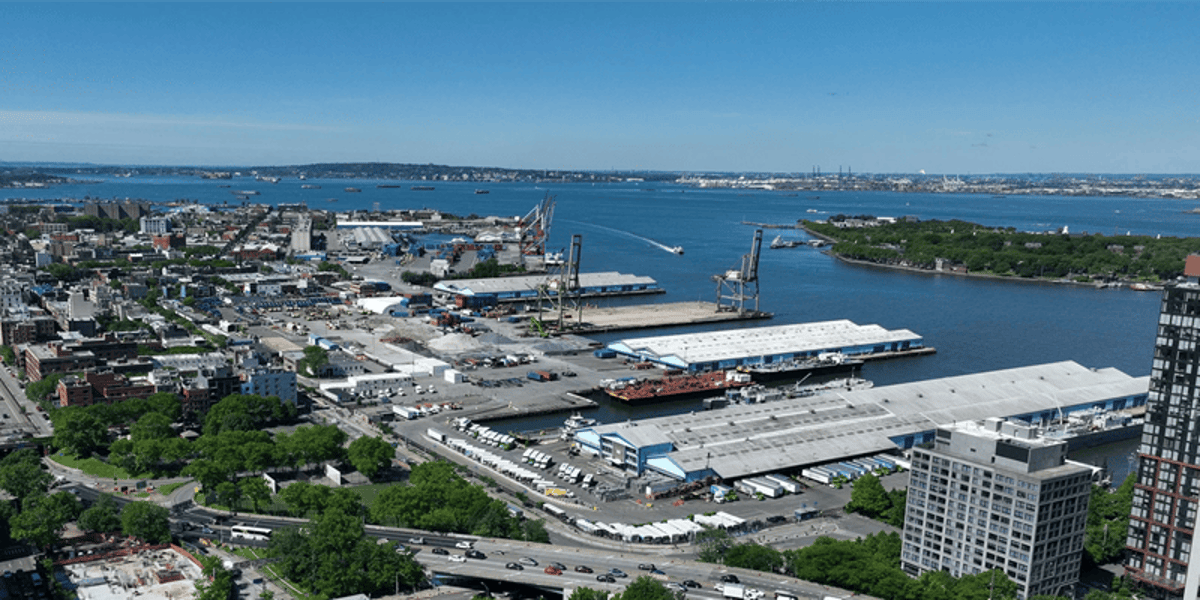
Embracing a Transformative Modern Vision for the Brooklyn Marine Terminal
Companies Mentioned
Why It Matters
The project repositions a underused waterfront asset as a catalyst for housing, climate‑resilient logistics and economic growth, addressing New York’s acute affordability and sustainability challenges.
Key Takeaways
- •NYCEDC secured $418M public capital for BMT revitalization.
- •Plan adds 6,000 housing units, 2,400 affordable.
- •New “Blue Highways” will shift food freight to barges, cutting emissions.
- •Project projects $18B economic impact and 37,000 construction jobs.
- •Ferry service to increase to three trips per hour.
Pulse Analysis
Brooklyn Marine Terminal, long a niche player handling less than 1.5% of the Port of New York and New Jersey’s container volume, has been handed to NYCEDC for a radical overhaul. The agency’s $418 million public‑funded package targets deferred maintenance, electrification of dock equipment, and the replacement of aging finger piers. By integrating modern maritime infrastructure with a robust mixed‑use strategy, the terminal is set to become the only east‑of‑Manhattan port that simultaneously supports freight and community needs.
At the heart of the plan is a housing push that will deliver 6,000 new units across the Atlantic Basin and BMT North sites, including 2,400 affordable apartments. Complementary amenities—250,000 sq ft of community facilities, 275,000 sq ft each of commercial and light‑industrial space, and up to 400 hotel rooms—aim to create a vibrant waterfront neighborhood. The upgraded ferry corridor, moving from one to three hourly trips, will improve connectivity, while the "Blue Highways" concept reroutes food‑grade containers onto barges for delivery to Hunts Point, slashing truck miles and associated emissions.
Economically, the redevelopment promises $18 billion in impact, generating 37,000 temporary construction jobs and 2,000 permanent operational roles. Beyond the balance sheet, the project advances climate resilience by preparing the site for sea‑level rise and reducing diesel reliance. If successful, BMT could serve as a template for other underutilized ports, demonstrating how strategic public investment can unlock housing, sustainable logistics, and long‑term fiscal health for a megacity.
Embracing a Transformative Modern Vision for the Brooklyn Marine Terminal
Comments
Want to join the conversation?
Loading comments...