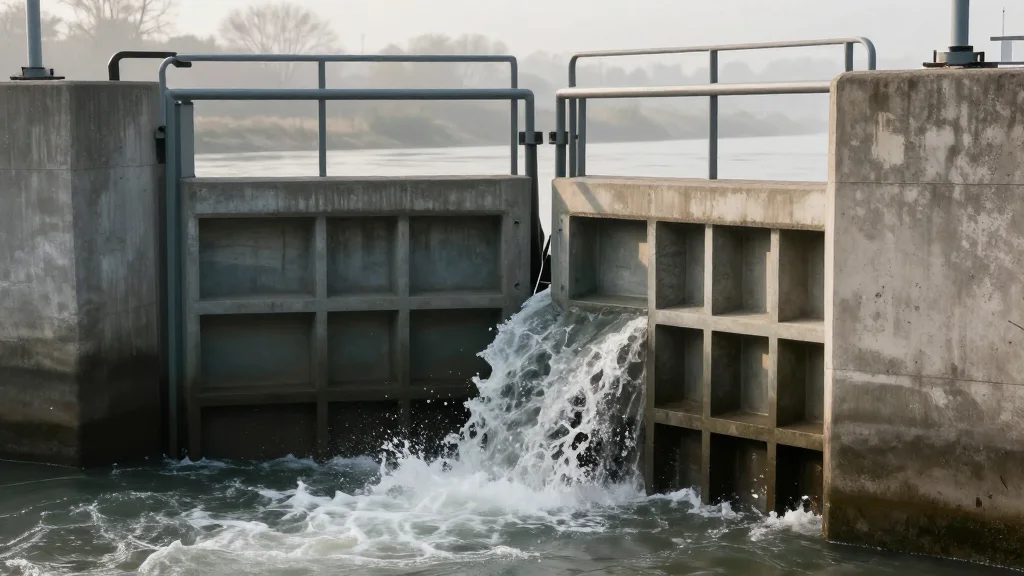
Environment Agency Appoints Consortium for New Flood Risk Framework
Why It Matters
The partnership equips the UK with the specialised expertise required to execute its largest flood‑defence funding programme, safeguarding communities, critical infrastructure and natural habitats. Effective delivery will enhance England’s climate‑resilience and demonstrate a scalable public‑private model for large‑scale risk mitigation.
Key Takeaways
- •AtkinsRéalis leads consortium for England’s FRAM framework
- •£10.5 bn (~$13.3 bn) flood‑defence investment targets 8 million properties
- •Contract covers technical, environmental, and programme‑management services
- •Consortium embeds experts to accelerate multi‑site flood and coastal projects
- •Framework supports climate‑resilient infrastructure and natural habitat protection
Pulse Analysis
England’s flood risk landscape is shifting dramatically as climate‑induced extreme weather events become more frequent. The Environment Agency’s latest National Flood Risk Assessment and Coastal Erosion Risk Map reveal that up to eight million properties could face flooding by 2050, prompting a government pledge of £10.5 billion (about $13.3 billion) to bolster defences. This unprecedented funding is channeled through the Flood Risk and Asset Management (FRAM) framework, a strategic platform designed to coordinate technical, environmental and programme‑management services across the country’s most vulnerable river and coastal catchments.
The newly appointed consortium—headlined by engineering giant AtkinsRéalis and supported by Stantec and Waterman—brings together a deep pool of multidisciplinary talent. By embedding engineers, ecologists and programme managers directly within the Agency, the team can streamline design approvals, accelerate construction schedules and ensure that ecological considerations are woven into every project. Their integrated supply chain approach promises cost‑effective solutions, from hard‑engineered flood barriers to nature‑based interventions that enhance habitats while reducing flood peaks.
For the broader market, the FRAM contract signals a growing appetite for collaborative, outcome‑focused procurement in the public sector. Private firms that can demonstrate both technical rigor and sustainability credentials are likely to win future infrastructure work as governments prioritize climate resilience. Moreover, the framework’s emphasis on flexible secondments and rapid mobilisation may set a new benchmark for how large‑scale environmental programmes are staffed, potentially reshaping talent pipelines across engineering and environmental consulting. Successful execution will not only protect communities but also reinforce the UK’s position as a leader in climate‑adaptation infrastructure.
Environment Agency appoints consortium for new flood risk framework
Comments
Want to join the conversation?
Loading comments...