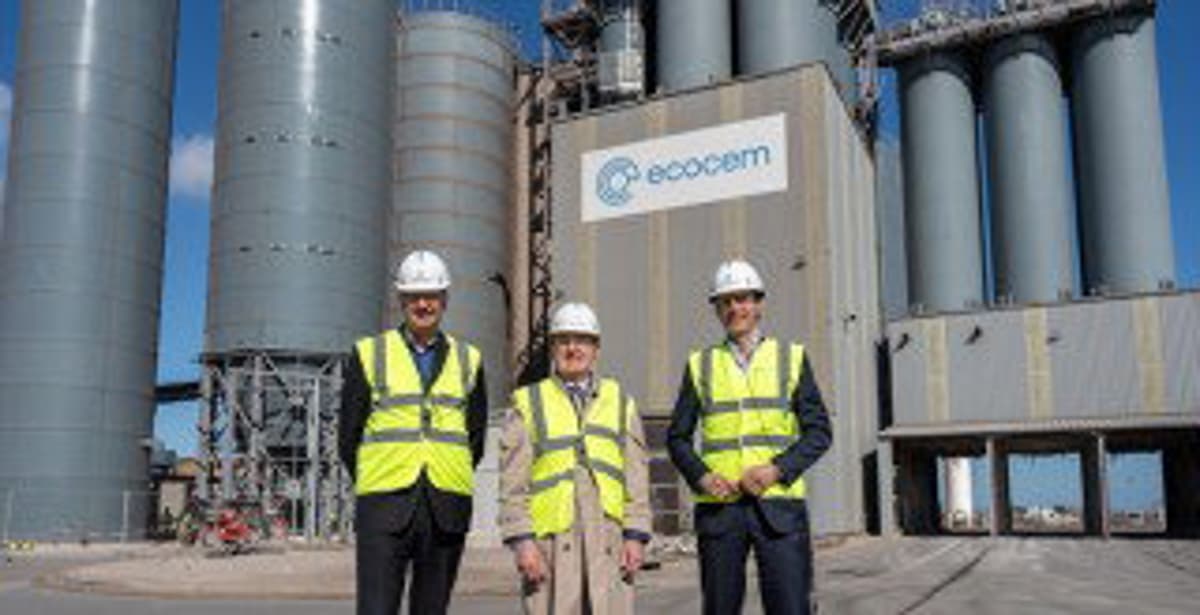
EU Climate Commissioner Visits Ecocem Flagship Plant in Dunkirk
Why It Matters
The visit signals EU commitment to industrial climate solutions, positioning low‑carbon cement as a competitive advantage for European manufacturers while accelerating progress toward climate targets.
Key Takeaways
- •€50 million (€≈$54 M) expands Dunkirk plant for ACT technology.
- •ACT aims to cut cement CO₂ emissions up to 70 %.
- •Plant will output 300,000 t low‑carbon cement by late 2026.
- •Ecocem’s €220 million (€≈$238 M) Europe‑wide rollout targets 2030 scale‑up.
- •Commissioner Hoekstra cites decarbonisation as competitiveness boost.
Pulse Analysis
The cement industry accounts for roughly 8 % of EU greenhouse‑gas emissions, making it a focal point of the bloc’s Green Deal. Low‑carbon alternatives such as Ecocem’s Alkali‑Activated Cement (ACT) replace traditional clinker with industrial by‑products, dramatically reducing the carbon intensity of the final product. By showcasing ACT at a high‑visibility plant, the EU signals that innovative materials are moving from laboratory to commercial scale, reinforcing policy incentives that favor climate‑friendly construction inputs.
The Dunkirk expansion, backed by a €50 million (about $54 million) investment, will enable the site to produce 300,000 tonnes of ACT cement annually by the end of 2026. This capacity boost is part of a €220 million (approximately $238 million) Europe‑wide funding program designed to create lead markets for low‑carbon building materials. The financial commitment reflects a strategic shift: the EU is not only subsidising research but also de‑risking scale‑up, ensuring that firms like Ecocem can meet growing demand from green‑building projects and public procurement rules that increasingly mandate carbon‑footprint reporting.
For the broader market, the move promises a dual payoff. First, it offers construction firms a viable pathway to meet tightening emissions standards without sacrificing performance, potentially lowering lifecycle costs. Second, it strengthens Europe’s industrial competitiveness by establishing a domestic supply chain for climate‑smart cement, reducing reliance on carbon‑intensive imports. As other regions grapple with similar decarbonisation pressures, the EU’s proactive stance could set a global benchmark, encouraging wider adoption of ACT technology and accelerating the transition to a low‑carbon built environment.
EU Climate Commissioner visits Ecocem flagship plant in Dunkirk
Comments
Want to join the conversation?
Loading comments...