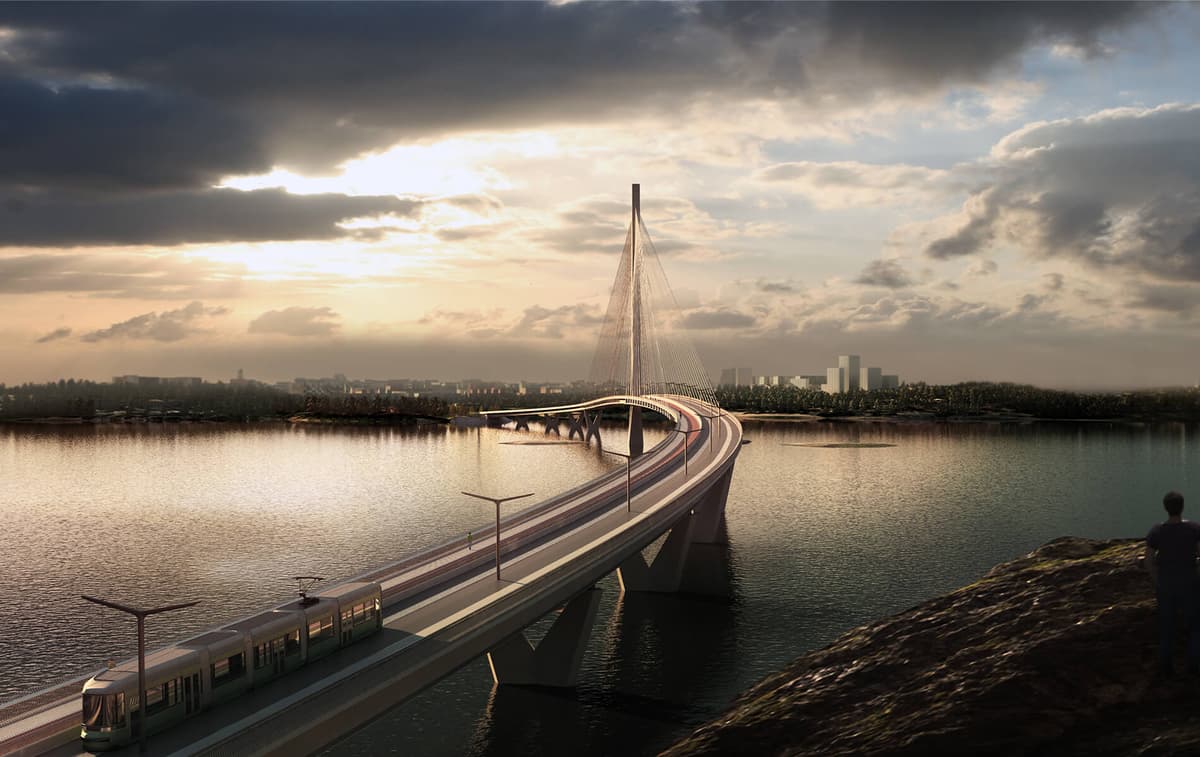
Finland’s Longest and Highest Bridge Opens to Public
Why It Matters
The bridge enhances sustainable mobility in Helsinki, offering a safe, year‑round route for cyclists and pedestrians while preparing for future tram service. It showcases advanced cold‑climate engineering that can be replicated in other northern cities.
Key Takeaways
- •Kruunuvuori bridge spans 1,191 m, tallest at 135 m in Helsinki
- •Designed for pedestrians, cyclists; tram service slated for 2027
- •Uses highly stressed steel and infrared concrete for durability
- •Central pylon features dynamic lighting that changes with time and season
- •Project managed by HTJ; built by YIT and Kreate, promising 200‑year lifespan
Pulse Analysis
Finland’s commitment to green urban transport is embodied in the Kruunuvuori bridge, a 1.2‑kilometre span that connects residential neighborhoods with Helsinki’s historic island of Korkeasaari. By prioritising pedestrians and cyclists, the city reduces reliance on cars and supports its broader climate goals, while the bridge’s striking design adds a new landmark to the capital’s skyline. The inclusion of a future tram line further integrates the structure into Helsinki’s multimodal network, promising smoother commutes and encouraging public‑transport adoption.
From an engineering perspective, the bridge is a showcase of cold‑climate innovation. Its cable‑stayed system incorporates highly stressed steel and infrared‑cured concrete, materials chosen to resist the heavy snow and ice loads typical of Nordic winters. The 135‑metre central pylon, illuminated with programmable LEDs, not only serves an aesthetic function but also enhances safety after dark. Such technical choices extend the bridge’s projected 200‑year lifespan, setting a benchmark for durability in harsh environments.
The economic and social ripple effects are significant. Improved connectivity between the city centre and Korkeasaari is expected to boost tourism to the island’s zoo and cultural venues, while the upcoming tram service will open new commuter corridors. For developers and city planners across Europe, Kruunuvuori offers a template for integrating pedestrian‑first infrastructure with future‑proof transit options, reinforcing the shift toward resilient, people‑centric urban design.
Finland’s longest and highest bridge opens to public
Comments
Want to join the conversation?
Loading comments...