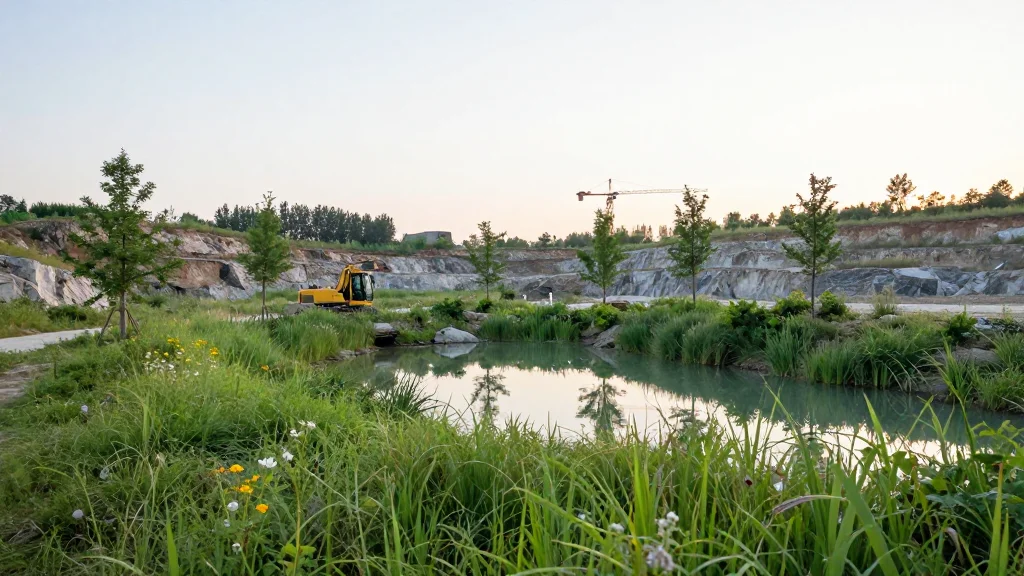
Former Quarry to Be Transformed Into Biodiversity Bank to Enable Infrastructure Development
Why It Matters
The habitat bank supplies a critical supply of BNG credits, easing compliance for developers while delivering long‑term ecological restoration on previously industrial land. It demonstrates a replicable model for turning exhausted quarries into revenue‑generating biodiversity assets.
Key Takeaways
- •29.5 ha Dalton Quarry to host grassland, wetland, woodland habitats.
- •30‑year stewardship: 5 years creation, 25 years management.
- •BNG units generated will offset biodiversity loss for developers.
- •GEDG retains Middlemarch Environmental for long‑term ecological monitoring.
- •Project demonstrates repurposing former mineral sites as valuable nature assets.
Pulse Analysis
The UK’s biodiversity net gain (BNG) policy, introduced in recent years, obliges new housing, commercial and infrastructure schemes to leave nature in a better state than before. To meet this requirement, a nascent market for BNG units has emerged, where dedicated habitat banks create, quantify and sell ecological credits. These credits allow developers to offset unavoidable impacts, streamlining planning approvals and reducing the need for on‑site mitigation. As the demand for BNG units accelerates, investors and environmental firms are seeking reliable, long‑term sources of biodiversity enhancement.
Dalton Quarry’s conversion epitomises this emerging model. Spanning 29.5 hectares, the former brick‑shale pit will be reshaped into a mosaic of grassland, wetland, woodland, hedgerow and aquatic habitats. GEDG’s 30‑year stewardship plan allocates the first five years to habitat creation—restoring natural drainage, establishing species‑rich meadows, and improving stream corridors—followed by 25 years of active management and scientific monitoring by Middlemarch Environmental, part of Warwickshire Wildlife Trust. Ibstock, the quarry’s owner, leverages its legacy of responsible land restoration to support the project, reinforcing its community ties while unlocking a new revenue stream from BNG unit sales.
Beyond the immediate site, the Dalton Quarry initiative signals a broader shift in how the UK can reconcile development pressure with ecological recovery. Former mineral sites, often situated near urban growth corridors, present low‑conflict opportunities for large‑scale habitat creation, reducing the need to encroach on pristine landscapes. By monetising biodiversity through BNG units, such projects can attract private capital, create local jobs, and deliver measurable environmental benefits. If replicated nationwide, habitat banks could become a cornerstone of the country’s strategy to meet housing targets while reversing decades of ecological decline.
Former quarry to be transformed into biodiversity bank to enable infrastructure development
Comments
Want to join the conversation?
Loading comments...