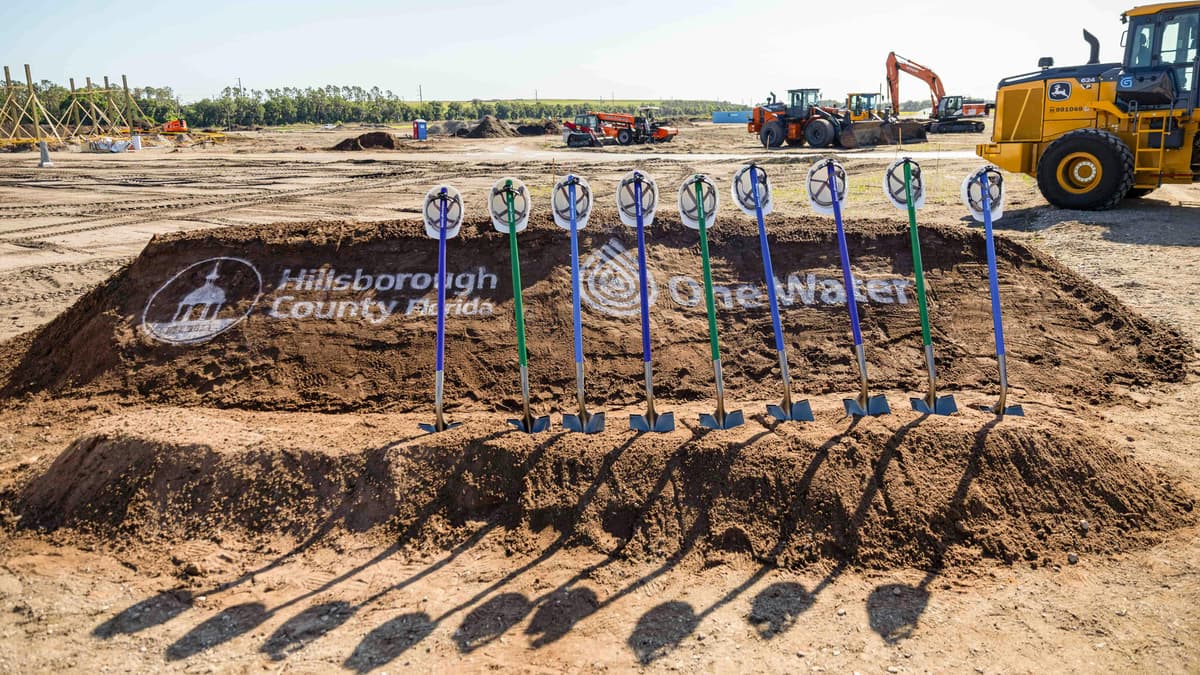
Garney Breaks Ground on Hillsborough County’s Largest Wastewater Project
Why It Matters
The project secures critical water‑treatment capacity for a rapidly growing Tampa region while advancing sustainable water‑reuse and setting a benchmark for large‑scale infrastructure delivery.
Key Takeaways
- •24 MGD treatment plant expandable to 30 MGD.
- •54 MGD lift station includes 5‑million‑gallon emergency tank.
- •Over 20 miles of wastewater and reclaimed‑water pipelines installed.
- •Project uses progressive design‑build for faster coordination.
- •Full completion slated for 2030, boosting regional water reuse.
Pulse Analysis
Tampa’s expanding population and climate‑driven water stress have pushed Hillsborough County to prioritize resilient infrastructure. By adding a 24‑million‑gallon‑per‑day advanced treatment facility that can scale to 30 MGD, the county not only meets current sewage demands but also creates a reliable source of reclaimed water for irrigation, industrial use, and future growth. The inclusion of a 54 MGD super lift station and extensive pipeline network ensures efficient conveyance and storage, reinforcing the region’s long‑term water security.
The project’s progressive design‑build model, led by Garney in concert with Hazen & Sawyer, exemplifies how early alignment of owners and engineers can compress schedules and reduce risk. By integrating design and construction phases, the team achieved tighter coordination, faster decision‑making, and cost‑effective value engineering—advantages that traditional delivery methods often lack. This collaborative framework also allowed the incorporation of sustainability goals, such as energy‑efficient treatment processes and advanced monitoring systems, without sacrificing timeline or budget.
Beyond the immediate engineering feats, the One Water – South initiative signals a broader shift toward circular water economies in the Southeast. Reclaimed‑water pipelines feed into municipal reuse programs, lowering reliance on freshwater withdrawals and supporting drought‑resilient landscaping and industrial operations. The project’s $‑billion‑scale investment is expected to generate local jobs, stimulate ancillary services, and attract businesses seeking robust utility infrastructure. As other jurisdictions observe Hillsborough’s approach, the model may catalyze similar large‑scale, design‑build water projects across the United States.
Garney breaks ground on Hillsborough County’s largest wastewater project
Comments
Want to join the conversation?
Loading comments...