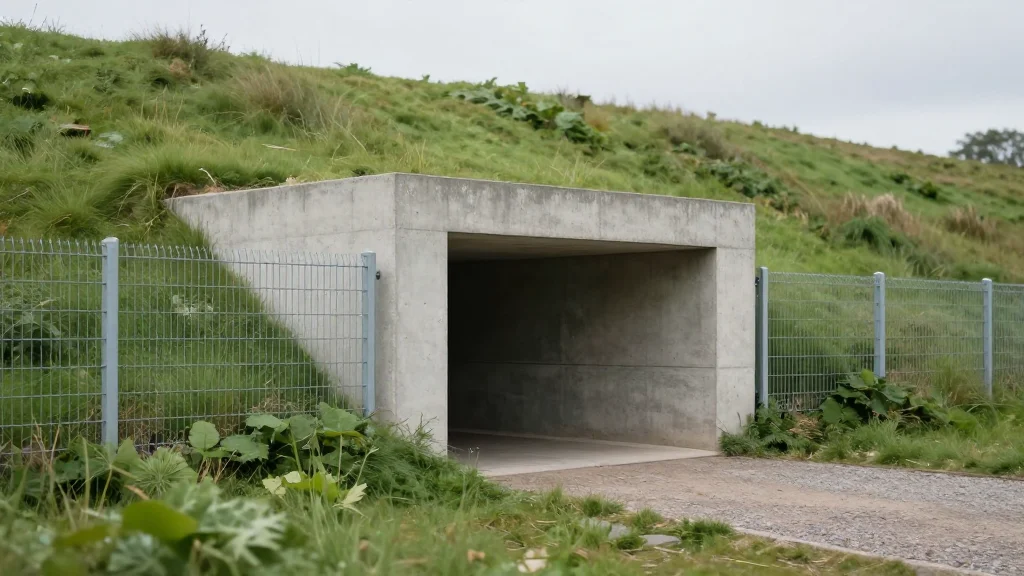
Government Nearing Decision to Select Site for Nuclear Waste Facility
Why It Matters
Choosing a permanent nuclear waste repository is essential for the UK’s energy transition and public safety, and the policy shift could speed up the programme while reshaping community dynamics.
Key Takeaways
- •Government close to selecting Cumbria site for nuclear waste facility
- •Consent‑based siting may be abandoned in favor of geological suitability
- •Decision deadline Q4 2025/26 missed; approval needed from Secretary of State
- •Facility projected to cost £2 bn (~$2.5 bn) and create thousands of jobs
Pulse Analysis
The United Kingdom has long wrestled with the challenge of safely isolating high‑level nuclear waste. Under the Nuclear Decommissioning Authority, the Geological Disposal Facility (GDF) is intended to house waste for up to 100,000 years, a timeline that far exceeds the lifespan of most infrastructure projects. Historically, the UK adopted a "consent‑based" siting model, requiring a willing host community before any deep‑borehole investigations could begin. This approach has stalled progress, as several prospective sites—most notably South Holderness and Lincolnshire—have withdrawn, leaving policymakers searching for a viable path forward.
Recent developments suggest a strategic pivot. The appointment of Nuclear Waste Services CEO Seth Kybird as senior responsible officer, coupled with internal deadlines that have already lapsed, signals that the government may prioritize geological suitability over community consent. Sources indicate that discussions are underway to favor regions with optimal rock formations, potentially accelerating the selection process. While this could reduce political friction, it also raises concerns about local opposition and the legitimacy of bypassing the consent framework, especially as the next local elections loom.
Economically, the GDF represents a multi‑billion‑pound investment—roughly $2.5 bn—promising thousands of skilled jobs in construction, engineering, and long‑term operations. Interim funding is likely to be sought to maintain momentum while full business cases are refined. If the Cumbria sites are confirmed, the region could experience a significant boost in high‑tech employment and ancillary services, positioning the UK as a leader in nuclear waste management. The decision will also set a precedent for how other nations balance technical criteria with community engagement in the era of expanding nuclear energy portfolios.
Government nearing decision to select site for nuclear waste facility
Comments
Want to join the conversation?
Loading comments...