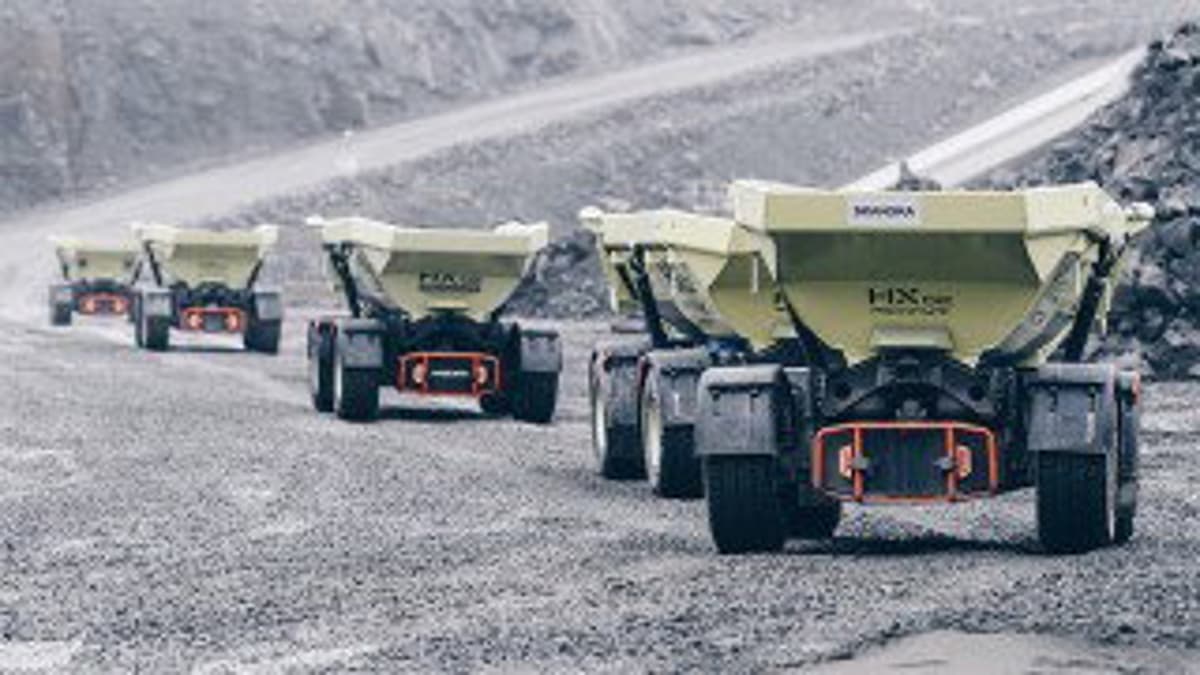
Heidelberg Materials Accelerates Global Deployment of Autonomous Heavy Equipment
Why It Matters
The expansion accelerates automation in construction, boosting safety and productivity while positioning Heidelberg as a leader in AI‑driven heavy‑machinery deployment.
Key Takeaways
- •30 autonomous vehicles slated for deployment by 2026 across six global sites
- •First autonomous wheel‑loader trial launched at a German sand‑gravel operation
- •Goal to operate 100+ driverless machines by 2028 underpins long‑term strategy
- •AI sensors enable seamless integration with existing equipment fleets
- •Projects span North America, Australia and Europe, showcasing worldwide rollout
Pulse Analysis
Heidelberg Materials' push into autonomous heavy equipment reflects a broader shift in the construction and aggregates sectors toward digitalization. After a pilot in Texas demonstrated reliable performance, the firm is now committing to a fleet of roughly 30 driverless machines by 2026. These vehicles—ranging from haul trucks to wheel loaders—leverage advanced lidar, radar and computer‑vision systems to navigate complex quarry and plant environments without human intervention. By proving the technology in diverse geographies, Heidelberg reduces the risk associated with a single‑market rollout and gathers data that will refine its AI models.
The upcoming deployments cover six strategic locations: two haulage sites in Indiana and Texas, new autonomous operations in Western Australia and New South Wales, and a wheel‑loader trial in northern Germany. Integrating these systems with existing fleets allows the company to standardize safety protocols, cut fuel consumption and achieve more consistent cycle times. Operators benefit from reduced exposure to hazardous conditions, while managers gain real‑time performance analytics that support predictive maintenance and tighter cost controls. The initiative also aligns with Heidelberg's sustainability goals, as autonomous equipment can optimize loading patterns and lower emissions.
Industry observers see Heidelberg's roadmap—aiming for over 100 autonomous vehicles by 2028—as a bellwether for the next wave of construction automation. Scaling driverless machinery addresses labor shortages, especially in remote sites, and sets a competitive benchmark for rivals. As AI and sensor technologies mature, the cost barrier diminishes, making large‑scale adoption feasible for mid‑size firms as well. Heidelberg's disciplined, partnership‑driven approach could accelerate sector‑wide standards for safety, data sharing, and regulatory compliance, reshaping how heavy‑mobile equipment is operated worldwide.
Heidelberg Materials accelerates global deployment of autonomous heavy equipment
Comments
Want to join the conversation?
Loading comments...