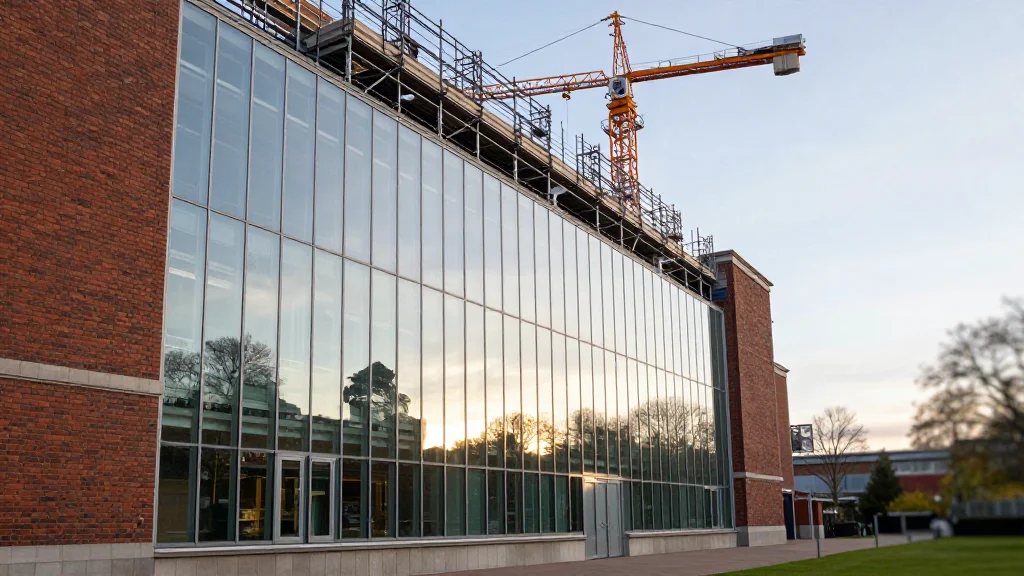
Historic England Backs Crystal Palace National Sports Centre Redevelopment
Why It Matters
The project demonstrates how historic sports venues can be modernized to meet contemporary performance standards, boosting community use and setting a benchmark for sustainable retrofits of listed buildings.
Key Takeaways
- •Historic England endorses redevelopment of iconic grade II* sports centre
- •Morgan Sindall to add padel courts, 3×3 basketball, five‑a‑side football
- •Renovations target energy efficiency, accessibility, and sustainable operation
- •New community space includes café, 200 m track, outdoor gym
- •Project balances heritage preservation with modern sports facility demands
Pulse Analysis
The Crystal Palace National Sports Centre, erected between 1960 and 1964 under the direction of modernist architect Leslie Martin, is one of Britain’s most celebrated post‑war public buildings. Its grade II* listing marks it as “particularly important”, reflecting both architectural innovation—the iconic concrete A‑frame—and its long‑standing role as a multi‑sport hub for London. As usage patterns evolve and climate‑change pressures intensify, many heritage venues face the dilemma of preserving cultural value while meeting contemporary performance standards. The recent endorsement by Historic England illustrates a growing policy shift toward integrating conservation with functional upgrades.
The redevelopment, led by Morgan Sindall, introduces a six‑court padel centre, 3×3 basketball courts, five‑a‑side football pitches and a full‑size artificial multi‑sport pitch, alongside a revamped 50 m pool, diving facilities and stadium stands. A new glazed partition separates wet and dry zones, improving indoor environmental quality without compromising the building’s open‑plan feel. Energy‑saving measures—enhanced insulation, upgraded mechanical systems and renewable‑energy integration—aim to cut carbon emissions dramatically. Complementary community amenities, including a café, a 200 m running track and an outdoor gym, broaden the centre’s appeal beyond elite athletes to local residents.
By marrying heritage preservation with cutting‑edge sustainability, the project sets a precedent for other listed sports complexes across the UK. The upgrade is expected to increase footfall, generate ancillary revenue for the Greater London Authority, and support the city’s ambition to host international events in venues that meet modern environmental criteria. Moreover, the initiative reinforces the economic case for adaptive reuse, demonstrating that historic structures can be revitalized without demolition. As urban planners seek resilient, community‑focused infrastructure, the Crystal Palace model may become a template for future public‑sector regeneration schemes.
Historic England backs Crystal Palace National Sports Centre redevelopment
Comments
Want to join the conversation?
Loading comments...