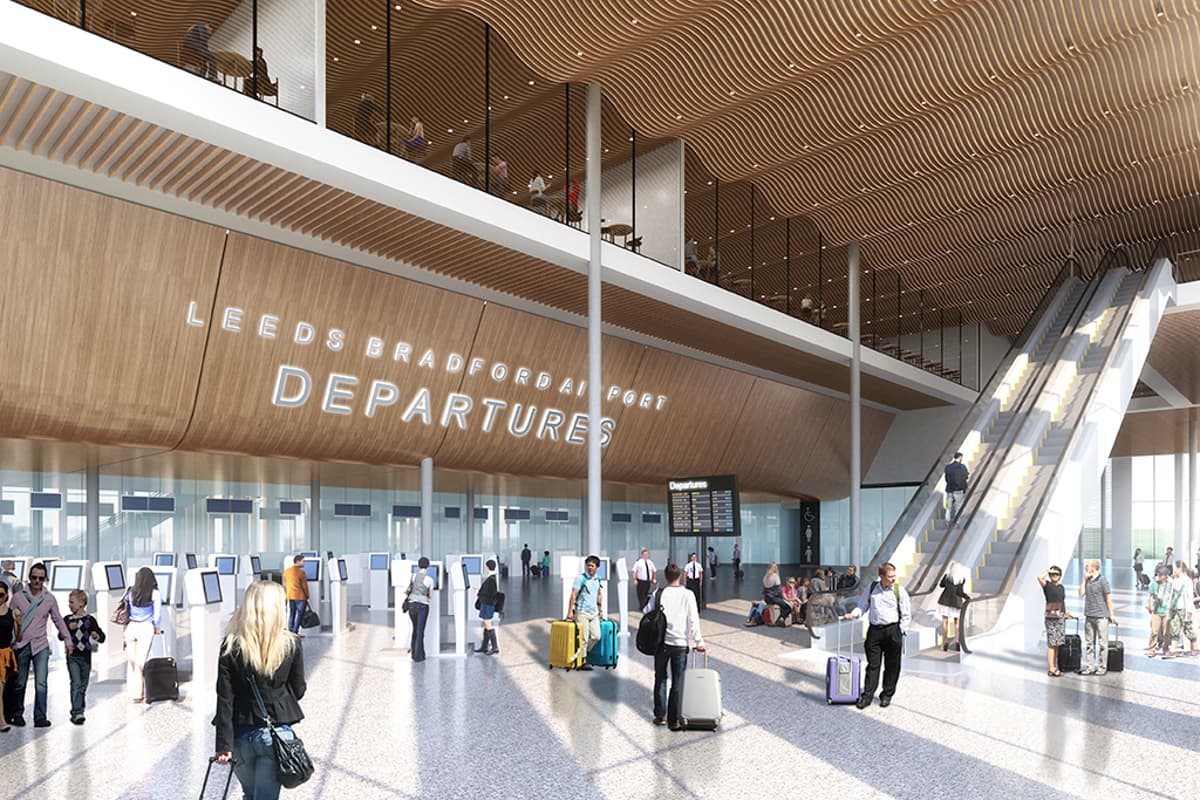
How Farrans Is Doubling the Size of Leeds Bradford Airport – While It Remains Operational
Why It Matters
The expansion positions LBA to handle 7 million passengers by 2030, boosting regional connectivity and economic growth, while demonstrating how large‑scale construction can be executed without halting airport operations.
Key Takeaways
- •Phase 1 added 9,500 sqm, new arrivals and UK Border Force facilities.
- •Phase 2 will double terminal size, targeting late‑2026 completion.
- •Construction kept 120 daily flights operational via staged work zones.
- •Used CMC piles and off‑site steel panels to manage sandstone ground.
- •85% of workforce sourced locally, supporting regional employment.
Pulse Analysis
Leeds Bradford Airport (LBA) is poised to become a pivotal hub in northern England as Farrans Construction drives a £100 million (£127 million) upgrade that will almost double the terminal footprint. The expansion aligns with the airport’s strategic goal of welcoming 7 million passengers by 2030, a target that promises to attract new airlines, increase tourism, and stimulate ancillary sectors such as logistics and hospitality. By modernising arrivals, baggage‑reclaim and duty‑free areas, LBA will improve passenger experience and operational efficiency, positioning it competitively against larger regional airports.
Executing a multi‑billion‑dollar‑scale renovation while maintaining 120 daily flights required innovative construction tactics. Farrans adopted Controlled Modular Construction (CMC) piles to navigate unexpected sandstone formations and avoid deep‑excavation delays. Off‑site fabrication of steel‑frame cladding reduced on‑site labor and minimized the risk of foreign‑object debris on runways. A phased demolition strategy, combined with temporary walkways and a rapid‑gate system, ensured that the flow of roughly 18,000 passengers per day remained uninterrupted, showcasing a blueprint for future airport upgrades where operational continuity is non‑negotiable.
Beyond LBA, the project underscores a broader industry shift toward resilient, low‑disruption infrastructure upgrades. The reliance on local subcontractors—85% of the workforce within a 20‑mile radius—highlights the economic multiplier effect of large construction contracts in regional economies. As airports worldwide grapple with aging facilities and capacity constraints, the LBA refurbishment offers a case study in balancing ambitious expansion, stringent safety standards, and community employment, setting a precedent for similar endeavors across the aviation sector.
How Farrans is doubling the size of Leeds Bradford Airport – while it remains operational
Comments
Want to join the conversation?
Loading comments...