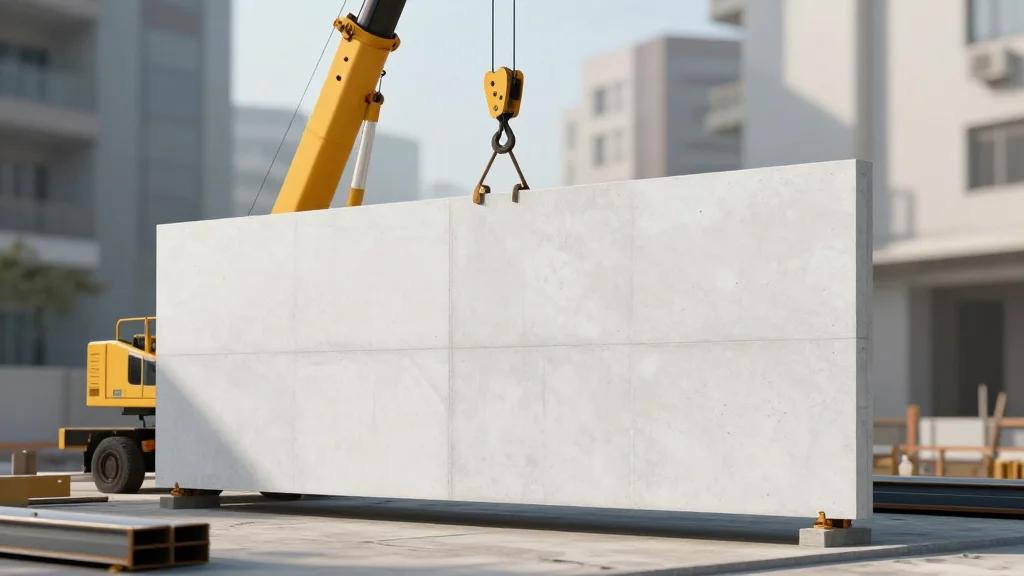
How Prefabrication Rescues Compressed Job Sites
Why It Matters
Off‑site assembly directly mitigates the biggest bottleneck on compressed sites—on‑site congestion—boosting productivity, quality and safety, which translates into tighter margins and protected revenue streams for developers and owners.
Key Takeaways
- •Prefabrication turns off‑site assembly into a schedule‑management tool
- •Parallel shop production reduces on‑site congestion and labor bottlenecks
- •Early‑sequenced modules improve inspection reliability and occupancy timelines
- •Controlled fabrication boosts quality control, cutting rework and safety incidents
Pulse Analysis
Compressed timelines have reshaped commercial construction, turning the job site into a logistical choke point rather than a simple build area. Owners now prioritize early turnover to protect revenue, while trades contend with limited access, overlapping scopes, and heightened safety constraints. In this climate, prefabrication is no longer a peripheral cost‑saving measure; it is a strategic scheduling lever that creates a parallel production stream outside the site perimeter, allowing critical systems to be fabricated under controlled conditions while the building envelope rises.
The operational upside is immediate. Off‑site modules—mechanical racks, pipe spools, duct sections, and equipment skids—can be sequenced to match floor‑by‑floor installation milestones, minimizing on‑site clutter and reducing the need for multiple trades to compete for the same space. This streamlined workflow improves productivity, cuts labor idle time, and enhances quality control because dimensions and tolerances are verified in a repeatable shop environment. Safety also benefits: fewer workers in confined or elevated zones mean fewer opportunities for accidents, a crucial advantage in occupied renovations, hospitals, or data centers where disruption carries high stakes.
For the industry, the shift signals a broader move toward integrated delivery models that treat prefabrication as a core discipline rather than an optional add‑on. Projects that embed off‑site assembly into their schedule logic see more reliable commissioning and occupancy dates, protecting cash flow and tenant satisfaction. As labor shortages persist and urban sites become increasingly constrained, the ROI of a robust prefabrication strategy—through reduced rework, accelerated hand‑over and lower incident costs—will drive wider adoption across mid‑size and large‑scale commercial builds.
How Prefabrication Rescues Compressed Job Sites
Comments
Want to join the conversation?
Loading comments...