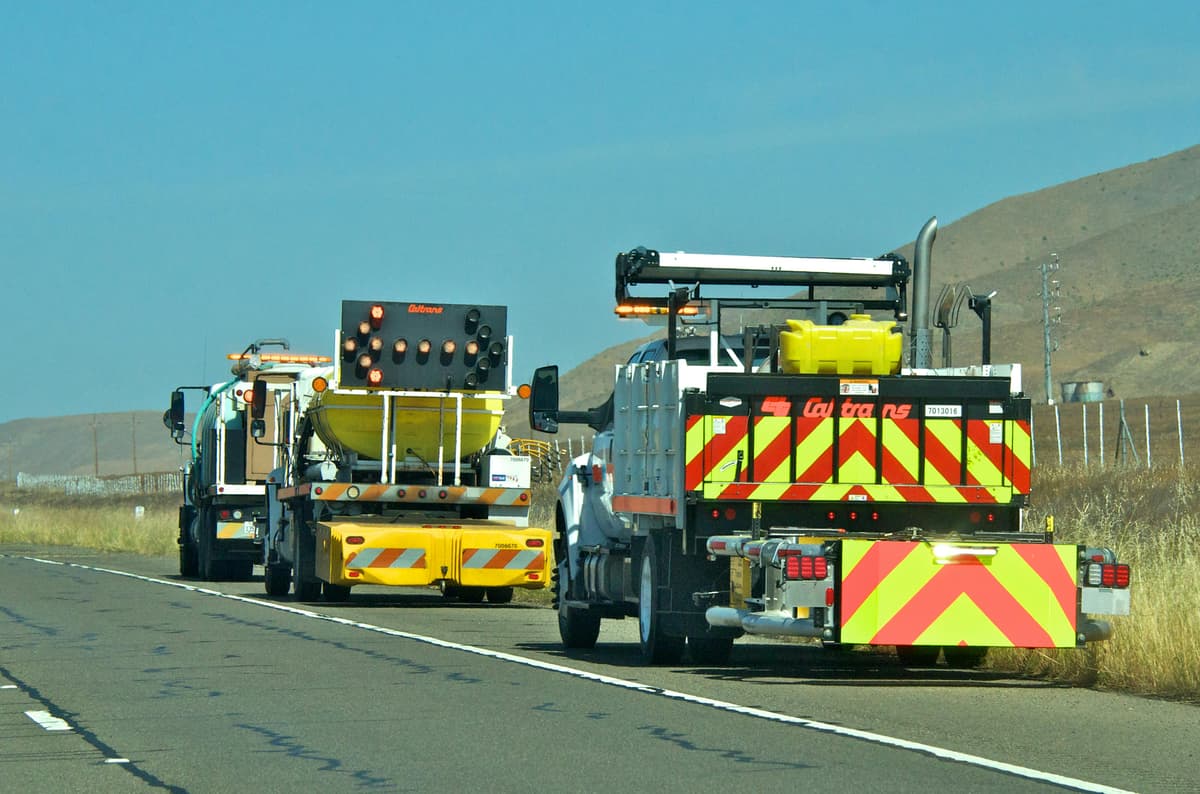
How Truck-Mounted Attenuators Are Improving Safety in High-Speed Work Zones
Why It Matters
By providing a physical shield where cones and barrels fall short, TMAs cut injury risk and liability for contractors and public‑agency owners of high‑speed road projects. Their adoption signals a shift toward safer, more efficient work‑zone management.
Key Takeaways
- •TMAs act as last‑line crash protection behind work trucks.
- •Automated TMAs follow lead vehicles, removing operators from exposure.
- •Road Runner TMA deploys rapidly without using truck‑bed space.
- •Cost and setup time remain barriers for broad TMA adoption.
Pulse Analysis
High‑speed highway repairs have long been a safety blind spot, with traditional cones and barrels offering little resistance to errant vehicles. Truck‑mounted attenuators fill that gap by attaching a crash‑worthy buffer directly to the work truck, creating a moving barrier that travels with the crew. This layered approach not only mitigates the severity of collisions but also shortens the window during which workers are exposed to live traffic, a critical advantage in mobile or short‑duration projects where rapid re‑channelization is impractical.
The next evolution—automated TMAs—leverages GPS and sensor fusion to maintain a precise following distance behind lead vehicles such as street sweepers or paving trucks. By eliminating the need for a driver in the shadow vehicle, these systems dramatically lower the human risk factor while preserving consistent protection. Early adopters, primarily state DOTs, report smoother operations and fewer “nuisance hits” that can sideline crews. Yet the technology’s upfront price tag, coupled with the requirement for on‑site calibration and operator oversight during setup, remains a hurdle for many municipalities operating under tight budgets.
Manufacturers are responding with designs that prioritize ease of use and cost efficiency. Lindsay’s Road Runner, for example, folds into a compact footprint, allowing crews to mount the attenuator without sacrificing payload capacity. As regulatory bodies tighten work‑zone safety standards and insurers reward reduced liability exposure, demand for such adaptable solutions is expected to rise. The industry’s trajectory points toward broader automation, but widespread adoption will hinge on demonstrating clear ROI through reduced accident rates and lower long‑term maintenance costs.
How Truck-Mounted Attenuators Are Improving Safety in High-Speed Work Zones
Comments
Want to join the conversation?
Loading comments...