Companies Mentioned

Why It Matters
The unified, AI‑powered workflow eliminates manual data re‑entry, reduces error risk, and speeds early‑stage HVAC sizing, giving consultancies a measurable productivity advantage. Its PDF‑first approach lowers adoption barriers, signaling a shift toward niche AI tools in the AEC industry.
Key Takeaways
- •AI agent creates HVAC models from PDFs with natural‑language prompts
- •Single‑project workflow syncs load calculations and duct layouts instantly
- •Early‑stage load estimates generated in minutes, not hours
- •No BIM model required; engineers upload existing architectural PDFs
- •Discipline‑specific AI trend reinforced by recent $390 M Consigli acquisition
Pulse Analysis
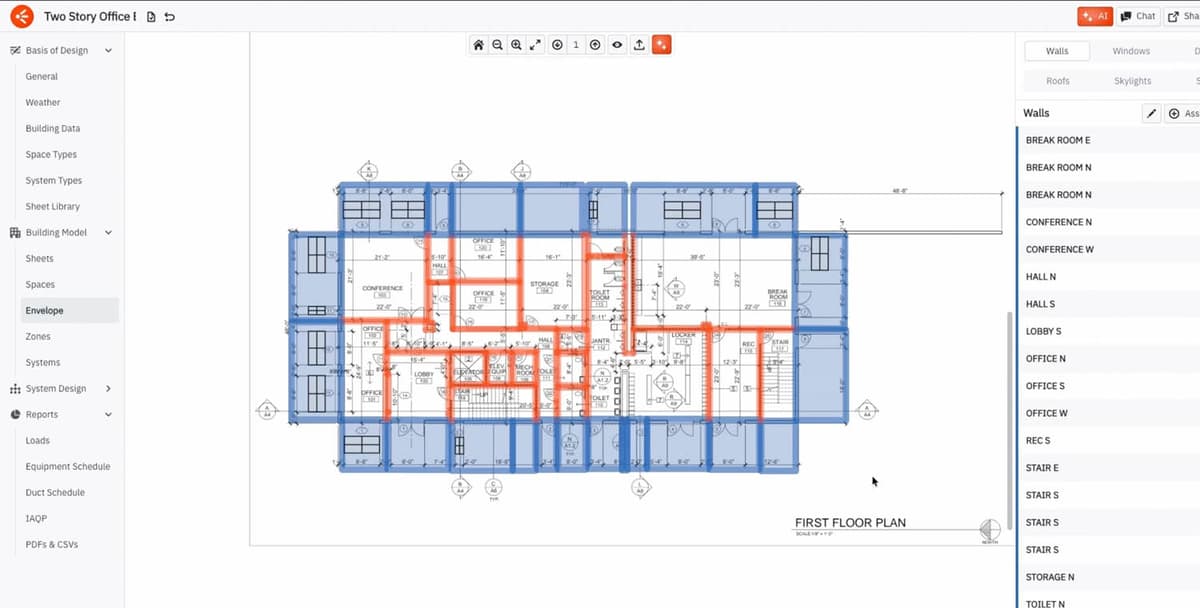
The rise of artificial intelligence in architecture, engineering, and construction is no longer confined to broad BIM platforms. While Revit and its successors wrestle with integration challenges, niche solutions are emerging that focus on a single discipline’s pain points. HVAKR exemplifies this trend by delivering a cloud environment where mechanical engineers can perform load calculations, duct sizing, and documentation without hopping between legacy applications. By centering the workflow around PDFs—already the de‑facto exchange format between architects and MEP firms—the platform sidesteps the steep learning curve of BIM models and accelerates project kickoff.
At the heart of HVAKR’s value proposition is its conversational AI layer. Engineers upload an architectural PDF, issue a plain‑English command such as “assign ASHRAE 62.1 space types to all conference rooms,” and the system instantly updates zoning, recalculates airflow, and annotates the duct layout. This capability not only trims hours of manual editing but also provides real‑time analytics, flagging spaces with the highest cooling load per square foot and surfacing the underlying drivers. The result is a more reliable, data‑rich design package that can be presented at bid meetings within minutes, dramatically shortening the pre‑construction phase.
The market response underscores a broader shift toward discipline‑specific AI tools. Recent acquisitions, such as AECOM’s $390 million purchase of Consigli, validate the commercial appetite for specialized automation. HVAKR’s roadmap—including automated diffuser placement and generative duct routing—positions it to compete with peers like Augmenta and Endra, while its low‑friction onboarding appeals to consultancies still reliant on spreadsheets and desktop apps. As firms increasingly demand measurable productivity gains, platforms that consolidate design steps and embed AI insights are poised to become standard components of the modern MEP workflow.
HVAKR: integrated AI HVAC design
Comments
Want to join the conversation?
Loading comments...