Indications of Massive Welland Residential Development Moving Forward, without Requested Grant
Why It Matters
The development will inject billions of dollars of construction activity, expand housing supply in a tight Ontario market, and test the limits of public‑private financing without provincial grant support.
Key Takeaways
- •LIV paid $10.6 M (≈$7.7 M) toward $35 M land deal
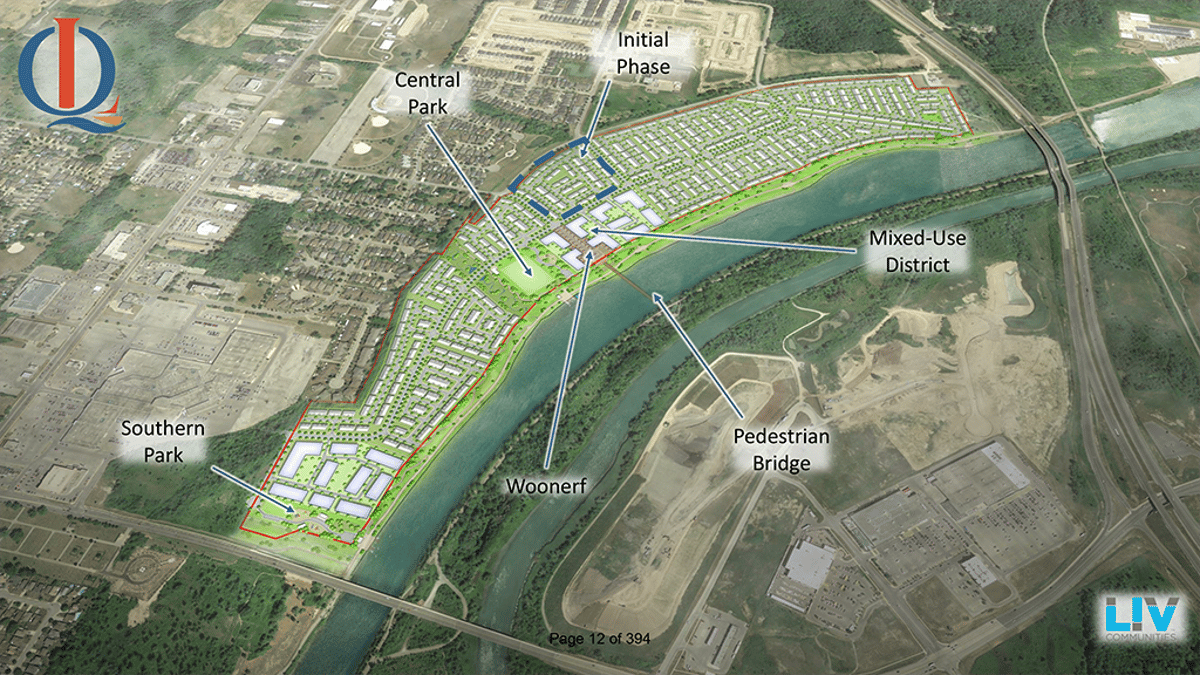
- •Lock and Quay will add ~4,500 homes to Welland‑Thorold corridor
- •$40 M (≈$29 M) TIG grant request denied by regional council
- •Project includes 12‑km waterfront park and pedestrian bridge
- •Sustainability plan features energy‑efficient buildings and water‑use reduction
Pulse Analysis
The Niagara‑region housing shortage has pushed municipalities to seek large‑scale, mixed‑use projects that can deliver both density and livability. LIV Communities’ Lock and Quay proposal stands out as one of the biggest single‑developer undertakings in Welland’s history, targeting 4,500 new units on a two‑kilometre stretch of the Welland Canal. By integrating townhouses, mid‑rise condos, and a 12‑kilometre waterfront park, the plan aligns with Ontario’s push for higher‑density, transit‑oriented development while preserving public amenity space.
Financing the venture has proved complex. While the city offered a Brownfield Tax Increment Grant (TIG) capped at $40 million (≈$29 M USD), the regional council declined to provide a matching contribution, leaving the grant request unfulfilled. This decision underscores the growing scrutiny of public incentives for private developers, especially when projected tax revenues are uncertain. Nonetheless, LIV’s recent $10.6 million (≈$7.7 M USD) payment signals confidence in the project's profitability and its ability to attract private capital without the full grant.
Beyond economics, the development emphasizes sustainability. Plans call for energy‑efficient building materials, water‑use reduction technologies, and pedestrian‑first street designs that lower car dependence. The inclusion of a pedestrian bridge linking trails across the canal and a multi‑use park aims to boost quality of life and attract residents seeking active, amenity‑rich environments. If successful, Lock and Quay could become a template for future brownfield revitalizations in Ontario, demonstrating how large residential projects can proceed even when public grant support is limited.
Indications of massive Welland residential development moving forward, without requested grant
Comments
Want to join the conversation?
Loading comments...