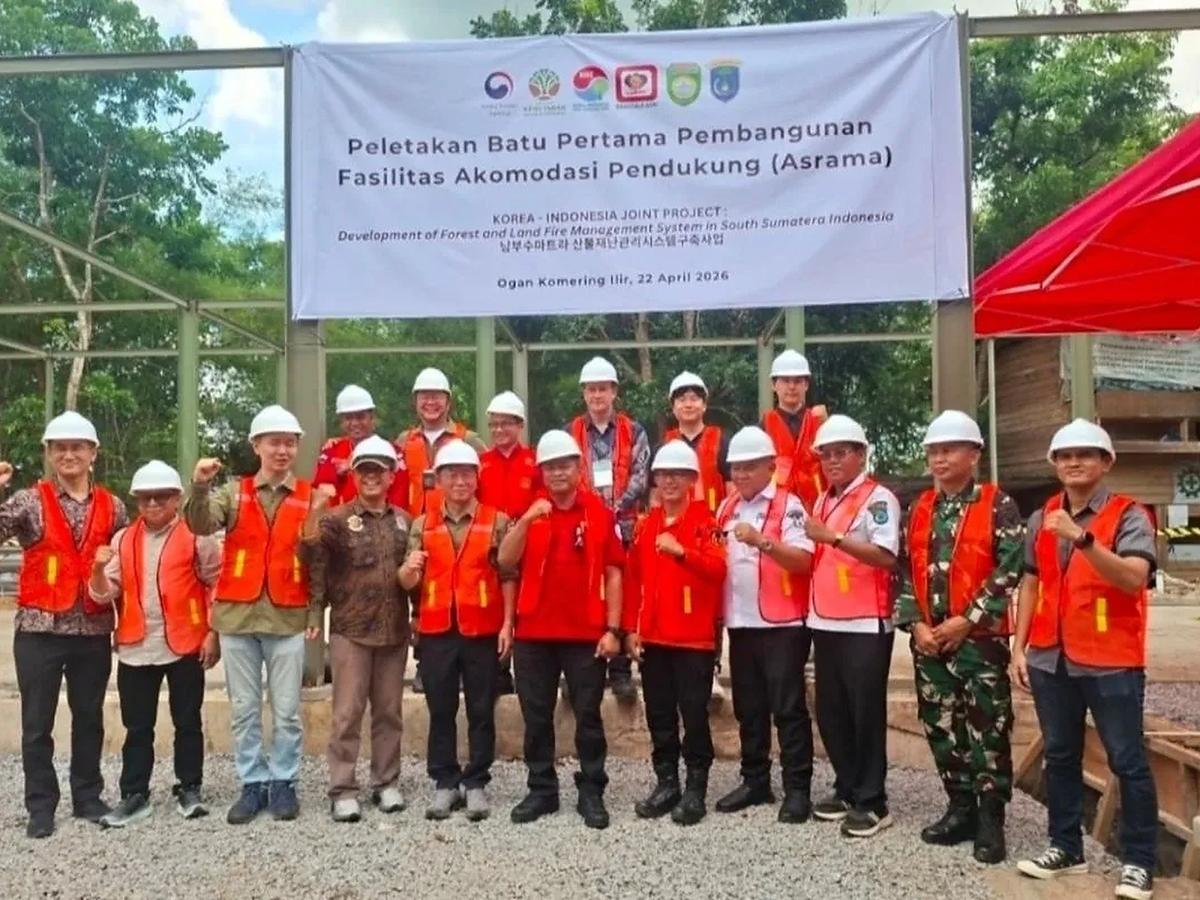
Indonesia and South Korea Break Ground on Sumatra Fire Centre for El Niño
Why It Matters
Boosting Indonesia's fire‑management capacity curbs peat‑fire emissions, safeguards communities, and strengthens strategic climate‑resilience ties between Korea and Southeast Asia.
Key Takeaways
- •Dormitory, command centre, training, detection system form integrated fire hub.
- •OKI district recorded 33,748 hotspots in 2015, 72% peat‑land.
- •Fires fell from 345 in 2021 to 109 in 2022, UNEP pilot.
- •Early‑2026 El Niño forecast compresses preparation window for Sumatra.
- •Korea Forest Service funding expands fire‑season expertise to Southeast Asia.
Pulse Analysis
Peat‑rich regions of Indonesia have long been tinderboxes for catastrophic wildfires, releasing vast quantities of carbon and threatening vulnerable populations. The 2015 fire disaster in Ogan Komering Ilir alone generated over 33,000 hotspots, underscoring the need for advanced detection and rapid response tools. Climate models now warn that an early‑2026 El Niño could intensify dry seasons across Sumatra, Kalimantan and Java, making traditional firefighting methods increasingly insufficient. Strengthening on‑the‑ground capacity is therefore a critical component of global climate mitigation efforts.
The newly announced Forest and Land Fire Management Centre combines four interlocking deliverables: a dormitory for the Manggala Agni brigade, a command and training hub, targeted capacity‑building programs, and a satellite‑linked wildfire detection system. Funded by the Korea Forest Service, the initiative leverages South Korea's recent experience battling record‑breaking fires in its own Gyeongsang and Ulsan regions. By embedding Korean expertise within Indonesia's forestry ministry, the project aims to accelerate knowledge transfer, standardize response protocols, and create a replicable model for ASEAN members facing similar peat‑fire challenges.
Beyond immediate fire suppression, the collaboration signals a broader shift toward multilateral climate resilience. Korea's involvement aligns with its 2026 reform agenda under Commissioner Park Eun‑sik, positioning the country as a regional leader in forest risk management. For Indonesia, the centre offers a scalable platform to reduce emissions from peat fires, protect livelihoods, and meet international climate commitments. As El Niño looms, the joint effort could set a precedent for future bilateral initiatives that blend technology, training, and policy to safeguard the world's most fire‑prone ecosystems.
Indonesia and South Korea Break Ground on Sumatra Fire Centre for El Niño
Comments
Want to join the conversation?
Loading comments...