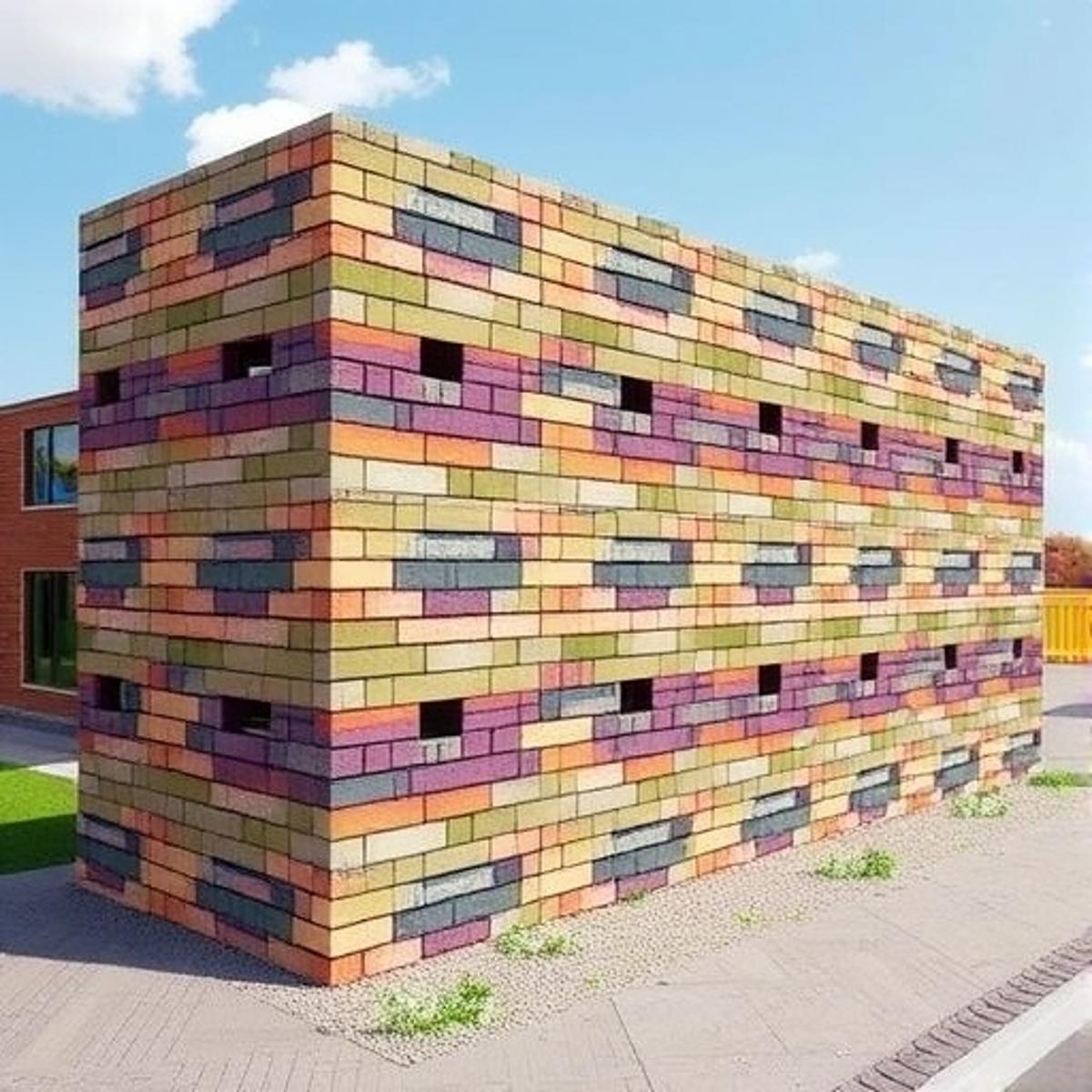
Innovative Reusable Brick Walls Revolutionize Construction Industry
Why It Matters
By turning bricks into reusable assets, the technology slashes construction‑related emissions and waste while offering owners residual value, potentially reshaping industry standards and cost structures.
Key Takeaways
- •Reversible joint enables non‑destructive disassembly and reassembly
- •CO₂ emissions drop up to 60% over three life cycles
- •Prefabricated walls integrate 44 cm thickness with built‑in insulation
- •Demonstrator building was dismantled, moved, and rebuilt unchanged
- •New codes and cost savings could accelerate market adoption
Pulse Analysis
Circular construction is gaining traction as regulators and investors pressure the building sector to curb its hefty carbon footprint. Traditional masonry locks bricks in mortar, creating massive demolition waste and necessitating fresh production for each new project. The TU Graz‑Wienerberger collaboration tackles this inefficiency by decoupling material lifespan from a building’s use phase, preserving the embodied energy of bricks and dramatically lowering lifecycle emissions. This shift mirrors broader sustainability trends, where material reuse and modular design are becoming competitive differentiators for developers and owners alike.
The technical heart of the system lies in a reversible joint that mimics mortar’s load‑transfer capabilities while allowing clean separation. Engineers achieved structural integrity through a 44 cm wall profile that embeds insulating wool, meeting modern thermal codes without sacrificing strength. Two stabilization strategies—heavy roof compression and pre‑stressed threaded rods—ensure adaptability across architectural layouts. Modal analysis, a vibration‑based health‑monitoring tool, provides real‑time insight into joint performance, enabling predictive maintenance and extending service life. The full‑scale prototype’s successful disassembly, transport, and reassembly validates these engineering solutions under real‑world conditions.
Market adoption will hinge on regulatory acceptance and demonstrated cost benefits. Building codes must evolve to recognize reusable components and certify reversible joints, while owners will weigh upfront investment against long‑term savings from reduced material purchases and demolition costs. If scaled, the technology could unlock new revenue streams for manufacturers and create a secondary market for reclaimed wall modules. Moreover, the approach sets a template for other structural elements, suggesting a future where entire building envelopes are designed for perpetual reuse, fundamentally reshaping the economics and environmental impact of construction.
Innovative Reusable Brick Walls Revolutionize Construction Industry
Comments
Want to join the conversation?
Loading comments...