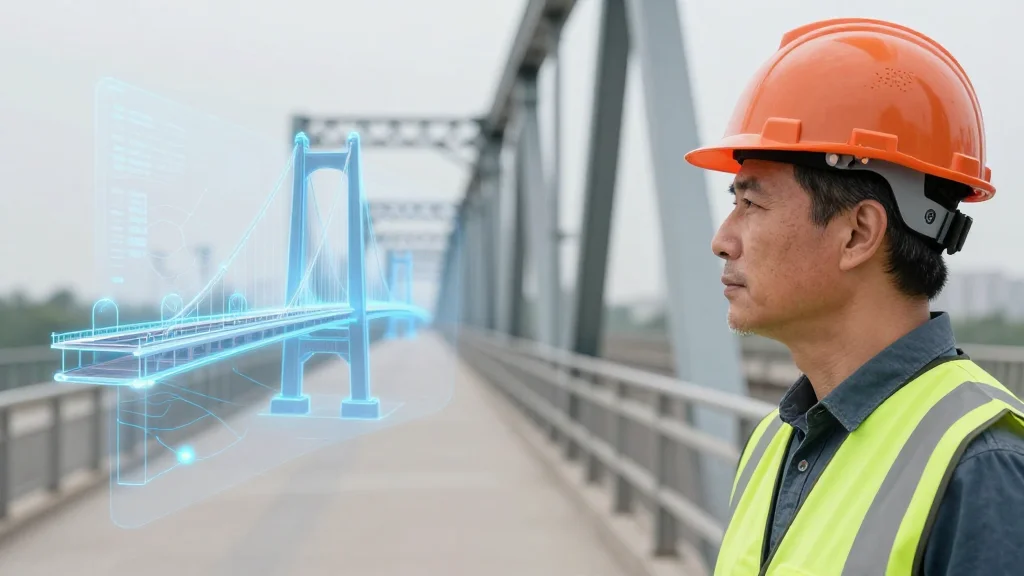
Interview: WSP Experts on How AI Is Being Used to Save Engineers’ Time
Companies Mentioned
Why It Matters
By turning tedious administrative work into automated processes, WSP frees engineers to focus on high‑value design and analysis, accelerating infrastructure delivery. The AI‑driven data foundations also enable predictive maintenance and climate‑risk planning, which can reduce costly outages and improve long‑term asset investment decisions.
Key Takeaways
- •WSP saved ~165 minutes weekly per staff using Microsoft Copilot.
- •AI converts scanned infrastructure records into structured data for maintenance.
- •Network Rail partnership uses AI for asset failure prediction and climate risk.
- •Northumbrian Water’s “Wisdom” AI assistant aggregates pump performance and history.
- •WSP trains engineers in coding to validate AI models responsibly.
Pulse Analysis
WSP’s recent rollout of Microsoft Copilot across its UK and Ireland practice illustrates how engineering consultancies are moving from experimental AI to everyday productivity tools. By embedding the large‑language model into standard billing and time‑coding systems, the firm measured an average weekly saving of 165 minutes per employee who used the tool more than once a month. Those minutes translate into faster report generation, automated meeting notes and reduced administrative overhead—tasks that traditionally consume a large share of engineers’ time. The initiative also serves as a live laboratory for scaling AI‑driven workflows while monitoring data‑privacy risks.
Beyond internal efficiency, WSP is partnering with Network Rail to lay the data foundation for predictive asset management. AI models ingest decades of scanned inspection reports, handwritten notes and image archives stored in SharePoint, converting them into searchable, structured datasets that can be linked to live sensor feeds. By overlaying historical failure records with Met Office climate projections, the consultancy is building scenarios that inform both operational‑expenditure (OpEx) and capital‑expenditure (CapEx) planning under extreme weather conditions. The effort dovetails with Network Rail’s Digital Lineside Inspection program, which already uses AI‑analyzed video, LiDAR and thermal imagery to flag faults before they disrupt service.
In the water sector, WSP’s “Wisdom” assistant demonstrates how generative AI can capture tacit knowledge from an aging workforce. The chatbot pulls real‑time pump performance, design specifications and maintenance histories from disparate databases, answering operational queries instantly and reducing reliance on legacy documentation. WSP also runs large‑scale scenario simulations to evaluate spending strategies and stressor impacts across entire water networks, a task beyond human capacity. By coupling AI with a firm‑wide coding curriculum, engineers gain the skills to audit model outputs, ensuring transparency and compliance—a blueprint for responsible AI adoption across infrastructure consulting.
Interview: WSP experts on how AI is being used to save engineers’ time
Comments
Want to join the conversation?
Loading comments...