Just Look Up — Mid-Rise Surge Marks Timber Frame’s Inflection Point
Why It Matters
The shift toward mid‑rise construction reshapes demand for building materials, putting pressure on timber‑frame manufacturers to adapt or risk being displaced by steel, while influencing Australia’s ability to meet its housing and carbon‑reduction targets.
Key Takeaways
- •Mid‑rise approvals up 70% in 2025, adding 7,800 dwellings
- •Timber consumption fell 1.1% despite rising approvals
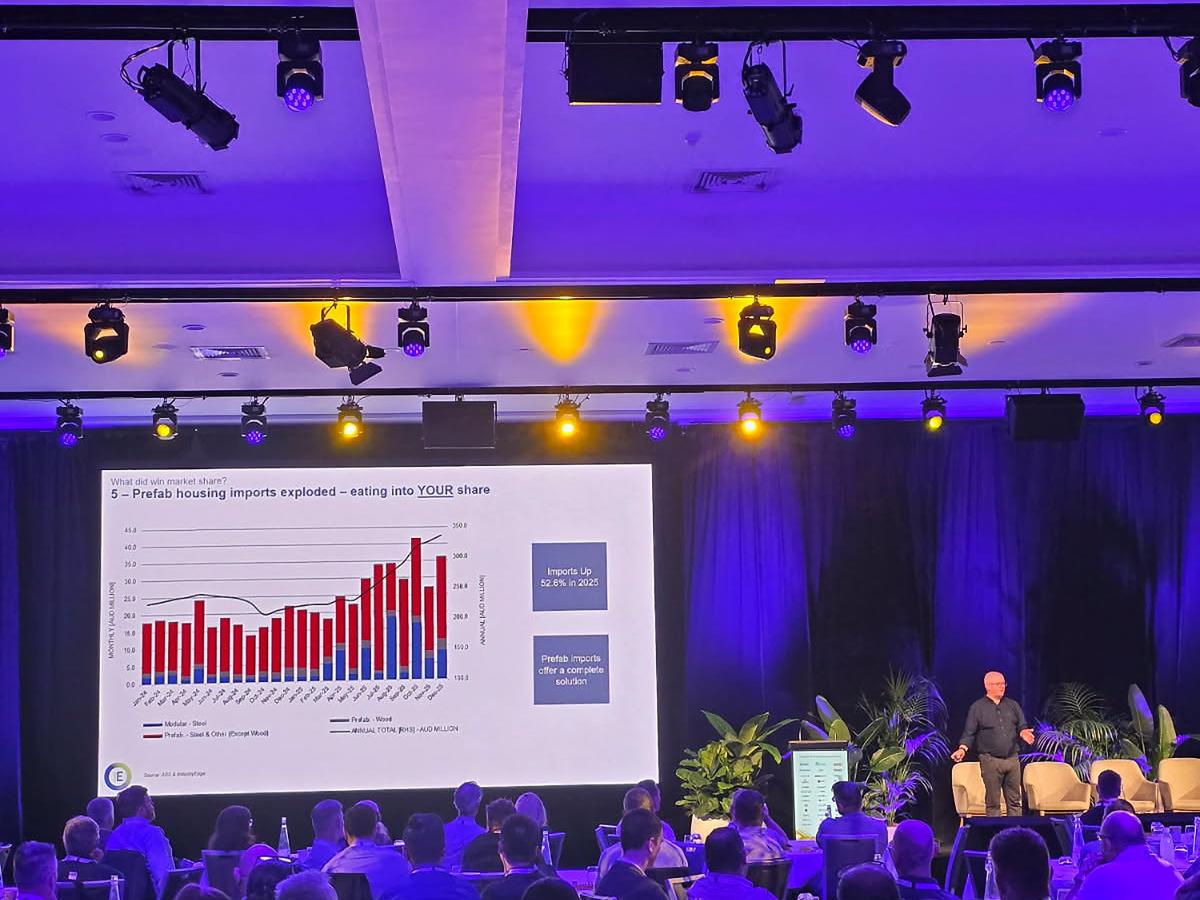
- •LVL imports rose 26%; prefabricated imports up 53%
- •Light‑gauge steel gaining share across all residential formats
- •$200 M research pool, $100 M matched federal funding
Pulse Analysis
Australia’s housing market is at a crossroads. After three decades of stagnant detached‑home completions, mid‑rise developments have exploded, delivering 7,800 new units in 2025—a growth rate that eclipses the combined increase of freestanding houses and townhouses. The surge is driven by a national goal of 225,000 dwellings per year to erase a looming shortfall of 1.02 million homes by 2034. This pivot forces developers, architects, and material suppliers to rethink traditional building typologies and prioritize density‑friendly solutions.
For timber‑frame manufacturers, the data reveal a paradox: structural timber use slipped 1.1% even as approvals climbed, while engineered‑wood imports surged and light‑gauge steel captured market share across detached, townhouse and mid‑rise projects. The advantage of engineered wood—lower embodied carbon, design flexibility, and superior livability—remains clear, yet the sector’s fragmented supply chain hampers its ability to offer a turnkey package. Steel’s rise reflects its ability to deliver integrated, fast‑track solutions that builders demand, highlighting a critical gap in the timber industry’s value proposition.
Policy and research initiatives aim to close that gap. A $200 million research pool, half funded by the federal government, supports the Future Frame Initiative to integrate design, manufacturing, and installation for timber systems. If the industry can leverage this investment to create a seamless, prefabricated offering, timber could retain a pivotal role in the mid‑rise boom and contribute to Australia’s carbon‑reduction agenda. Failure to adapt, however, risks marginalising timber as the nation’s housing strategy leans increasingly toward steel‑based, high‑density construction.
Just Look Up — Mid-Rise Surge Marks Timber Frame’s Inflection Point
Comments
Want to join the conversation?
Loading comments...