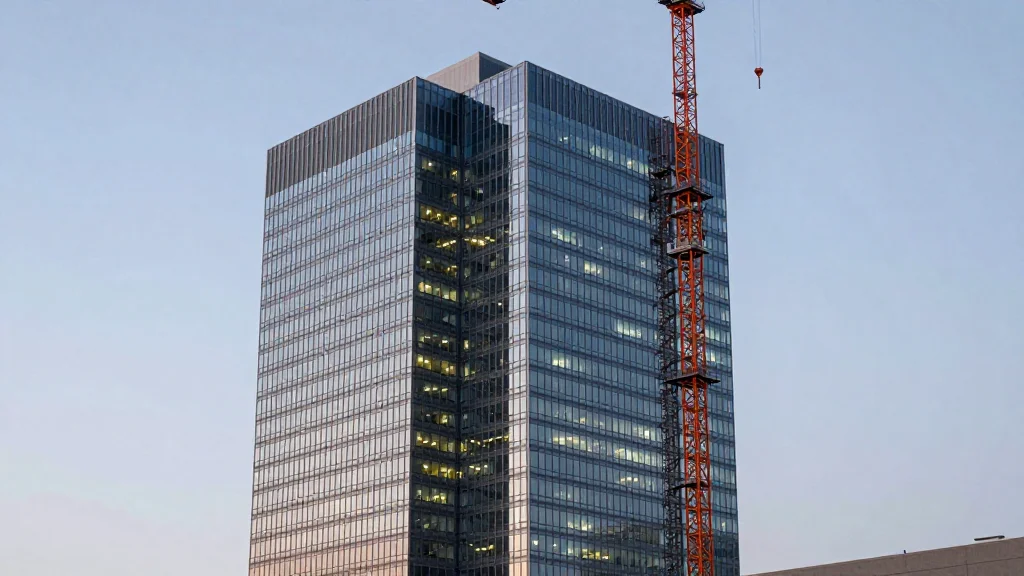
Key Part of $2.2B Detroit Hospital Expansion Tops Out
Companies Mentioned
Why It Matters
The expansion dramatically boosts Detroit’s acute‑care capacity while pioneering an all‑electric hospital model, setting a sustainability benchmark for U.S. health systems. Its integration with a citywide redevelopment plan also promises economic revitalization and new research opportunities.
Key Takeaways
- •Tower tops out, adding 432 private rooms and 5 ICU floors
- •Project includes 1,500‑space garage and all‑electric energy hub
- •$653 million raised, $241 million from “Rising Above” campaign
- •Completion slated for 2029, part of $3 billion citywide health plan
- •JV partners Barton Malow, Turner, and Detroit‑based Dixon
Pulse Analysis
The Henry Ford Hospital’s $2.2 billion Destination: Grand expansion reached a structural milestone this month when the joint venture of Barton Malow, Turner Construction and Dixon installed the final beam on its 20‑story tower. The tower will house 432 private patient rooms, five intensive‑care floors and 28 operating suites, dramatically increasing the facility’s capacity. Funding combines internal capital with $653 million in philanthropic gifts, including a $241 million “Rising Above, Reaching Beyond” campaign. The project remains on schedule for a 2029 opening, reinforcing Detroit’s role as a regional health hub.
Beyond sheer size, the expansion is designed to be one of the nation’s largest all‑electric hospitals. A central energy hub will generate clean power for the tower, parking structure and shared services building, reducing reliance on fossil fuels and lowering operating costs. The all‑electric model aligns with growing industry pressure to decarbonize health‑care facilities, which collectively account for roughly 4 percent of U.S. greenhouse emissions. By adopting this technology early, Henry Ford positions itself as a sustainability leader, potentially attracting patients and clinicians who prioritize environmental stewardship.
The tower is a cornerstone of Detroit’s $3 billion Future of Health: Detroit initiative, which envisions a walkable, mixed‑use district anchored by health‑care, research and affordable housing. The project will add a 1,500‑space garage, a shared services building and a new medical research facility slated for Michigan State University in 2027. By coupling the hospital upgrade with broader urban revitalization, the plan aims to generate construction jobs, stimulate ancillary businesses and improve community health outcomes. Competing megaprojects in Ohio and Pennsylvania underscore a national trend of large‑scale health‑care investments, positioning Detroit to capture a share of that growth.
Key part of $2.2B Detroit hospital expansion tops out
Comments
Want to join the conversation?
Loading comments...