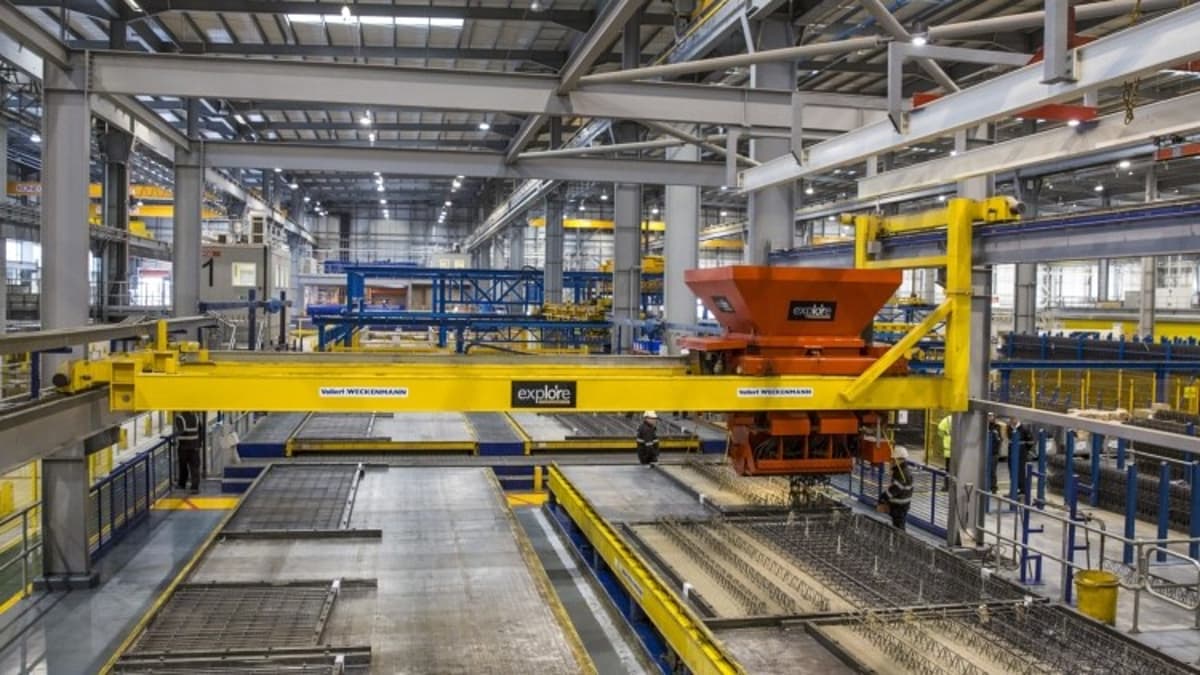
Laing O’Rourke: Design Phase Collaboration Is Key to MMC Success
Companies Mentioned
Why It Matters
The model demonstrates how trust‑based design partnerships can dramatically boost productivity, lower costs and improve delivery certainty, accelerating industry adoption of MMC and DfMA techniques.
Key Takeaways
- •Laing O’Rourke targets ≥70% offsite fabrication on MMC projects.
- •Design partner framework with Aecom, BDP, WSP drives early design alignment.
- •Offsite approach cuts onsite labor >60% and speeds delivery 30%.
- •Early design maturity reduces risk, cost, and program delays.
- •Everton stadium shows DfMA can meet time and budget goals.
Pulse Analysis
Modular‑manufactured construction is reshaping how large‑scale infrastructure is delivered, and Laing O’Rourke’s recent push for design‑phase collaboration underscores the shift. By formalising a design‑partner framework with global consultancies Aecom, BDP and WSP, the contractor creates a shared digital environment where design intent, procurement and sustainability criteria are aligned before any component leaves the factory. This early‑stage alignment mirrors the broader industry move toward integrated project delivery, where the traditional siloed approach gives way to real‑time data exchange, standardized naming conventions and ISO 19650‑compliant information management.
The tangible benefits of this strategy are compelling. Off‑site fabrication of at least 70% of a project’s elements reduces the on‑site workforce by more than 60%, translating into lower labor costs, fewer health‑and‑safety incidents and a smaller carbon footprint. Faster assembly—up to 30% quicker than conventional builds—means projects meet tighter market windows, a critical advantage in sectors such as healthcare and sports venues. Embedding DfMA and sustainability targets early also curtails change orders, stabilises budgets and improves risk profiles, delivering a more predictable return on investment for owners.
Case studies like the Everton stadium illustrate the model’s scalability. Delivered on time and within budget, the stadium’s 70% off‑site superstructure demonstrates that high‑profile, architecturally ambitious projects can still benefit from modular methods without sacrificing design quality. The success has prompted a cultural shift among partners, moving from adversarial comment cycles to collaborative problem‑solving. As more contractors adopt trust‑based design partnerships, the construction sector is likely to see accelerated digital transformation, broader MMC adoption, and a new benchmark for delivering complex assets efficiently.
Laing O’Rourke: design phase collaboration is key to MMC success
Comments
Want to join the conversation?
Loading comments...