Learn Practical Collaboration Strategies to Improve Construction Project Outcomes From AIA and AGC
Why It Matters
Stronger collaboration reduces cost overruns, schedule delays, and disputes, delivering higher‑value outcomes for owners and the construction market. The guide’s adoption could become a new industry benchmark for project delivery.
Key Takeaways
- •Framework targets architects, contractors, owners of all project sizes.
- •Emphasizes early contractor involvement for constructability and cost certainty.
- •Promotes shared metrics on quality, safety, and schedule performance.
- •Calls for digital coordination tools throughout the project lifecycle.
- •Aims to reduce disputes, delays, and overall project costs.
Pulse Analysis
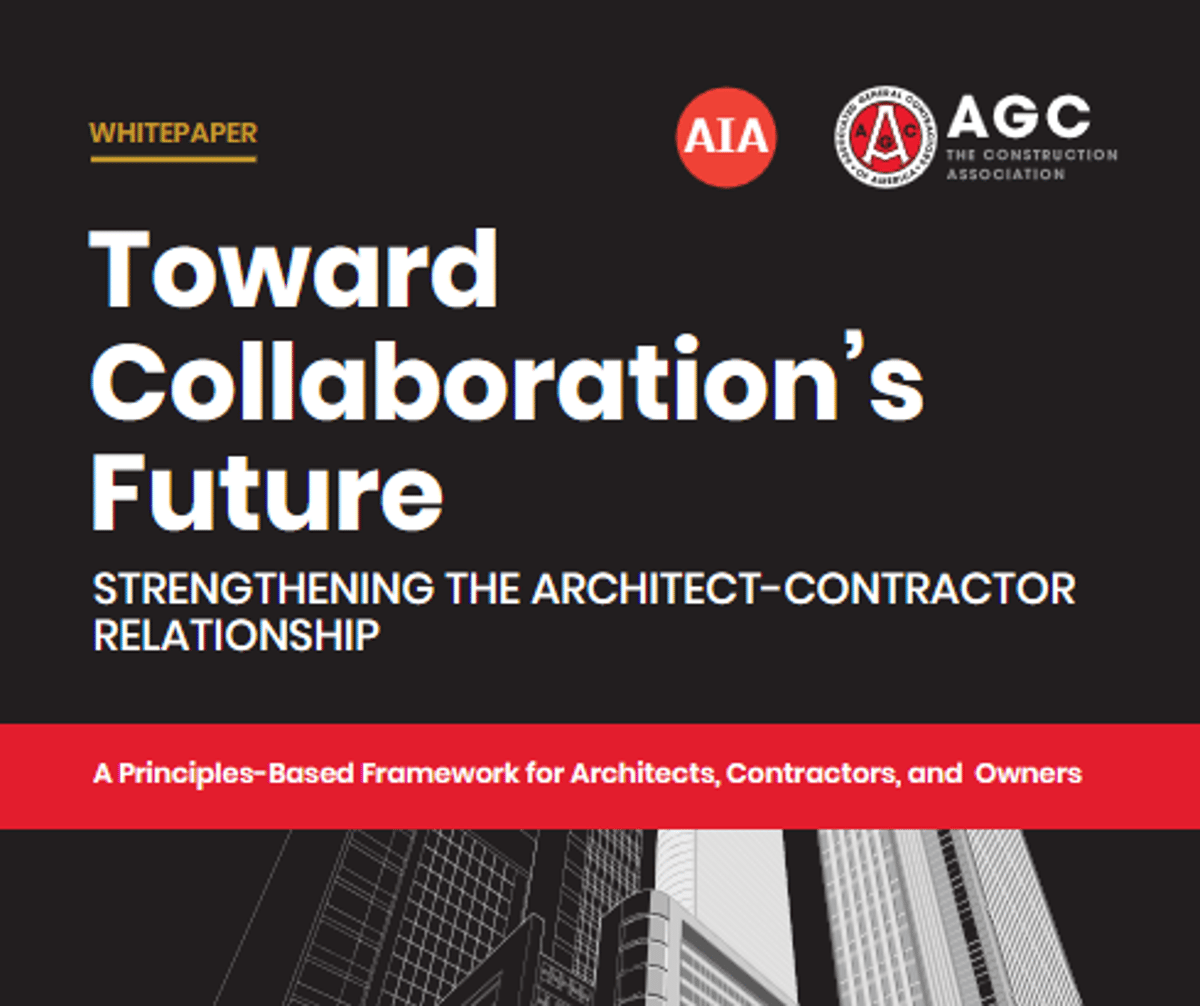
The construction sector has long struggled with siloed design and building processes that generate cost overruns and schedule slips. In response, the American Institute of Architects and the Associated General Contractors of America unveiled a joint framework, "Toward Collaboration’s Future," that codifies best‑practice tactics for architect‑contractor teamwork. Drawing on a multi‑year research effort and input from leading firms, the document offers a roadmap that can be applied across delivery methods, from design‑build to traditional general‑contracting, aiming to embed trust and transparency from project inception.
The framework zeroes in on three operational pillars: early contractor involvement, shared performance metrics, and digital coordination. By pulling contractors into the design phase, owners gain constructability insights that sharpen cost certainty and reduce change‑order volatility. Simultaneously, the guide recommends unified dashboards tracking quality, safety and schedule KPIs, fostering accountability across trades. Finally, it champions cloud‑based BIM, clash‑detection software and real‑time communication platforms to streamline decision‑making and mitigate risk before it escalates. Collectively, these tactics promise tighter schedules, fewer disputes, and more predictable budgets.
Adoption of the AIA‑AGC playbook could reshape market dynamics by rewarding firms that demonstrate collaborative competence. Investors and owners are increasingly scrutinizing risk‑adjusted returns, and projects that deliver on‑time, on‑budget outcomes tend to command premium financing rates. Moreover, the emphasis on digital tools aligns with the industry’s broader push toward smart construction and data‑driven decision making. As the framework gains traction, it may become a de‑facto standard in contract negotiations, prompting a cultural shift toward partnership rather than adversarial posturing.
Learn practical collaboration strategies to improve construction project outcomes from AIA and AGC
Comments
Want to join the conversation?
Loading comments...