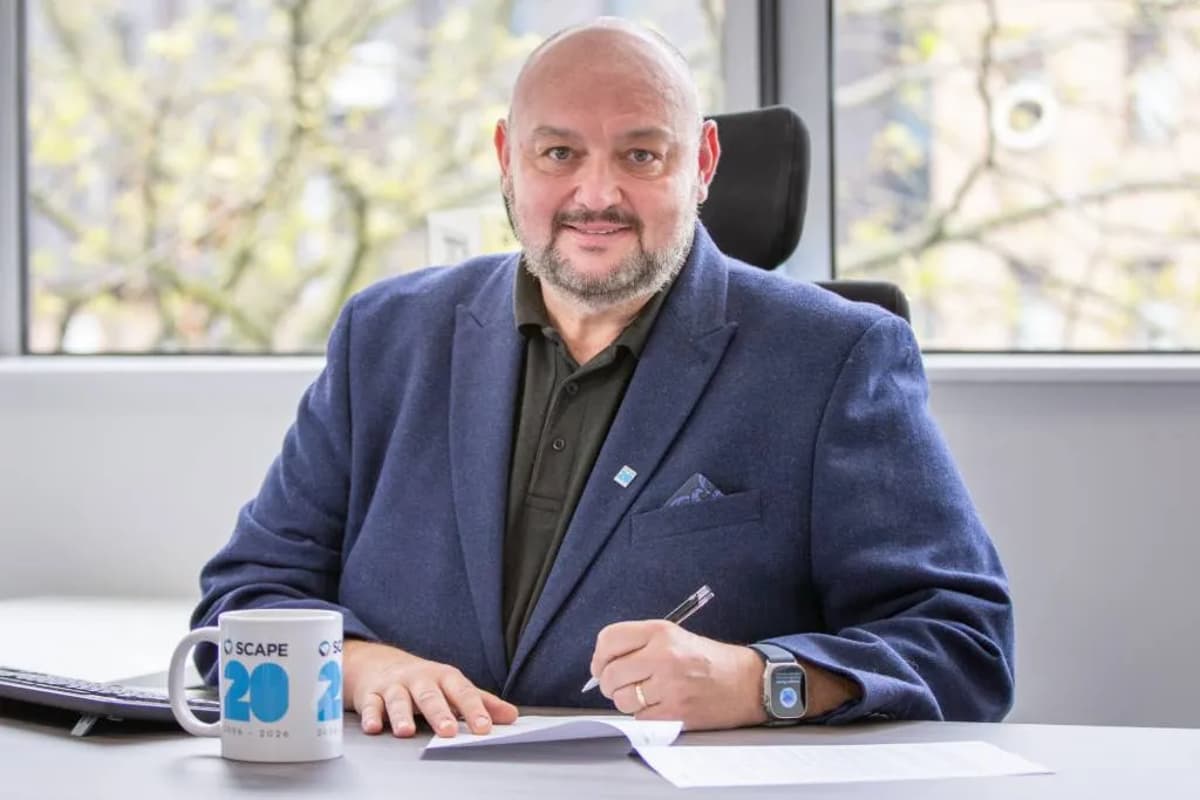
Mark Robinson on Scape at 20
Why It Matters
Scape’s low‑fee, high‑volume framework model demonstrates a scalable, taxpayer‑friendly approach to public‑sector construction procurement, setting a benchmark for efficiency and innovation in government‑backed infrastructure projects.
Key Takeaways
- •Scape supports 675 UK public clients, delivering 2,000 projects
- •Framework levy is 0.5% of project value, no upfront fees
- •Next construction framework projected over £10 bn, up from £350 m
- •Scape dropped retentions 20 years ago, predating government move
- •AI bid tools trialed, but human assessment remains decisive
Pulse Analysis
Scape’s two‑decade journey illustrates how a regional school‑building consortium can become a national procurement powerhouse. By formalising under the 2003 Local Government Act and launching the UK’s first national construction framework, the firm filled a market gap that previously left public bodies without a coordinated sourcing mechanism. Today, its seven to eight national frameworks and roughly 50 local ones channel billions of pounds—about $12.7 bn for the upcoming construction framework—into schools, hospitals and civic projects, driving economies of scale that smaller councils could not achieve alone.
The financial architecture behind Scape’s success is deliberately modest. Rather than charging upfront membership fees, the organisation levies roughly 0.5% of the contract value on partners, translating to an estimated $4.5 m on a £900 m (≈ $1.1 bn) annual spend. Surpluses are returned to the six council shareholders or reinvested via a community investment company, reinforcing a public‑interest ethos. Early adoption of a zero‑retention policy—abandoned 20 years ago—pre‑empted recent government reforms, reducing cash‑flow risk for contractors and cutting administrative overhead for taxpayers.
Looking ahead, Scape is testing AI tools to benchmark bid quality while keeping human judgment at the core, a stance that safeguards against generic, machine‑generated responses. The firm also eyes a defence‑specific framework, building on its existing £750 m (≈ $953 m) annual work with the Defence Infrastructure Organisation, and is exploring refurbishment and decarbonisation projects aligned with UK climate goals. These strategic moves signal that Scape’s framework model could become a template for other sectors seeking transparent, cost‑effective procurement in an increasingly digital and sustainability‑focused landscape.
Mark Robinson on Scape at 20
Comments
Want to join the conversation?
Loading comments...