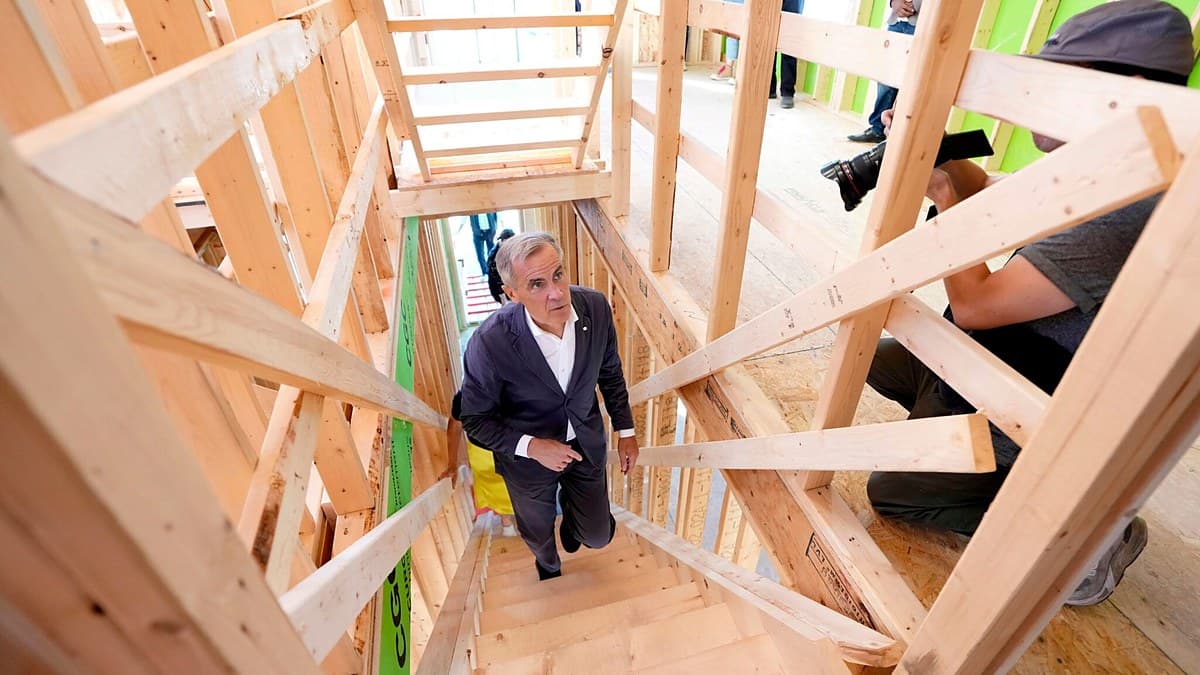
Mass Timber Alone Won’t Fix Canada’s Housing Crisis, Spoke Warns
Why It Matters
The analysis shows that construction technology alone cannot resolve Canada’s housing shortage; coordinated policy reforms and financing mechanisms are essential to achieve genuine affordability for millions of Canadians.
Key Takeaways
- •BCH's $9.6 B budget centers on mass timber, not systemic reforms
- •Land‑use rules and slow approvals remain primary affordability barriers
- •Spoke calls for a public dashboard tracking starts, costs, private capital
- •Cost discipline must keep per‑unit prices at or below market levels
- •Expanding timber capacity funded by $890 M forestry package and loan guarantees
Pulse Analysis
Canada’s housing crisis is rooted in structural constraints that mass‑timber and modular construction cannot alone remedy. While Build Canada Homes (BCH) promises to accelerate delivery through modern methods, the agency’s $9.6 billion mandate overlooks the bottlenecks created by municipal zoning, lengthy approval processes, and fiscal pressures on developers. Analysts argue that without reforms to land‑use policy and streamlined permitting, even the fastest‑built units will remain out of reach for most households, reinforcing the need for a holistic approach that pairs technology with regulatory overhaul.
Matt Spoke’s op‑ed spotlights the gap between ambitious construction targets and the realities of financing and cost control. He proposes a public transparency dashboard that would capture annual housing starts, average unit costs, and the ratio of private capital leveraged per federal dollar. Such data visibility could pressure both government and private partners to maintain per‑unit expenses at or below market levels, preventing the cost inflation that often accompanies layered policy requirements. Moreover, Spoke suggests that BCH consider acquiring unsold condominium inventories at discount, partnering with municipalities or non‑profits to manage them—an approach that could quickly add affordable units without new land acquisition.
The broader Canadian timber sector is scaling up, buoyed by a US$890 million forestry package, $518 million in loan guarantees, and a $370 million product‑diversification fund. Companies like Element5 and Atlas Engineered Products are expanding capacity, positioning the industry to meet BCH’s demand. However, without coordinated policy changes and transparent funding mechanisms, this surge in supply risk becoming a surplus of high‑cost homes rather than a solution to affordability. Stakeholders must align construction innovation with reforms that lower barriers, ensuring the $9.6 billion investment translates into tangible, affordable housing outcomes for Canadians.
Mass Timber Alone Won’t Fix Canada’s Housing Crisis, Spoke Warns
Comments
Want to join the conversation?
Loading comments...