Metropolitan Park Riverfront Redevelopment Advances Flood Protection and Public Space in Jacksonville
Companies Mentioned
Why It Matters
The redesign shields downtown Jacksonville from increasingly frequent tidal flooding while creating a vibrant civic space for large events and everyday recreation. It offers a replicable model for waterfront cities to fuse climate adaptation with economic and cultural revitalization.
Key Takeaways
- •100‑foot “Living Edge” adds wetlands for flood buffering
- •Design adds ~3 feet of storm‑surge protection to riverfront
- •Community input shaped flexible event spaces and river access
- •Preserved 70+ mature oaks and cypress trees for shade
- •Park layout reflects Gullah Geechee basket‑weaving patterns
Pulse Analysis
Jacksonville’s riverfront has long been a defining feature of the city, but rising sea levels and more intense storms have turned it into a liability. Downtown’s low‑lying topography makes “sunny‑day” flooding a regular occurrence, prompting planners to seek solutions that go beyond traditional levees. The Metropolitan Park overhaul illustrates how a city can turn a climate threat into an opportunity by embedding resilience directly into public space, a strategy that other coastal municipalities are watching closely.
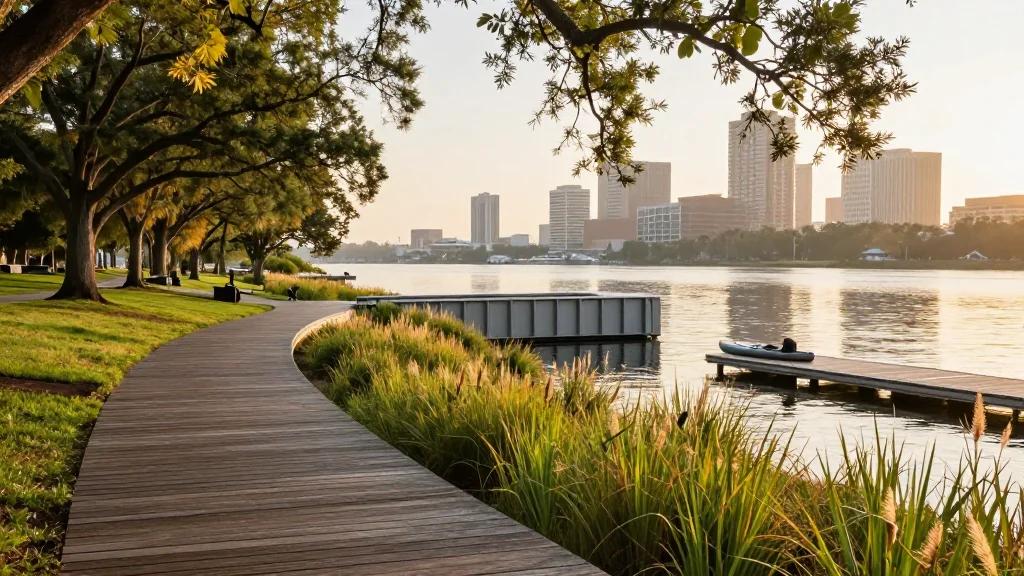
At the heart of the project is the 100‑foot “Living Edge,” a tiered wetland corridor that acts like a natural sponge, absorbing surge water, slowing wave energy, and filtering storm‑runoff before it reaches the St. Johns River. Elevated boardwalks and a community dock provide safe, immersive water access while protecting the delicate ecological zone below. By preserving more than 70 mature oaks and cypress trees, the design also mitigates heat island effects and creates habitat for birds and pollinators, delivering multiple environmental co‑benefits alongside flood protection.
Beyond engineering, the park’s design is rooted in local culture. Patterns inspired by Gullah Geechee basket weaving shape the layout of plazas, gardens, and pathways, forging a visual link to the region’s African‑Creole heritage. The flexible open lawns and durable pavilions are calibrated for everything from Jaguars game‑day tailgates to quiet river walks, ensuring the space remains active year‑round. As Jacksonville’s North Riverfront Development expands, Metropolitan Park serves as a proof‑of‑concept that resilient infrastructure can also be a catalyst for economic activity, community cohesion, and cultural expression.
Metropolitan Park Riverfront Redevelopment Advances Flood Protection and Public Space in Jacksonville
Comments
Want to join the conversation?
Loading comments...