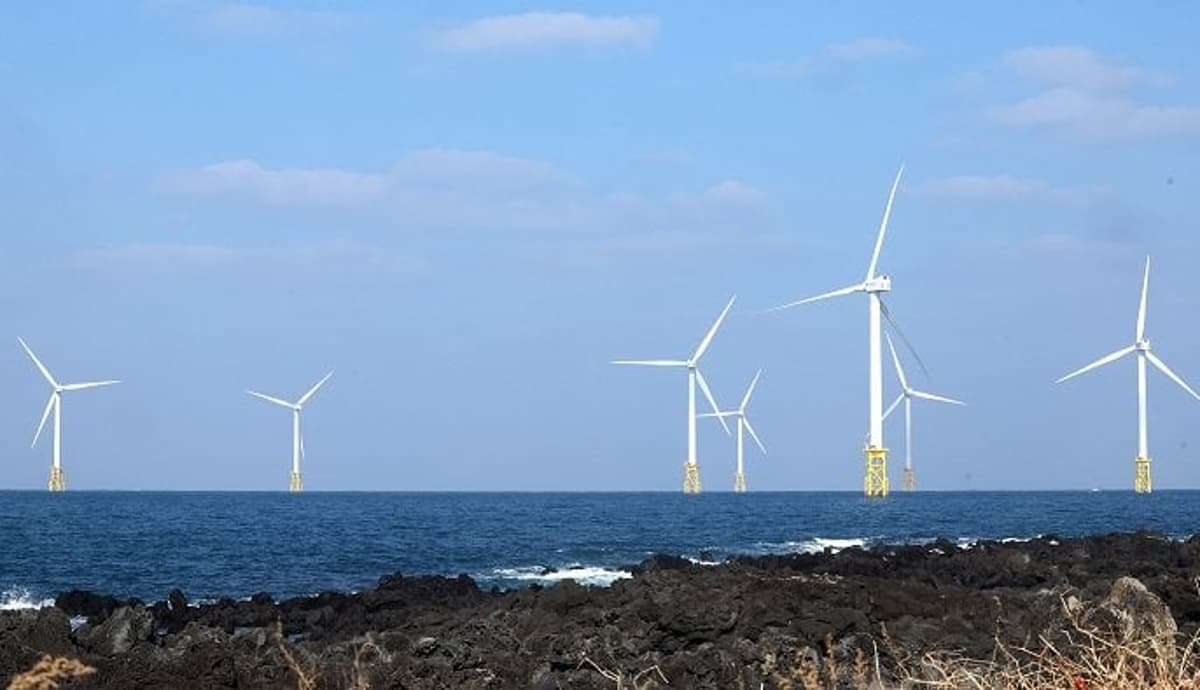
Military Permit Derails South Korea’s Anma Offshore Wind Project
Why It Matters
The delay threatens South Korea’s first utility‑scale offshore wind farm, jeopardizing renewable‑energy targets and discouraging foreign investment in a fledgling market.
Key Takeaways
- •Military testing zone blocks Anma’s public waters permit
- •$273M jacket foundation contract suspended by SK Oceanplant
- •$110M cable contract terminated by LS Cable & System
- •Equis may sell 78% stake amid regulatory uncertainty
- •New Korean law aims to streamline offshore wind approvals
Pulse Analysis
South Korea’s offshore wind ambitions have hit a regulatory roadblock with the Anma project, a 532 MW, $3.5 billion development located 24 miles west of the peninsula. The site’s overlap with a defense‑agency weapons‑testing zone has halted the issuance of a public waters occupation permit, a prerequisite for construction. This clash underscores how non‑technical factors—particularly complex permitting frameworks—can derail projects even after key supply contracts are signed and financing is secured.
The fallout has been swift: SK Oceanplant paused its $273 million jacket‑foundation contract, while LS Cable & System scrapped a $110 million cable supply agreement. These withdrawals not only inflate project costs but also signal heightened risk for other investors. Recent exits by Britain’s Corio Generation and Germany’s RWE from Korean offshore ventures amplify concerns that the market’s regulatory uncertainty is eroding confidence, potentially slowing the nation’s transition to renewable energy and limiting job creation in the emerging sector.
In response, the Korean government introduced the Offshore Wind Power Special Act, consolidating 28 separate licenses into a single approval from the Ministry of Trade, Industry and Energy. If effectively implemented, the one‑stop‑shop could accelerate future projects and restore investor trust. However, the Anma delay illustrates that legislative reform alone may not resolve legacy site conflicts. Stakeholders will be watching closely to see whether streamlined processes can translate into tangible project progress and keep South Korea on track for its 2030 renewable targets.
Military Permit Derails South Korea’s Anma Offshore Wind Project
Comments
Want to join the conversation?
Loading comments...