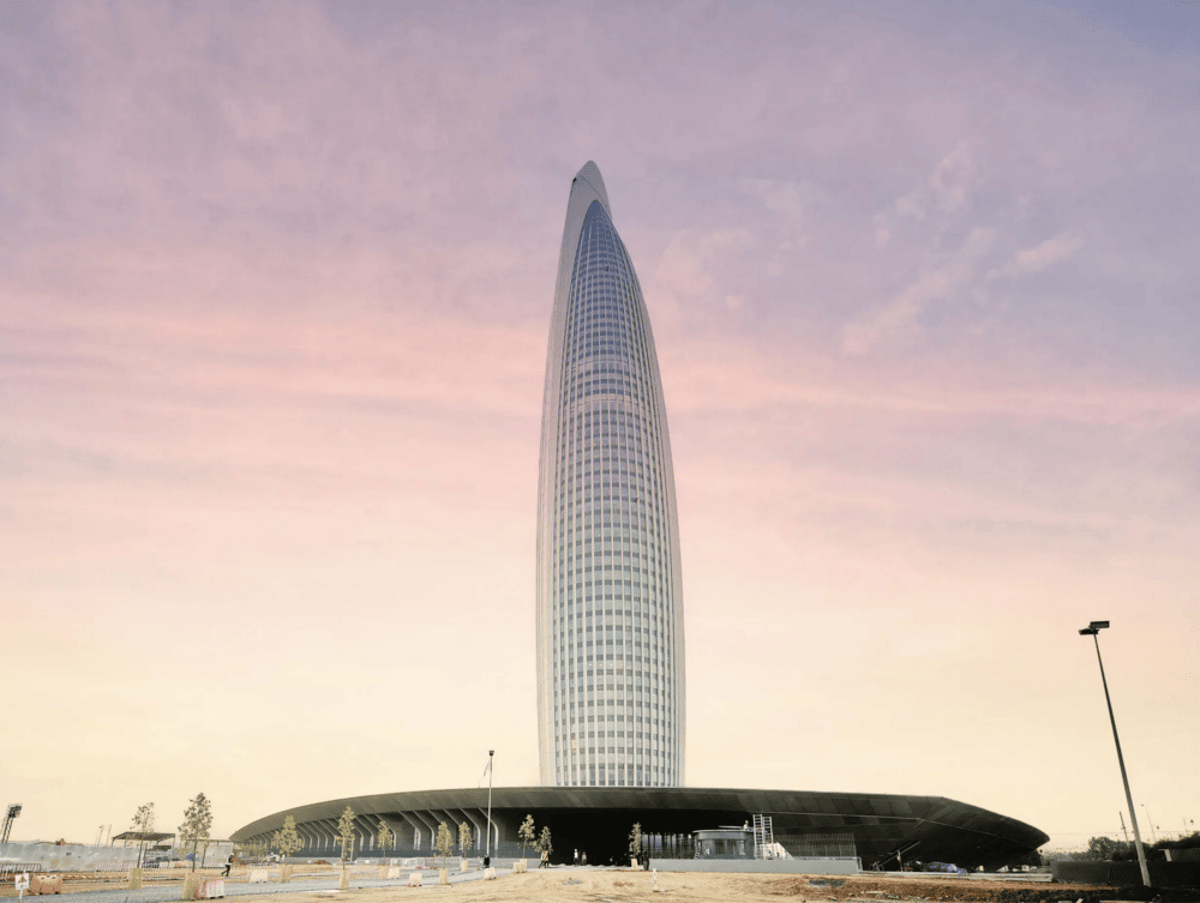
Morocco’s Tallest Tower Inaugurated, Visible for 50km
Why It Matters
The tower signals Morocco’s push into high‑rise, sustainable urban development, attracting global investors and showcasing advanced construction technologies in Africa.
Key Takeaways
- •250 m, 55‑storey Mohammed VI Tower inaugurated in Rabat
- •102,800 sq m mixed‑use space includes hotel, offices, residences
- •160‑tonne tuned mass damper reduces wind and seismic sway
- •Podium roof hosts 2,200 sq m photovoltaics; façade adds 1,800 sq m
- •Besix’s BIMPrinter robot mapped floor plans three times faster
Pulse Analysis
Morocco’s new Mohammed VI Tower marks a watershed moment for North African skylines, joining a wave of megaprojects that aim to reposition the region as a hub for high‑value real estate. At 250 metres, the tower not only eclipses previous national records but also aligns Rabat with global cities that leverage iconic architecture to stimulate tourism, business travel, and local prestige. The project’s mixed‑use program—luxury hotel, premium office floors, upscale residences, and a public observation deck—creates a diversified revenue stream that can weather sector‑specific downturns, a strategic advantage for investors seeking stable returns in emerging markets.
From an engineering perspective, the tower showcases cutting‑edge solutions to the challenges of building tall in a seismically active, flood‑prone zone. The tube‑in‑tube system couples a high‑strength concrete core with an outer steel frame, distributing lateral loads efficiently, while 60‑metre‑deep foundations anchored by 104 concrete barrettes provide robust ground support. A 160‑tonne tuned mass damper at the crown mitigates wind‑induced motion, enhancing occupant comfort and reducing wear on structural components. Sustainability is woven into the design: 2,200 sq m of rooftop photovoltaics and 1,800 sq m of façade‑integrated panels cut cooling loads, and a high‑performance envelope minimizes solar heat gain, lowering operational energy costs.
The construction methodology itself signals a shift toward digital‑first building practices in Africa. Besix deployed its autonomous BIMPrinter robot, which traced complex floor‑plan geometries directly onto slabs, accelerating the layout phase by roughly threefold compared with conventional methods. This integration of robotics and Building Information Modeling reduces labor intensity, improves accuracy, and shortens project timelines—critical factors for developers competing for capital in fast‑moving markets. As the tower becomes a landmark visible from 50 km away, it also serves as a proof point that sophisticated, sustainable, and technologically advanced construction can thrive outside traditional Western hubs, encouraging further high‑rise investments across the continent.
Morocco’s tallest tower inaugurated, visible for 50km
Comments
Want to join the conversation?
Loading comments...