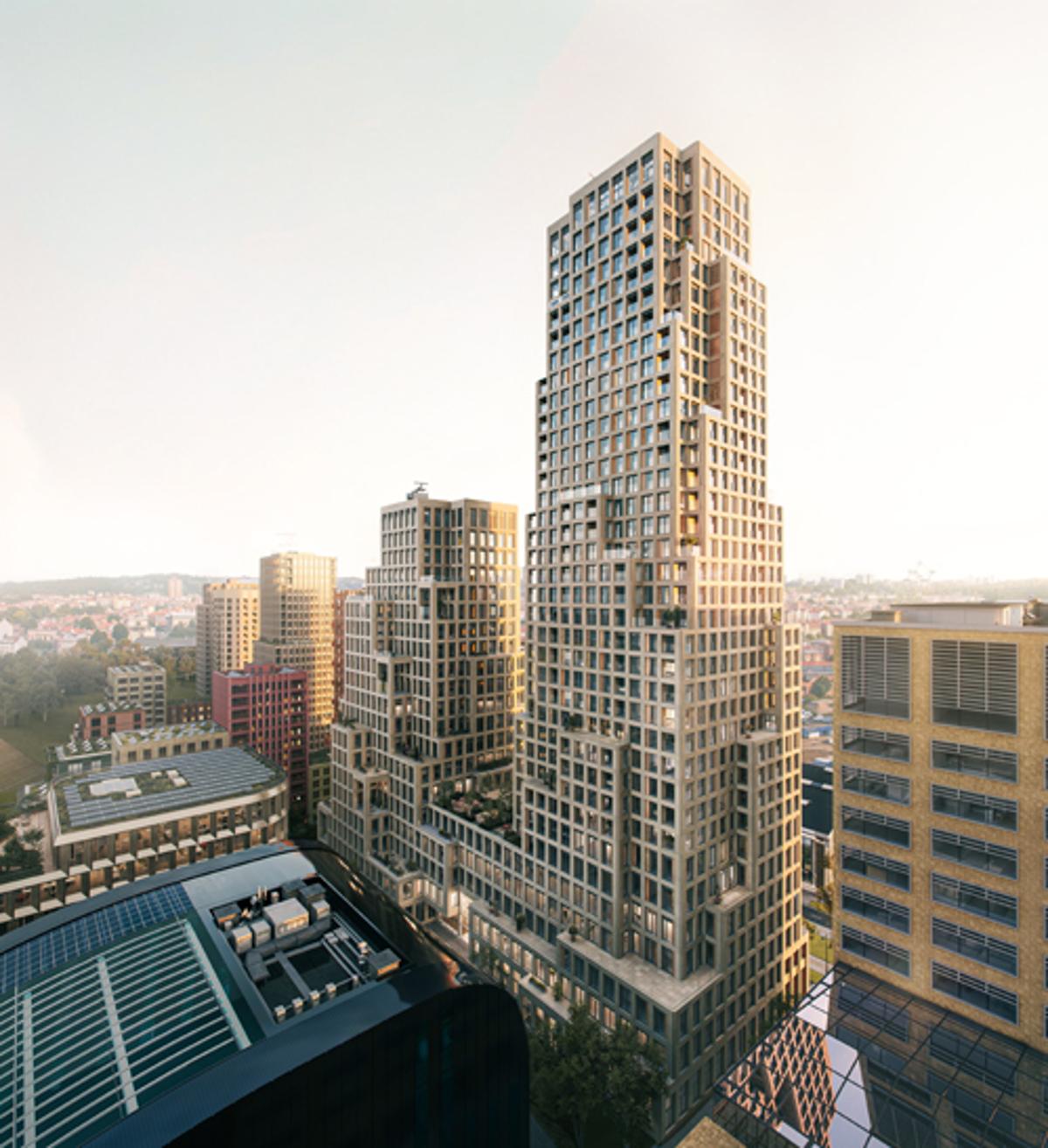
MVRDV Obtains Construction Permit for Low-Carbon Mixed-Use Tour & Taxis Towers in Brussels
Why It Matters
The approval demonstrates that large‑scale, high‑rise projects can meet stringent carbon targets, setting a benchmark for sustainable urban development across Europe.
Key Takeaways
- •Construction permit granted for 126 m, 58,000 m² Tour & Taxis Towers.
- •Hybrid concrete‑timber structure reduces embodied carbon versus conventional towers.
- •199 residential units and office space create dense mixed‑use neighbourhood.
- •Public‑level plinth activates street life and links Lake Side to Anna Bochlaan.
- •Project aligns with EU taxonomy, showcasing MVRDV’s CarbonSpace software.
Pulse Analysis
European cities are under pressure to reconcile vertical growth with climate commitments, and Brussels is emerging as a testbed for that balance. MVRDV’s Tour & Taxis Towers illustrate how architects can embed sustainability at the earliest design stage, leveraging proprietary tools like CarbonSpace to quantify embodied carbon before construction begins. By opting for a hybrid structural system that pairs a concrete frame with cross‑laminated timber slabs, the project trims material weight and cuts concrete usage, directly lowering the building’s carbon footprint while preserving structural performance.
The towers also embody a shift toward dense, mixed‑use neighbourhoods that reduce urban sprawl. With 199 apartments ranging from studios to three‑bedroom units, office floors, and a publicly programmed plinth, the development creates a self‑contained micro‑city that encourages walking, transit use, and community interaction. Irregular setbacks, wind‑responsive façades, and adaptable 2.7‑metre modules further enhance flexibility, allowing the complex to evolve with changing market demands. Such design choices align with the EU taxonomy for sustainable activities, positioning the project as a credentialed green asset for investors and tenants alike.
For developers and investors, the Tour & Taxis Towers signal a viable financial model where sustainability drives value. The EU’s green financing incentives and growing tenant preference for low‑carbon buildings can translate into premium rents and lower financing costs. Moreover, the project’s success may accelerate adoption of carbon‑aware design software across the industry, prompting a new wave of high‑rise constructions that meet both density targets and climate goals, reshaping the European real‑estate landscape.
MVRDV Obtains Construction Permit for Low-Carbon Mixed-Use Tour & Taxis Towers in Brussels
Comments
Want to join the conversation?
Loading comments...